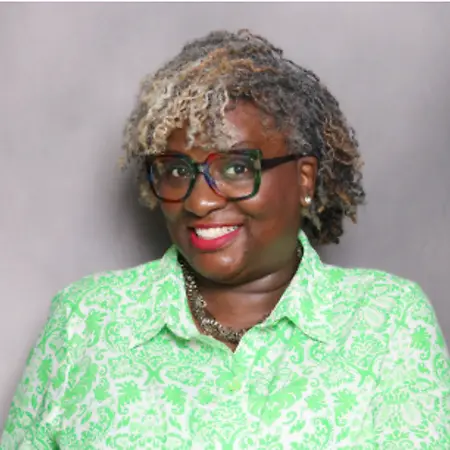
Influential Woman · Social Justice and Leadership Development
Lakisha Adams, MPA
Founder & Chief Restoration Strategist, Live Bold and Restored LLC.
NYC Tri-State Area, 11229
Her Story
About Lakisha
Lakisha Adams, MPA, is a restorative justice leader, educator, and systems strategist with more than 20 years of experience in social justice work centered on advancing equity and meaningful change for marginalized communities. Through her platform, Live Bold and Restored, she continues to extend her mission of helping individuals and organizations embrace restorative practices, leadership development, and transformative change. Her career has been rooted in bridging policy, practice, and people to transform systems and expand access to fair and humane justice responses, with a consistent focus on building sustainable solutions that uplift youth and families impacted by systemic inequities. Lakisha spent many years in New York City government, where she ultimately served as Executive Director of Programs for the city’s juvenile justice system. In that role, she identified the needs of system-involved youth and families and led the development of innovative programming through strategic partnerships, RFP development, and concept papers designed to expand supportive services. She later became the founding director of a Restorative and Transformative Justice Hub in Mercer County, New Jersey, where she built the county’s restorative justice landscape from the ground up. There, she designed a comprehensive portfolio of services including social work, case management, training programs, and restorative practices education for community members, schools, and law enforcement agencies. A core part of Lakisha’s work has been training, capacity building, and operationalizing new initiatives so that change is both implemented and sustained. She has served as an adjunct professor within the CUNY system and a facilitator at Columbia University, and recently as a guest lecturer at Princeton University's School of Public and International Affairs. She is also a forthcoming speaker at the National Association of Community and Restorative Justice (NACRJ) 10th Anniversary Conference in New Orleans. Known for her ability to make people feel seen, heard, and at ease, Lakisha is a bridge builder and connector who moves seamlessly between C-suite leaders and community members, meeting people where they are while fostering trust and authenticity. She is currently focused on consulting, speaking, and training, continuing to grow her work through Live Bold and Restored to expand access to restorative leadership and transformative change practices.
Her Interview
Ten minutes with Lakisha
01What do you attribute your success to?
I attribute my success to my keen ability to make people feel comfortable and to meet them where they are. Whether I'm working with C-suite executives or people directly in the community, I am able to have hard accountability conversations with care, and people appreciate my authenticity. I show up fully myself and which attributes to people feeling comfortable in being themselves. My secret sauce is that I have a keen ability to identify gaps and then create innovative solutions which have a direct impact on the bottom line. I connect people, ideas, and communities. My combined professional acumen, with being from the community, allows me the strategic ability to make those connections and serve as the bridge between different worlds. People feel seen and supported when they work with me, and that enables me to create authentic connections across all levels and sectors has been the foundation of my success over more than 20 years in this work.
02What’s the best career advice you’ve ever received?
The best career advice I have ever received was to lead with integrity. When you are working in social justice and leading change, you can only take an organization as far as it is willing to grow. But when you no longer feel and see the issues being addressed in the environment, there is an ethical decision to be made. You need to have a level of integrity where you are always willing to do the right thing for the people and not lose sight because of the system pressures. I was taught that this work takes a level of bravery and being willing to put skin in the game. So to do this work with a sense of bravery and willingness to take risks has been the most important advice I have received and followed throughout my career.
03What advice would you give to young women entering your industry?
My advice to young women entering this industry is to listen more than you speak. Listening helps you understand where the gaps are, and identifying where the gaps are is your superpower because you can then position yourself and create space for others to design solutions. Be inquisitive and always be willing to learn new skills. Most importantly, recognize that your voice has power and that you belong. You are there because you belong there, and you have value to add. Women often deal with imposter syndrome and question their worthiness of a seat at the table, but you don't need to ask for permission. If you listen, you will identify where the challenges and gaps exist, your work will speak when you don't even have to.
04What are the biggest challenges or opportunities in your field right now?
One of the biggest challenges in her field is that women in social justice and leadership development continue to face persistent gender bias and structural inequalities that limit advancement opportunities. Many women also struggle with a lack of mentorship and support while navigating double standards around leadership and assertiveness. In many cases, they are placed in high-pressure “glass cliff” leadership roles while also balancing disproportionate family and caregiving responsibilities. Additionally, outdated approaches to measuring performance is a challenge. At the same time, she sees a growing opportunity to create more inclusive leadership spaces, strengthen mentorship networks, and empower women to lead authentically and boldly.
05What values are most important to you in your work and personal life?
The values most important to me in my work and personal life are social justice, equality, empowerment, and empathy. I am also deeply committed to cultivating work environments that are conducive to work-life balance. I believe in creating restorative approaches where teams can actually relate to one another in a way recognizing their individual roles as part of a larger ecosystem, as this minimizes conflict. When you create a work environment where people feel seen, you empower them to communicate productively, and take ownership over the shared mission. I am passionate about building that bridge between leadership and the human part of us. When we are able to translate those basic values into workspaces, we create a higher impact industry. At the end of the day, when people feel heard, they do well, and that impacts all of our bottom lines. As a person of faith, I consider it a responsibility to serve and am a proud member of a social justice-centered church community.
Join Influential Women and start making an impact. Register now.