Higher Education Influential Women: Kelsey Ruiz.
From Public Housing to Doctoral Pursuit: A Journey of Resilience, Mentorship, and Transformative Leadership in Higher Education

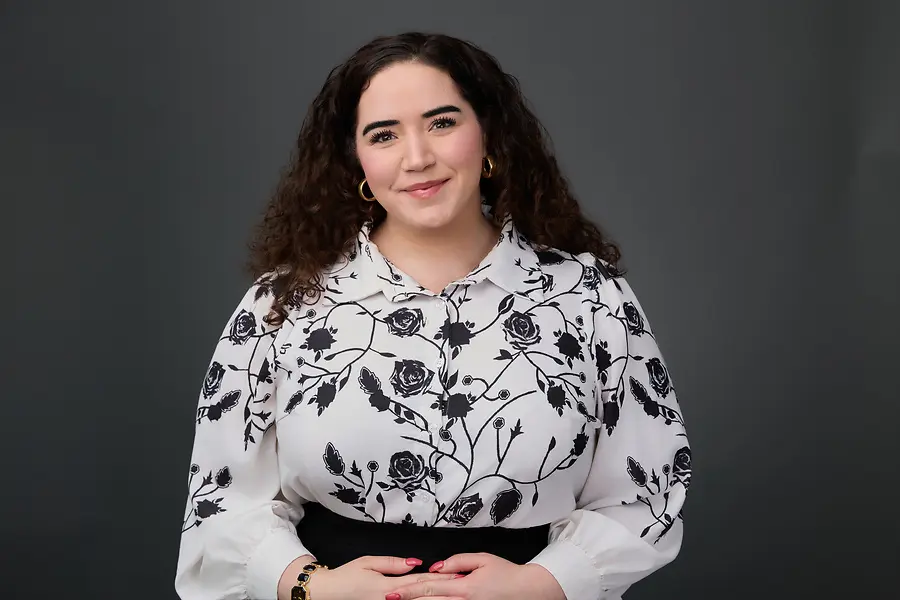
What Do You Attribute Your Success To?
Much of what has shaped my success in my career is rooted in the life challenges I faced at a young age, which ultimately inspired my path. I grew up very poor in public housing in Harrison, NJ, an urban-suburban town where many residents rented tightly packed homes and came from diverse backgrounds.
I attended a poor, public, and diverse K–12 school district that primarily served students with minoritized identities. My high school population was approximately 80% Hispanic and 20% White, reflecting the strong immigrant roots of my community. Growing up in public housing without mentorship or guidance on applying to college, I never imagined that higher education could be within my reach. In fact, I was the first in my family to graduate from high school — a milestone that not only transformed the trajectory of my life but also laid the foundation for my commitment to helping others access educational opportunities.
My life shifted significantly when my mother became disabled while I was in middle school. As a child, I stepped into the role of caregiver for my single mother. Growing up was not simple, and many of my own aspirations were placed on hold as I prioritized her care. In many ways, I grew up too quickly and lost parts of my youth — a reality many low-income children face. Yet becoming a caretaker at such a young age profoundly shaped my character. It taught me responsibility, empathy, resilience, and advocacy. Navigating medical systems, educational systems, and financial uncertainty also exposed me to how institutions often fail families like mine. These early experiences became the foundation for my lifelong commitment to social change.
When I eventually had the opportunity to attend college, I carried those early experiences with me. As a mixed-race woman and a first-generation, low-income student, college was the first time I became acutely aware of the structural inequalities shaping educational opportunities. I no longer saw classmates who reflected my background. Many of my peers had been preparing for college their entire lives, with access to youth programs, sports, travel, and college preparation resources that were never available to me. Witnessing these racial and socioeconomic disparities did not discourage me; instead, it fueled a deeper commitment to supporting underrepresented students in accessing and navigating higher education.
Throughout my undergraduate experience, I intentionally sought roles that allowed me to mentor and advocate for students like myself. These roles clarified my purpose. My work was no longer simply about my own mobility — it became about collective access. I committed myself to ensuring that low-income, first-generation, and minoritized students could see higher education as attainable and transformative.
In pursuing this path, I surpassed expectations that once felt impossible. I became the first in my family to graduate from college and later earn a Master’s degree in Higher Education. This year, I will complete my Doctorate in Education with a concentration in Transformative School Leadership at Northeastern University. For me, earning these degrees is not merely a personal achievement; it is a communal one. Becoming an agent of change means modeling what is possible and using advanced training to challenge dominant narratives about who belongs in academia. As a Puerto Rican woman pursuing a doctorate — a group historically underrepresented at this level — I am intentional about occupying spaces where we have been excluded and about holding the door open for those who come next.
Today, in my professional role in Residential Life, my commitment to first-generation students of color continues to guide my work. Building networks of support for students of color requires more than good intentions; it demands established best practices, strategic collaboration, and the explicit naming of populations whose identities are often marginalized within institutional structures. While access to higher education has increased for historically marginalized communities, retention remains a pressing challenge. First-generation students of color often navigate intersecting identities that compound adjustment challenges, particularly within predominantly white institutions. Centering their narratives and lived experiences is essential to creating environments where they can thrive.
Overall, I want to share that although the journey has been long and difficult, I was eventually able to find a sense of membership and belonging — and it is because of women that I built my self-esteem and learned to believe in myself. The greatest mentors in my life have always been women — women who believed in me, encouraged me, and inspired me to strive for more.
I struggled a great deal navigating education and life, but I could always count on women to show up for me when I needed guidance and support. The reason I have been able to get through graduate school and am now on the verge of completing my doctoral degree is because I had mentorship from women, especially women of color, who had gone through this process themselves and wanted to pave the way for students like me to succeed.
I am deeply grateful for the community of women of color who have consistently supported me, stood up for me, and created spaces where I could grow. As much as I have worked hard to get to where I am today, none of it would have been possible without the membership and mentorship I found through these remarkable women.
What Are the Biggest Challenges or Opportunities in Your Field Right Now?
We live in a time when diversity and inclusion in higher education are under threat. In my field, I have witnessed legislative changes, institutional decisions, and systemic barriers that continue to limit access for underrepresented students. I am deeply concerned not only about whether these students will have opportunities to attend college, but also whether they will be able to enroll in institutions that protect them, value their identities, and honor their contributions.
Currently, cultural centers and other spaces designed to support underrepresented students face increasing threats from state and national legislation aimed at restricting or dismantling diversity, equity, and inclusion (DEI) initiatives in higher education.
Cultural centers serve as critical spaces where counter-narratives can be shared, validated, and sustained. Within these spaces, students are encouraged to examine internalized assumptions, engage in critical reflection, and unpack dominant narratives in pursuit of truth and self-authorship. When these spaces are underfunded or eliminated, underrepresented students lose vital opportunities to cultivate a sense of belonging, affirm their identities, and develop the critical consciousness necessary to navigate and challenge systemic inequities.
What Advice Would You Give to Young Women Entering Your Industry?
I was taking a course with both Master’s and doctoral students, and my advisor — who was also teaching the course — would often tell me, “Kelsey, you are so brilliant. You’re so smart. You have a lot of great ideas. How come you don’t speak up in group discussions?”
I told her that I felt intimidated by many of the doctoral students, especially one male student who took up a lot of space and spoke with confidence. She looked at me and said, “Kelsey, things are never as they seem. I graded his assignments. He doesn’t score as high as you. Taking up space and using big words doesn’t mean he’s smarter than you.”
This apprehensiveness extended beyond the classroom to my plans after completing my Master’s degree. When my advisor asked if I wanted to pursue a doctorate, I told her I didn’t think I was smart enough. She responded with something that has stayed with me: “Kelsey, that’s exactly what society wants you to say. They want you to doubt yourself so that fewer people who look like you and come from your background pursue these degrees.”
She reminded me that systems are designed to make us believe we are not good enough, and overcoming that self-doubt is an act of resistance and representation.
That experience taught me that success is not about being the loudest voice in the room; it is about being confident in your abilities, talents, and ideas. I learned that I can be soft-spoken and still command attention, and that believing in myself is not only for me — it is for the people who will come after me.