I Had a Bilateral Mastectomy at 20
At 20, I chose a bilateral mastectomy to protect my future against a PTEN gene mutation and an 85% breast cancer risk.

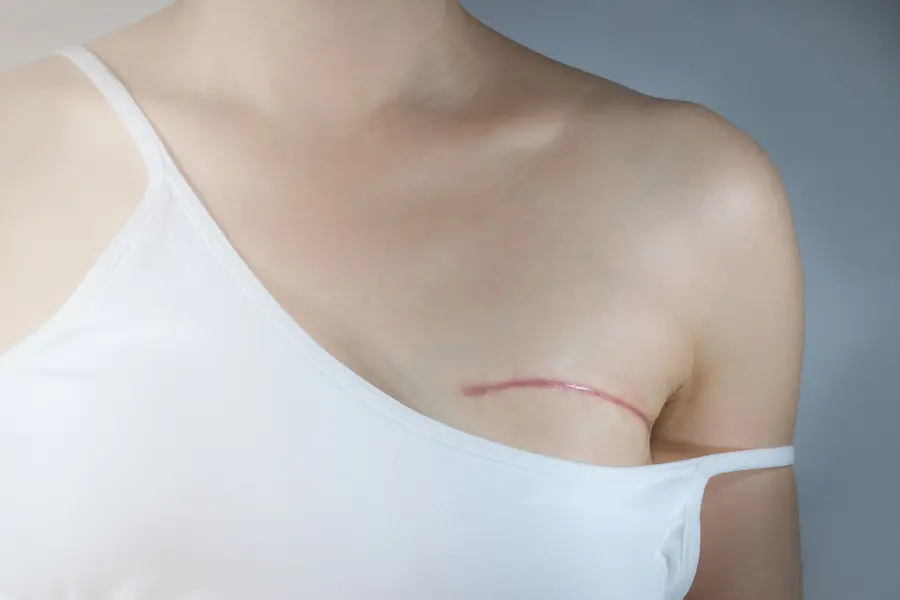
At 20 years old, I made a decision most people never have to face—not because I was sick, but because I refused to wait until I was. This surgery didn’t take my future from me—it gave it back. Most people won’t need to make this choice until later in life, or maybe they’re lucky enough to never have to at all.
On December 19, 2025, I decided to lose both of my breasts and undergo a bilateral mastectomy. This choice wasn’t because I had breast cancer—it was because I carry a PTEN gene mutation.
The PTEN gene is a tumor-suppressor gene that regulates normal cell growth. A mutation greatly increases the risk of multiple cancers, including breast cancer, by allowing cells to grow uncontrollably (NCI). Since I was 16, I’ve undergone regular breast checkups at Sloan Memorial Hospital. Because of the number of masses found in each breast, a mastectomy was always discussed—but I believed it was something I might face later, perhaps in my 50s.
In August 2025, I underwent a lumpectomy, and my surgeon found precancerous cells. Combined with my genetic mutation, my risk of developing breast cancer jumped to approximately 85% in the near future.
Leading up to the surgery, I didn’t think much about it. Maybe my mind was protecting me from fully processing how major this was, because I didn’t consider how I would look, feel, or think about myself afterward. I mean, think about it—what 20-year-old woman willingly decides to remove her breasts?
The morning of surgery felt ordinary. My procedure wasn’t until 4:00 p.m., with a call time of 2:45 p.m. I was offered a nerve block to relieve pain (spoiler alert: it didn’t). The nurse gave me a sedative to numb the needle, and I drifted off—waking about 20 minutes later to be wheeled into the operating room.
I remember the hallway being eerily quiet, probably because I was the only patient. I heard my mom shouting, “I love you, Veronica, and I’ll see you soon,” until her voice faded away. As I was rolled into the OR, my surgeon squeezed my hand one last time before anesthesia pulled me under.
Four hours later, I woke up in sharp, stabbing pain so intense I couldn’t move. My upper body felt trapped, and I was screaming. My breast tissue had been removed and expanders placed—the first step toward implants—but all I felt in that moment was pain. The nurses tried every painkiller, but nothing dulled it. Sleep finally came as a blur.
The next day, with my physical therapist’s help, I took my first steps. Even then, the drains hanging from my body reminded me I was still tethered to the process—I had to empty them morning and night. It took four long days before I could even pull down my pants to use the bathroom. Every movement reminded me of the choice I had made.
I even had fleeting thoughts of regret: Why did I do this to myself? It was terrifying, painful, and exhausting—but necessary to protect my future and ensure a cancer-free life.
Even with my family nearby, the pain felt isolating. The nurses told me the intensity I was feeling was “unusual,” almost as if they didn’t believe me. Despite this being a proactive choice to protect my health, I couldn’t ignore the whispers of shame—as if my body had betrayed me, or I had somehow failed as a woman.
There’s a quiet stigma around preventative mastectomies, implying women should only act once cancer is present. Choosing otherwise can feel isolating. Society teaches women that breasts are tied to femininity, sexuality, and identity, so removing them—even to save your life—can feel like stepping outside what’s considered “acceptable.”
To every woman facing difficult choices about her body: your decisions are valid. Your voice is important. Your strength is undeniable.
The journey is tough, but there is a light at the end. We are not defined by what we lose, but by the power we embrace to protect ourselves and our futures. My story is proof that taking control of your body is not just an act of survival—it’s an act of defiance against stigma. It’s a declaration that women have the right to live, thrive, and be unapologetically themselves—cancer-free.
My breasts do not define my worth, my strength, or my femininity. This surgery was not a loss; it was an act of courage, self-respect, and love for my future and my children. Choosing to protect my health at 20 required bravery (and a lot of oxycodone), and it is a decision no one else can judge. Society may try to shame women for taking control of their bodies—but empowerment comes from reclaiming that control.