SHE SERVED
A firsthand account of breaking barriers and the case for capability-based military service.

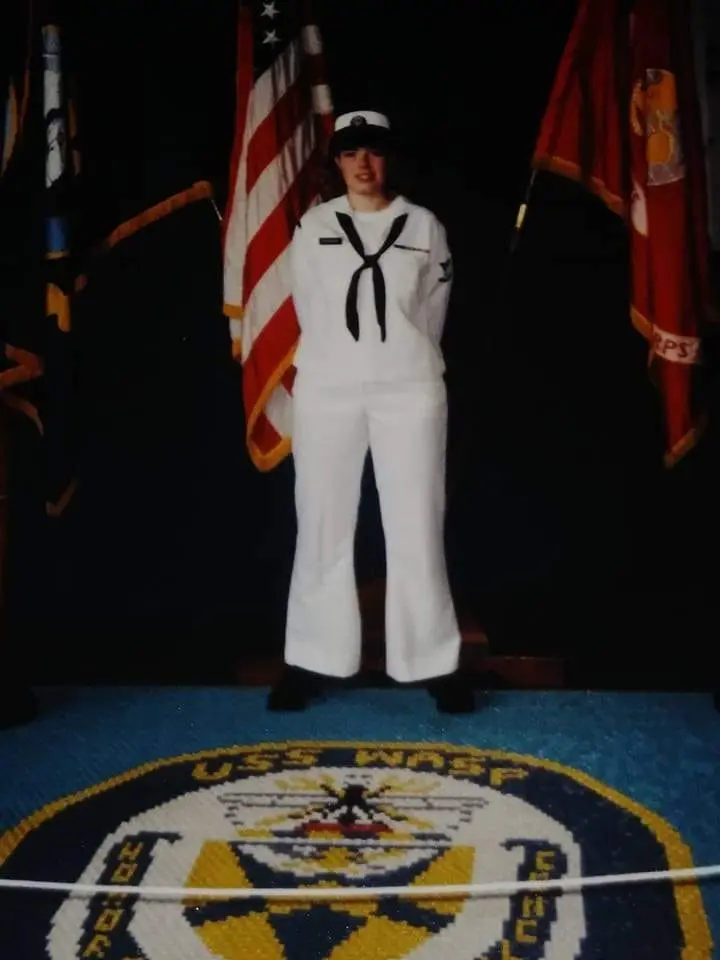
Women in Combat Roles: Reflections and Challenges
Breaking Barriers: Serving Where Few Women Had Gone Before
My experience as one of the first women stationed aboard a U.S. warship represents a meaningful milestone in the integration of women into combat and operational military roles. It was a moment that symbolized progress—not just for women in uniform, but for a military evolving toward capability-based service rather than tradition-based exclusion.
Yet today, renewed conversations about reassessing women’s participation in combat roles have surfaced across military and policy circles. These discussions have reignited debate and raised important questions about progress, readiness, and equity—questions that deserve to be examined through both data and lived experience.
Renewed Debate, Old Questions
Some argue that reassessment is necessary to ensure fairness and operational effectiveness. Others, myself included, view renewed scrutiny as a potential regression—one that risks undermining decades of hard-won advancement by women who have already proven their capability under the most demanding conditions.
Revisiting policies without acknowledging demonstrated performance and integration risks reframing progress as provisional rather than permanent.
First Steps Aboard the USS Wasp
In October 1996, I stepped onto the quarterdeck of the USS Wasp (LHD-1) as one of the first 60 enlisted women assigned to the ship’s company. Out of a crew of approximately 900, we were clearly in the minority—but our presence carried weight far beyond the steel hull beneath our feet.
We met the same standards. We completed the same training. We were held to the same expectations.
The only difference between me and my male counterparts was biological sex.
Just as not every man is suited for Navy SEALs, not every woman is suited for combat units. Capability—not gender—has always been the determining factor in operational effectiveness.
Commitment to Mission, Not Labels
I did not join the Navy seeking a specific role or distinction. I joined to serve—to do whatever was required to accomplish the mission.
That commitment raises a fundamental question whenever women’s combat roles are reconsidered:
What problem is being solved?
Modern military operations already depend on environments where survival hinges on teamwork, equipment reliability, and precision. Domains such as submarine service and space operations demand absolute trust in every crew member. A single failure can have catastrophic consequences for everyone involved.
If women are trusted—and proven—in these high-risk environments, the argument against their participation in terrestrial combat becomes increasingly difficult to justify.
From Exclusion to Integration
Historically, women were barred from submarine service due to concerns about exposure to nuclear reactors and potential reproductive harm. That restriction was lifted in 2015. Today, women serve fully integrated across submarine platforms, the Space Force, and other operational domains once deemed incompatible with female service.
These integrations did not weaken the force. They strengthened it.
Which leads to the critical question:
If women are trusted in every other domain of modern warfare, what remains the concern?
Conclusion: Capability, Commitment, and the Future Force
Reflecting on my service, I remain convinced that military readiness is best protected by evaluating individuals based on dedication, training, and performance—not gender.
The progress achieved has been hard-won and essential. An effective military depends on unity, trust, and the full utilization of every qualified service member willing to serve.
As warfare evolves and new operational domains emerge, adaptability will define success. That adaptability depends on inclusion—not as ideology, but as strategy.
Protecting progress is not about politics. It is about honoring service, preserving operational excellence, and ensuring that those who are willing and able to serve are empowered to do so.
A military that values capability over category remains resilient, prepared, and worthy of those who volunteer to stand in its ranks.