Three Worlds, One Woman
The Power of Integration: How One Leader Stopped Compartmentalizing and Found Her Authentic Voice


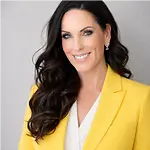
For a long time, Jennifer Connell lived in carefully constructed compartments.
There was the educator—teacher, coach, principal, director—leading with discipline, vision, and unwavering commitment to the students and communities she served.
There was the mother—fiercely protective, deeply compassionate—navigating the realities of raising a daughter with a rare disease.
And there was the advocate—the nonprofit founder, building something meaningful from necessity, love, and an unshakable refusal to let her daughter’s diagnosis define her future.
Three distinct identities.
Three separate worlds.
And for years, Jennifer worked tirelessly to keep them apart.
“I thought I was protecting everything,” she reflects. “But in reality, I was probably protecting myself.”
That kind of separation often feels like control. But more often, it is fear.
Fear that vulnerability may be misunderstood.
Fear that personal challenges may somehow diminish professional credibility.
Fear that allowing life’s deeper experiences to become visible may change how others perceive your capability.
So many high-performing women live this way—carefully managing the intersections of their lives, believing that professionalism requires separation rather than integration.
Then Jennifer turned forty.
And something shifted.
Not dramatically.
Not all at once.
But intentionally.
She began to realize that the very experiences she had once worked so hard to compartmentalize were not distractions from her leadership—they were the foundation of it.
“Who we are is shaped by every chapter we live,” Jennifer says. “We evolve intentionally, and there is power in allowing those experiences to teach us rather than hide us.”
This realization changed everything.
The challenges her family faced did not weaken her leadership.
They strengthened it.
Her daughter’s journey did not serve as a limitation.
It deepened Jennifer’s empathy, sharpened her advocacy, and expanded her ability to lead with humanity.
Her nonprofit was not separate from her career.
It was a living extension of her values.
Her motherhood was not something to keep in the background.
It was one of her greatest sources of resilience, perspective, and strength.
Rather than continuing to divide herself into manageable pieces, Jennifer chose wholeness.
And in doing so, she stepped into a more powerful version of leadership.
Today, Jennifer leads fully integrated.
As an educator with deep expertise in inclusion, literacy, leadership development, and systemic transformation.
As a mother whose lived experience gives her uncommon compassion.
As an advocate who understands firsthand what it means when families must fight to be seen, supported, and heard.
As a woman no longer interested in shrinking parts of herself to fit outdated expectations.
Her philosophy remains grounded and refreshingly honest:
Progress over perfection.
One percent better every day.
“Our growth and resilience are part of the beauty,” she says.
And perhaps that is where Jennifer’s story resonates most deeply.
Because leadership is not about becoming someone entirely new.
It is about fully owning who you already are.
It is about recognizing that your personal story, your struggles, your victories, and your evolution are not liabilities to be hidden.
They are assets.
Jennifer Connell did not reinvent herself at forty.
She simply stopped editing herself.
She stopped separating the pieces.
She stopped apologizing for the fullness of her story.
And in doing so, she became an even more impactful leader, advocate, and example of what authentic success truly looks like.
Not fragmented.
Not performative.
But whole.
Because sometimes the most powerful transformation is not becoming more.
It is finally allowing yourself to be fully seen.