Women Who Led Change: Honoring Pioneers in Public Service During Women’s History Month
Celebrating Trailblazers in Public Service and Advocacy Who Transformed Society
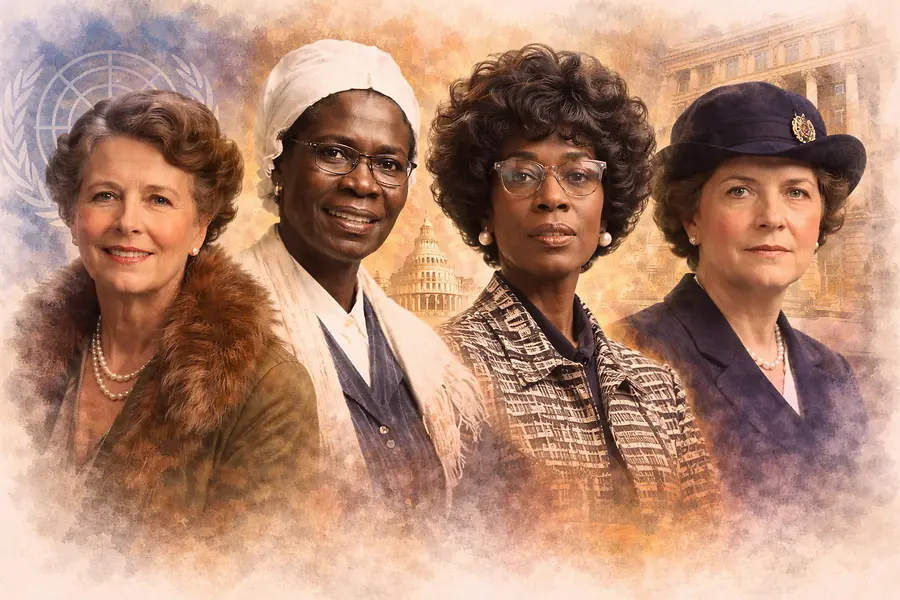
Women’s History Month is a time to recognize the leaders who challenged injustice, expanded opportunity, and helped shape the systems that guide our societies today. Throughout March, Influential Women is highlighting trailblazers whose courage and vision created lasting change across industries.
This week, we focus on women in public service and advocacy. These leaders used their voices, influence, and determination to challenge inequality, shape policy, and represent communities that had long been excluded from positions of power.
Eleanor Roosevelt
Eleanor Roosevelt redefined the role of First Lady by becoming one of the most influential public servants of the twentieth century. She used her platform to advocate for civil rights, human dignity, and social reform. After leaving the White House, she served as a delegate to the United Nations and played a central role in drafting the Universal Declaration of Human Rights, helping establish a global standard for equality and freedom.
Sojourner Truth
Sojourner Truth was a powerful abolitionist and advocate for women’s rights who used her voice to confront injustice during a deeply divided era in American history. Born into slavery, she later escaped and dedicated her life to speaking out against oppression. Her speeches, including the famous “Ain’t I a Woman?” address, challenged society to reconsider both racial and gender inequality.
Shirley Chisholm
Shirley Chisholm made history as the first Black woman elected to the United States Congress in 1968. Known for her motto “unbought and unbossed,” she became a powerful voice for marginalized communities and championed policies supporting education, workers, and women’s rights. In 1972, she further broke barriers by becoming the first Black woman to seek a major party’s nomination for President of the United States.
Frances Perkins
Frances Perkins became the first woman to serve in a United States presidential cabinet when she was appointed Secretary of Labor by President Franklin D. Roosevelt. She played a critical role in shaping many of the labor protections that Americans rely on today, including Social Security, unemployment insurance, and workplace safety standards. Her leadership helped create policies that improved the lives of millions of workers.
The women we honor this week remind us that leadership in public service requires courage, persistence, and a commitment to justice. Their work reshaped laws, institutions, and opportunities for future generations.
At Influential Women, we believe that influence is often measured by the ability to create meaningful change for others. The leaders we celebrate this week used their voices and positions to expand rights, represent communities, and inspire future generations to step forward and lead.