𝗔 𝗵𝗲𝗮𝗿𝗶𝗻𝗴 𝗮𝗶𝗱 𝗱𝗼𝗲𝘀𝗻'𝘁 𝗳𝗮𝗶𝗹 𝗶𝗻 𝘁𝗵𝗲 𝘀𝗼𝘂𝗻𝗱 𝗯𝗼𝗼𝘁𝗵. 𝗜𝘁 𝗳𝗮𝗶𝗹𝘀 𝗶𝗻 𝘁𝗵𝗲 𝘀𝗼𝗰𝗸 𝗱𝗿𝗮𝘄𝗲𝗿.
Why hearing aid returns are really about expectation management, not device failure.

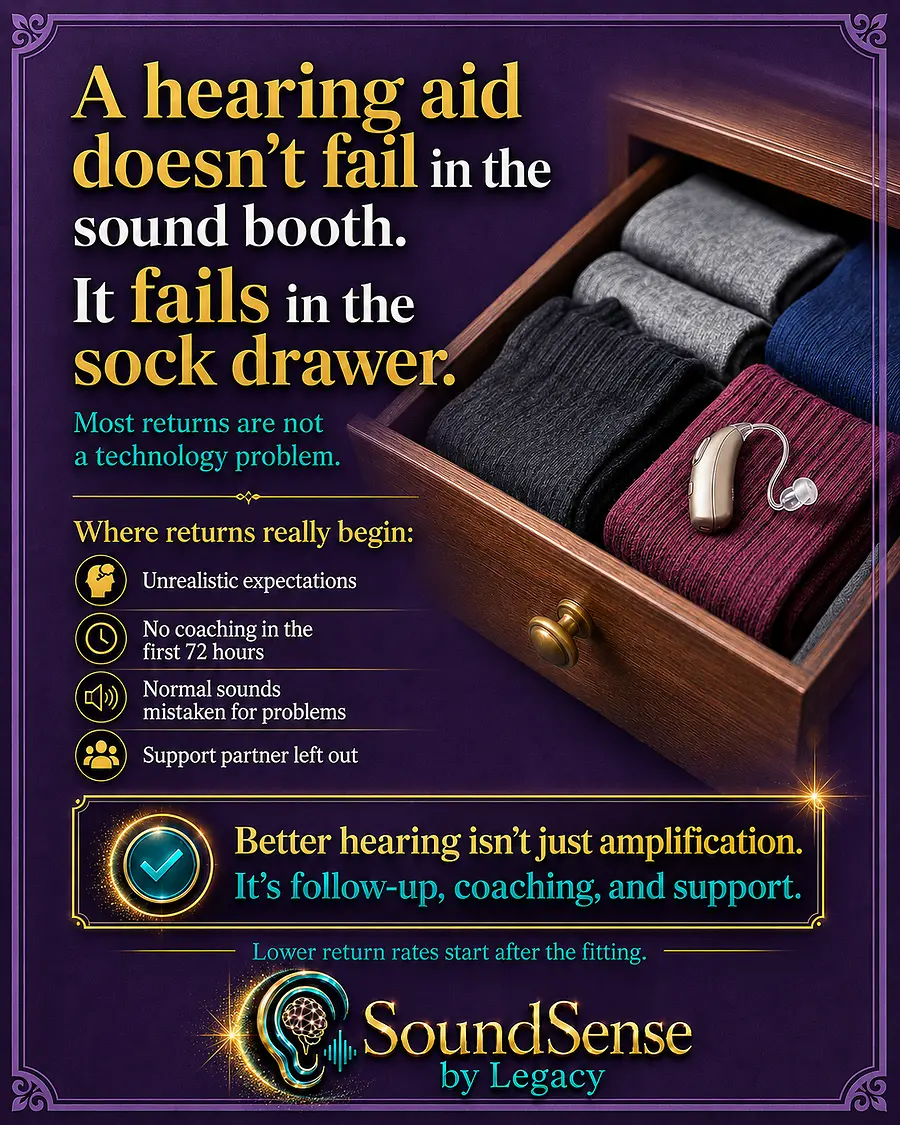
A hearing aid doesn't fail in the sound booth. It fails in the sock drawer.
Industry surveys have put hearing aid return rates in the mid-teens to around 20% for years—and for every device that is formally returned, others quietly disappear into a nightstand drawer, never to be worn again.
Here's the part that often gets missed: most of those returns aren't a technology problem.
The devices available today are genuinely remarkable. The breakdown is almost always human—and almost always predictable.
Where Returns Actually Begin
- Expectations set at the point of sale that no device on earth could meet.
- The first 72 hours, with no one explaining why the world suddenly sounds "wrong."
- A patient who never learns that hearing their own footsteps is a sign the device is working, not broken.
- A support person who was never invited into the conversation.
Better hearing isn't a purchase. It's an adjustment—and the brain needs coaching, not just amplification.
The practices with the lowest return rates rarely have better products than everyone else. They have better follow-up: a call within the first 24 to 48 hours, a plan that explains what's normal, and someone who picks up the phone before frustration turns into a refund.
Providers—when a device comes back, do you log it as a product return, or do you trace it back to the conversation that set the expectation? I'd love to hear where you think the real gap is.
#HearingHealthcare #HearingAids #PatientExperience #ReturnPrevention #SoundSenseByLegacy


