𝗛𝗲𝗮𝗿𝗶𝗻𝗴 𝗹𝗼𝘀𝘀 𝗶𝘀𝗻'𝘁 𝗾𝘂𝗶𝗲𝘁. 𝗜𝘁'𝘀 𝗲𝘅𝗵𝗮𝘂𝘀𝘁𝗶𝗻𝗴.

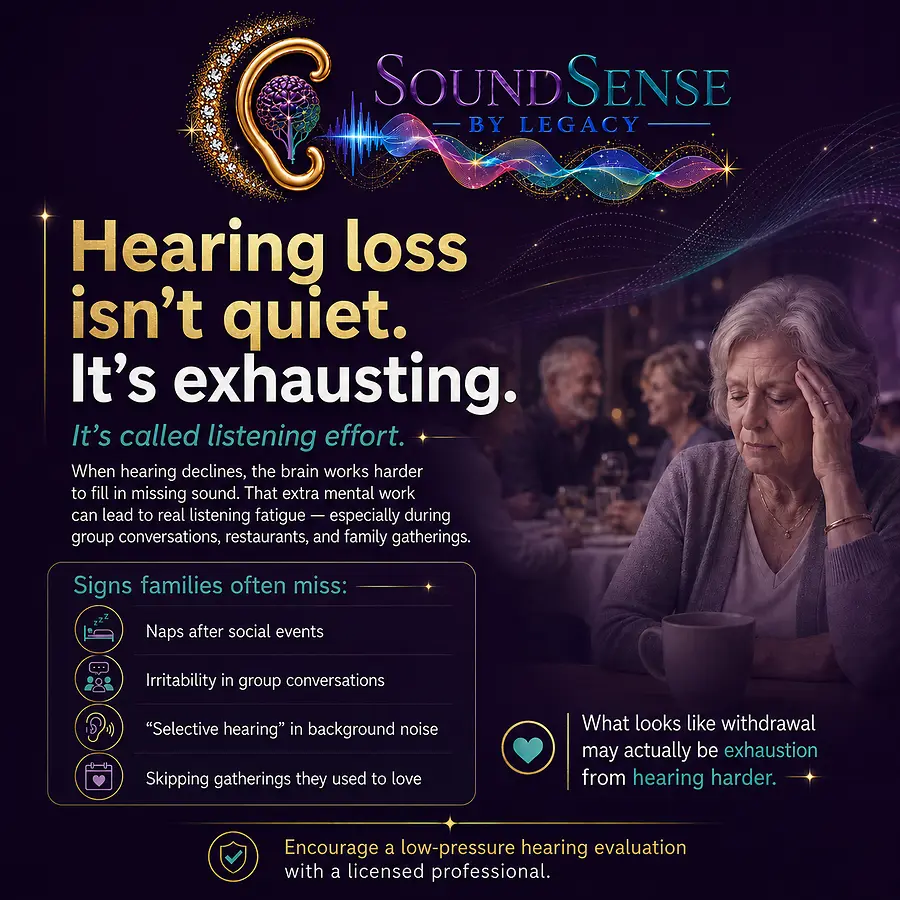
Hearing loss isn't quiet. It's exhausting.
Families usually notice the naps before they notice the hearing loss.
Dad is "just tired lately." Mom leaves the party early. Grandpa falls asleep twenty minutes after Sunday dinner. We chalk it up to age - but often, something else is going on.
It's called listening effort.
When hearing declines, the brain doesn't just hear less - it works harder. It strains to fill in missing sounds, guesses at words from context, reads lips without realizing it. Researchers describe the result as listening fatigue: real, measurable exhaustion from the mental workload of decoding conversation.
For someone with untreated hearing loss, a noisy restaurant or a big family gathering can feel like doing puzzles for two hours straight.
Signs families often miss:
- Naps right after social events
- Irritability during group conversations
- "Selective hearing" that gets worse in background noise
- Quietly skipping gatherings they used to love
That last one matters most. What looks like withdrawal or disinterest is often energy management - participating simply costs too much.
And the stakes go beyond tiredness. Untreated hearing loss is consistently linked in published research to social isolation and a higher risk of cognitive decline. When the brain spends its energy decoding sound, there's less left over for remembering, connecting, and enjoying the people in the room.
I'm not a clinician, and this isn't medical advice. It's a nudge for families: if someone you love seems worn out by conversation, the problem may not be their stamina. It may be their hearing - and a hearing evaluation with a licensed professional is a simple, low-pressure first step.
Have you ever noticed "social exhaustion" in someone you love before anyone thought about hearing? Share your story below - your experience might help another family connect the dots.


