5 Simple Summer Activities That Teach Children About Money Without Feeling Like School
Make Financial Learning Fun This Summer With These Five Easy Activities for Kids

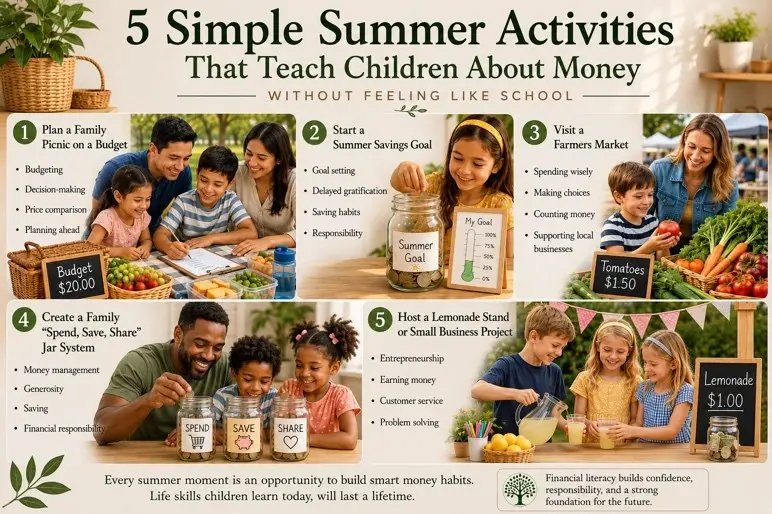
5 Simple Summer Activities That Teach Children About Money Without Feeling Like School
By Sandra Soos Reynolds
Founder, Money Monster Kids
Summer is a wonderful time for children to relax, explore, and make memories with their families. It is also the perfect opportunity to teach important life skills in a fun and natural way.
One of the most valuable skills parents can help their children develop is financial literacy. The good news is that teaching children about money does not always require formal lessons or worksheets. Some of the best learning happens through everyday experiences.
Here are five simple summer activities that help children build money skills while having fun.
1. Plan a Family Picnic on a Budget
Before heading to the park, involve your children in planning the picnic. Give them a budget and let them help create a shopping list. Talk about needs versus wants, compare prices, and discuss how to make the most of the money available.
Children learn:
- Budgeting
- Decision-making
- Price comparison
- Planning ahead
2. Start a Summer Savings Goal
Ask your child to choose something they would like to save for during the summer. It could be a toy, a book, a game, or a special outing. Create a simple savings chart and encourage them to track their progress.
Children learn:
- Goal setting
- Delayed gratification
- Saving habits
- Responsibility
3. Visit a Farmers Market
Farmers markets provide a wonderful hands-on learning experience. Give your child a small amount of money and allow them to make purchasing decisions. Encourage them to compare prices, ask questions, and determine how much money they will have left after making a purchase.
Children learn:
- Spending wisely
- Making choices
- Counting money
- Supporting local businesses
4. Create a Family "Spend, Save, Share" Jar System
Summer is a great time to introduce the concept of dividing money into categories. Whenever children receive money from chores, gifts, or other activities, encourage them to place a portion into three jars:
- Spend
- Save
- Share
This simple system helps children understand that money can be used for immediate needs, future goals, and helping others.
Children learn:
- Money management
- Generosity
- Saving
- Financial responsibility
5. Host a Lemonade Stand or Small Business Project
Children love earning money through their own efforts. Whether it is a lemonade stand, pet sitting, yard work, or selling handmade crafts, small business activities help children understand the relationship between work and income.
Children learn:
- Entrepreneurship
- Earning money
- Customer service
- Problem solving
Summer Learning That Lasts a Lifetime
Financial literacy is not just about dollars and cents; it's about helping children develop confidence, responsibility, and decision-making skills that will benefit them throughout their lives.
The conversations we have with children today about money can help shape the habits they carry into adulthood. By incorporating simple financial lessons into everyday summer activities, parents can create meaningful learning experiences without adding extra pressure or structure to their summer schedules.
The best part is that children often do not realize they are learning financial skills—they are simply having fun while building a foundation for future success.
Sandra is the Founder of Money Monster Kids and the creator of financial literacy resources designed to help students build smart money habits through stories, activities, and real-world learning experiences.


