
A Future Students Can See: The Impact of the IN-MaC Pathways System
Connecting Students to Career Possibilities Through Collaborative Pathways
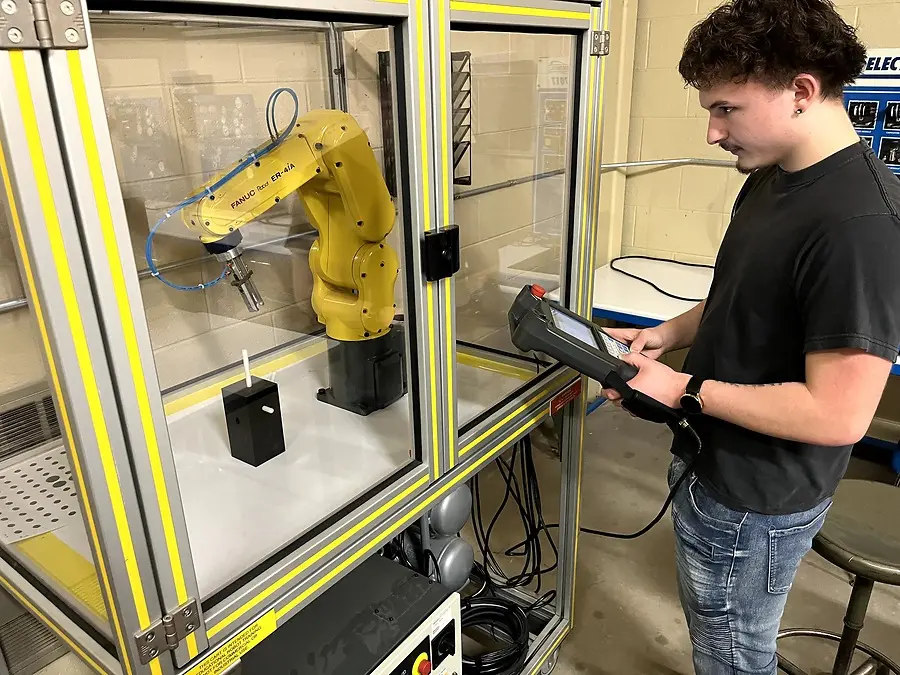
For a young person, the question "What are you going to do after graduation?" can feel overwhelming. It is difficult to choose a future when you have had little opportunity to experience what that future might look like.
The Purdue IN-MaC Pathways System helps make those possibilities real. Through partnerships among schools, employers, postsecondary institutions, and community organizations, students have opportunities to learn in workplaces, develop professional relationships, and connect their education to a next step.
The 2025-2026 year-end impact report reflects the reach of that work: 21 active academies and institutions across four states, more than 70 industry partners, and 447 students enrolled. Behind those numbers are opportunities for students to discover their strengths, explore careers, and begin building a future with greater direction.
A Process Built Around People and Possibilities
The Pathways System follows a deliberate process: Assess, Collaborate, Develop, Plan, and Evaluate.
It begins with understanding a community. What skills do employers need? What educational programs and resources already exist? Where are students encountering barriers? What could partners accomplish together?
These questions bring education and industry into the same conversation. Employers help identify the technical and professional skills needed in their workplaces. Educators contribute their understanding of students, instruction, and academic requirements. Community partners help connect resources and address obstacles to participation.
Together, they develop a pathway that connects classroom learning, practical experience, and opportunities beyond high school. Implementation planning turns those ideas into responsibilities, schedules, training experiences, and expectations. Evaluation helps partners understand what is working and where adjustments are needed.
That process matters because a partnership becomes valuable to students when it changes what they can actually experience.
Where Learning Becomes Real
The heart of implementation is the connection between school and work.
Through work-based learning, projects, and internships, students have opportunities to apply what they learn. Technical concepts gain meaning when students see how they are used in a company. Professional skills become part of everyday practice as students communicate with coworkers, respond to feedback, solve problems, and contribute to a team.
The goal is purposeful learning. Employers have a role in shaping training experiences and helping students understand both the work and the expectations that come with it.
For younger students, that requires thoughtful planning, age-appropriate activities, safety procedures, and supervision. It also requires employers to consider how students can begin learning within their companies before they are ready for full employment.
Those experiences can give students something difficult to create through classroom instruction alone: a clearer understanding of where their abilities might lead.
Outcomes That Open Doors
The 2025-2026 report documents 396 students completing their programs, an 89 percent completion rate.
It also reports 109 employment offers and 86 offers accepted, representing a 79 percent offer acceptance rate. These outcomes show a tangible connection between participation in the network and opportunities to enter the workforce.
Employment is one of several possible next steps. The report also identifies more than 303 program graduates, with destinations spanning college, employment, apprenticeships, military service, and industry training.
That range is important. A successful pathway gives students room to make informed choices. A student may pursue further education, begin an apprenticeship, accept employment, or continue technical training. The purpose is to help them understand their options and prepare for the direction they choose.
Completion and employment statistics tell an important part of the story. The personal meaning of those outcomes belongs to the students: what they discovered, who encouraged them, and how their plans changed through the experience.
Employers Share Responsibility for the Future Workforce
The Pathways System also creates an opportunity for employers to participate directly in developing future talent.
Their involvement extends beyond describing hiring needs. Through training, mentoring, and collaboration with educators, employers help students develop the skills and professional habits they value.
Students gain access to people who know the work. Employers gain opportunities to understand students' potential and contribute to their growth. Schools gain partners who can help keep learning connected to workplace expectations.
Sustaining those relationships takes time, strong instructors, reliable funding, and clear commitments. The process provides a structure, but people bring it to life.
The Work Ahead
The network's growth since the launch of the 4T Indiana Academy in 2020 shows how a shared process can support pathways in different communities. Each partnership brings its own needs, resources, and opportunities.
The next challenge is to sustain that work while continuing to improve the student experience. That means supporting instructors, strengthening employer participation, addressing barriers to access, and listening to students as they move through their pathways.
The measure of success is both practical and personal: students completing programs, gaining skills, receiving opportunities, and making informed decisions about what comes next.
When a young person can see a place for themselves in the working world, the future becomes easier to imagine. The IN-MaC Pathways System brings people together to help students take the next step toward it.
Lisa Deck is a workforce development strategist with 25+ years bridging industry and education at Purdue University's IN-MaC Center. She created the Pathways System model integrating academic, technical, and professional development. Her work expanded 22 academies across four states in manufacturing, healthcare, skilled trades, and emerging fields. Lisa holds degrees from Indiana University and Indiana Wesleyan, and…





