
Applied improv for Negotiators
Mastering Nonverbal Communication and Applied Improv Techniques for Negotiation Success

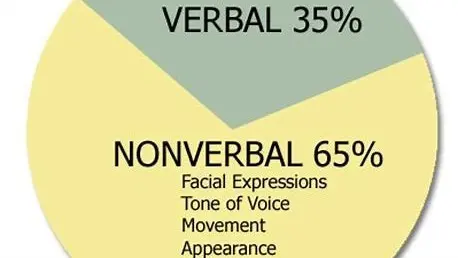
Nonverbal behavior, or body language, is a powerful tool that can be used to influence the outcome of a negotiation. When was the last time you missed reading a mood, attitude, or nonverbal message from a partner, team member, or boss? By understanding the different types of nonverbal communication and how they can be interpreted, you can gain more leverage and confidence in a negotiation.
A "power with" strategy in negotiation requires nonverbal skills, which include understanding the following:
- Facial expressions: Facial expressions can convey a wide range of emotions, including happiness, sadness, anger, and fear. Negotiators can use facial expressions to signal their own emotions and to read the emotions of their counterparts.
- Eye contact: Eye contact is a powerful way to establish rapport and build trust. Negotiators who make eye contact with their counterparts are often seen as more credible and trustworthy, depending on cultural preferences.
- Body language: Body language can communicate a variety of messages, such as confidence, power, or submissiveness. Negotiators who use body language effectively can create a favorable impression for their fellow negotiators and increase the chances of negotiation satisfaction.
- Gestures: Gestures can be used to emphasize points, illustrate ideas, or simply show interest. Negotiators who use gestures effectively can make their offers more engaging and persuasive.
- Aspects of speech: Negotiators can observe the tone of voice, volume, and rate of speech of a counterpart. Negotiators can convey a sense of urgency, build rapport, or create more likable impressions on others, which encourages shared problem-solving.
Applied Improv Increases Nonverbal Skills for Negotiators
Applied Improv practices help increase powerful nonverbal communication:
- Be aware of your own body language: The first step to using nonverbal communication effectively is to be aware of your own body language. Applied Improv game rules prepare negotiators to commit to acceptance, encouragement, respect, and appreciation for others. This has an impact on how you are sitting, standing, and gesturing. With appreciation as a ground rule, negotiators' eye contact and body language convey respect and acceptance.
- Pay attention to the other party's body language: Applied Improv game rules encourage commitments to making your partners look good, listening, and co-creating solutions. These game rules help us to be aware of our own body language and notice our counterpart's body language. This will give us clues about another's emotions, their level of interest, and their willingness to negotiate.
- Be aware of cultural differences: It is important to be aware of cultural differences when using nonverbal communication. In some cultures, direct eye contact is considered rude, while in other cultures, it is considered a sign of respect. By addressing the Applied Improv game rules before negotiation begins, negotiators can create trust and rapport by discussing those differences and negotiating a shared culture of norms in a negotiation.
Empathy skills are increased through the Applied Improv practices of non-judgment, experimentation, and encouragement of others.
Applied Improv and Thin-Slicing
Thin-slicing is a term used to describe the ability to find patterns only on "thin slices," or narrow windows, of experience. The term refers to the process of making very quick inferences about the attitude, characteristics, or details of an individual or situation with minimal amounts of information. Research has found that brief judgments based on thin-slicing are similar to those judgments based on much more information.
Judgments based on thin-slicing can be as accurate, or even more so, than judgments based on much more information. However, the Applied Improv game rules of appreciation, acceptance, and respect can help to regulate negative emotions and encourage more curiosity about the quick judgments that are often made.
Microexpressions occur in everyone, often without their knowledge. There is no way to prevent them from occurring without conscious preparation to be appreciative and nonjudgmental. Through Applied Improv practices, negotiators can become more versed in reading faces, learning to recognize when someone is canceling emotions or unaware of even what they are actually saying.
Recommended Practice:
THREE ICONS
This game is a nonverbal way to connect players in a common goal. The "problem" is a simple one, but there is really no strategy or cognitive process that will help realize the goal. It requires simply trying. The willingness to keep trying until the goal is achieved taps into a different pathway of connection between people, an intuitive, unspoken connection that develops when we play together.
The practice of nonverbal body language can lead to a "sense" of being connected to others that is cultivated by playing games and improvisation. It is also the mental and social process that drives creative problem-solving.
To Begin:
- Form a group(s) of 3.
- Decide together and agree on 3 iconic figures who are inspirational, e.g., Albert Einstein, Maya Angelou, Bruce Springsteen. Then, number them 1, 2, or 3.
- Without talking, the group of 3 decides on a strong, identifiable pose that represents each of these iconic individuals.
- Next, in the style of "rock, paper, scissors" (taking turns), someone motions to the group to "Pose." Each player assumes one of the icons' postures.
- Keep "posing" until everyone in the group represents each icon at the same moment-without speaking!
- Do not end the exercise or speak until all three icons are "posed" at the same time.
Debrief:
- Did you practice "posing" without overthinking the icons or the poses? (Did you jump right into the physical experience that connects the players in a shared goal?)
- Did you experience the "high" of a "win" when the goal was achieved?
- Did you observe what happened nonverbally over the course of a few or more attempts to achieve the goal? What did you notice?
- How did it feel, and did you experience a shift in your thinking?
Join the Social Intelligence practice community to practice with us! https://community.competency.center/landing/plans/1531881

I have been in my field since 1983, bringing over 40 years of experience in negotiation, conflict resolution, and cross-cultural communication. I served as a faculty member at Thunderbird School of Global Management from 1992 to 2014-2015, where I was a professor trained with a PhD in political science and international relations. I taught negotiation, cross-cultural communication, political economy, and mediation…





