Before Everything Else, We Are Human
Reclaiming our shared humanity in a divided world through dignity, compassion, and connection.

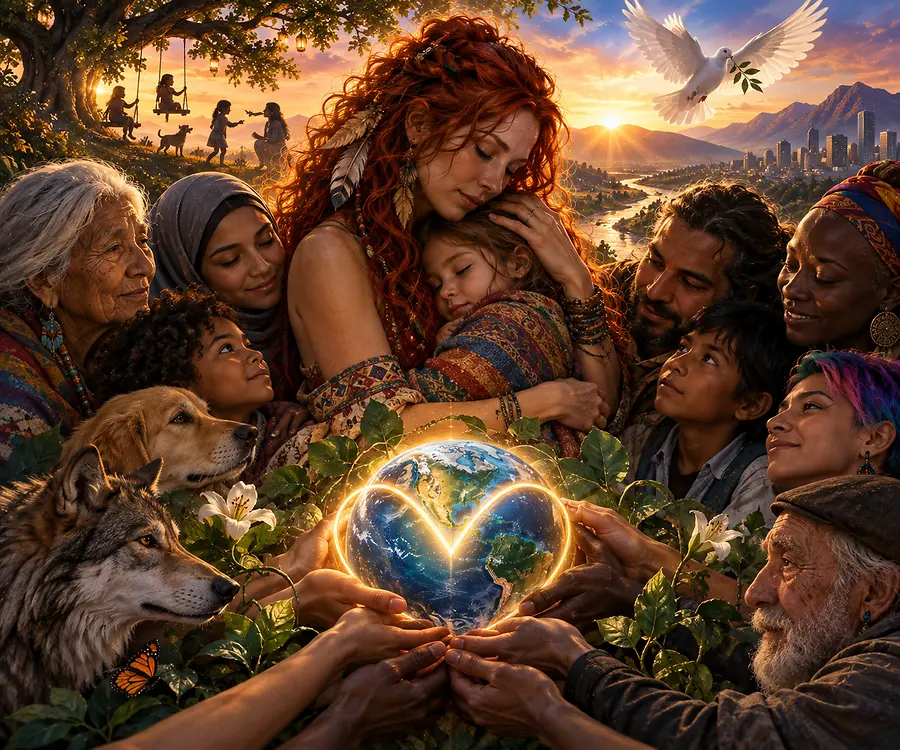
There is something I have been thinking about for a long time.
Perhaps we have made being human far more complicated than it needs to be.
Before our politics. Before our religions. Before our professions. Before our bank accounts. Before our education. Before our gender, race, nationality, neighborhood, social status, or the countless other categories we use to understand one another, there is a human being.
A person who needs food. Water. Shelter. Safety. Connection.
Someone who wants to matter. Someone who wants to be heard. Someone who wants the people they love to be safe.
Someone who will experience joy and grief, fear and hope, beginnings and endings. Somehow, amid all our disagreements about what kind of world we should create, I wonder whether we have forgotten the simplest place from which we could begin.
Human dignity.
Dignity Should Not Have to Be Earned
We often talk about dignity as though it is something people acquire through good behavior. Be productive. Work hard. Make good choices. Become successful. Contribute. Then perhaps you deserve our respect. But I have come to believe dignity works in the opposite direction.
Dignity belongs to us because we are human.
It does not disappear because someone is poor. Homeless. Disabled. Struggling. Old. Young. Different from us. It doesn't disappear because someone made mistakes. It doesn't disappear because we don't understand someone's life. And it certainly shouldn't disappear because another human being believes differently than we do.
We can hold people accountable while preserving their humanity. We can establish boundaries without humiliation. We can disagree without dehumanizing. We can protect ourselves without deciding that another person's life has no value. Those things are not contradictions. They are what dignity requires.
What Happened to Kindness?
Kindness has somehow acquired a reputation for being soft. Naïve. Sentimental. Something lovely when circumstances allow for it. But kindness can require tremendous courage.
It is easy to be kind to people who think like us. Who look like us. Who behave in ways we understand. Who belong to our circles. The real test comes when they don't.
Can I remain compassionate toward someone whose experience I cannot understand? Can I listen without immediately preparing my rebuttal? Can I encounter someone's suffering without first deciding whether they deserve my concern? Can I disagree with someone without needing to destroy them?
Can I say:
"I don't agree with you, but I still recognize your humanity"?
That isn't weakness. In an increasingly divided world, it may be one of the most courageous things we can practice.
Being Seen Changes People
Throughout my work with trauma, education, community, and healing, one idea keeps returning:
People need to be seen.
Not evaluated. Not categorized. Not reduced to a diagnosis, statistic, demographic, political identity, income level, or problem that needs solving. Seen. There is something extraordinary about sitting across from another person and knowing that, for this moment, they aren't trying to correct you. They are listening. Sometimes people don't need us to have an answer.
They need someone to say:
"I hear you."
That doesn't mean agreement. Listening and agreeing are not the same thing. Understanding and endorsing are not the same thing. Compassion and permission are not the same thing.
We can listen deeply while maintaining our own values, boundaries, and beliefs. But we cannot understand one another if no one is willing to listen.
Somewhere Along the Way, People Became Categories
We have become extraordinarily good at labeling one another.
- Left.
- Right.
- Rich.
- Poor.
- Religious.
- Nonreligious.
- Educated.
- Uneducated.
- Urban.
- Rural.
- Citizen.
- Immigrant.
- Insider.
- Outsider.
- Us.
- Them.
Categories can help us understand patterns. But categories become dangerous when they replace people.
Because eventually, we stop talking about human beings and begin talking about those people. And once someone becomes those people, it becomes much easier to dismiss their suffering.
Their hunger becomes an economic debate. Their homelessness becomes a statistic. Their trauma becomes an inconvenience. Their fear becomes something to mock. Their children become collateral damage in arguments they didn't create.
That is where I think we need to become very careful. Because history has repeatedly shown us what can happen when societies become comfortable deciding that some human beings matter less than others.
Compassion Does Not Require Sameness
Perhaps one of our greatest misunderstandings is believing that unity requires agreement. It doesn't. We are never going to agree about everything. Nor should we.
Different experiences produce different perspectives. Different cultures bring different wisdom. Different generations see the world differently. Different disciplines ask different questions. Difference itself is not the problem.
Dehumanization is.
We can debate ideas fiercely while refusing to strip dignity from the people holding them. We can challenge systems. Question leaders. Demand accountability. Protect vulnerable people. Stand against injustice. And still refuse hatred as our primary language.
Compassion doesn't require silence. Sometimes compassion requires us to speak. The question is whether we speak because we want to build something better—or simply because we want someone else to hurt.
Imagine Starting With a Different Question
When someone is homeless, instead of beginning with:
What did they do wrong?
What if we asked:
What happened?
When someone is struggling financially:
Why didn't they prepare better?
could become:
What barriers have they been navigating?
When someone is frightened:
Why are they overreacting?
could become:
What are they experiencing that I cannot see?
When a child behaves differently:
What's wrong with this child?
could become:
What is this child trying to communicate?
When someone disagrees with us:
How can anyone think like that?
could become:
What experiences led them to see the world this way?
Questions don't excuse harmful behavior. They give us information. And information gives us more possibilities than judgment alone ever will.
It Takes a Community to Sustain Its People
We often celebrate independence. I understand why. Being able to care for ourselves matters. But the mythology of complete self-sufficiency ignores almost everything we know about human civilization. None of us truly does this alone.
Someone grew our food. Someone taught us. Someone built the road. Someone cared for us when we were small. Someone created the medicine. Someone answered the telephone. Someone gave us an opportunity. Someone believed in us. Someone loved us when we weren't particularly easy to love.
We are interconnected whether we acknowledge it or not. I have often returned to this thought:
It takes a village to raise a child, but it takes a community to sustain its people.
What would our communities look like if we actually believed that? Not communities where nobody has personal responsibility. Communities where responsibility runs in both directions.
I am responsible for my life.
And:
I have some responsibility for the world my choices create for yours.
Both can be true.
We Don't Need Another Savior
I don't believe humanity needs one extraordinary person to arrive and fix everything. I think we need millions of ordinary people making slightly more humane choices.
A teacher who sees the frightened child behind the behavior. A business owner who remembers that an employee has a life beyond the workplace. A neighbor who brings dinner. A stranger who intervenes when someone is being humiliated. A leader who listens before deciding. A community that asks what people need rather than assuming it knows. A person who chooses not to repeat the cruel thing everyone else is sharing.
Someone who says:
"Come sit with us."
These actions rarely make headlines. But perhaps civilizations are shaped as much by small acts of humanity as they are by grand declarations.
What Kind of Ancestors Will We Become?
I find myself returning to this question more and more. One day, we will be someone's ancestors. Future generations may look back at the choices we made.
They will inherit our institutions. Our environment. Our technologies. Our conflicts. Our solutions. Our stories. And our unfinished work.
What will they say about us? Did we have extraordinary tools but forget compassion? Did we become more connected technologically while becoming less connected to one another? Did we become so determined to prove who was right that we forgot to ask who was hurting?
Or will they say:
That was the generation that remembered.
They remembered that clean water matters. That food matters. That shelter matters. That safety matters. That children matter. That elders matter. That the Earth matters. That differences don't erase belonging. That people deserve to be heard. That nobody should have to prove their humanity before receiving dignity.
Before Everything Else
I have spent years thinking about equality, justice, education, trauma, healing, and community. The more I learn, the more complicated these subjects become. And yet, underneath all that complexity, I keep finding something remarkably simple.
Before everything else—
we are human.
Maybe that is where we begin.
See the person. Listen. Stay curious. Practice kindness. Protect dignity. Choose compassion when compassion is possible. Speak when silence permits harm. Build communities where people belong.
And when we inevitably disagree, remember that the person standing across from us carries an entire life we cannot see.
A childhood. People they love. Things they regret. Things they fear. Dreams they haven't told anyone. Wounds. Hope. Just like us.
Perhaps changing the world doesn't always begin with changing someone else's mind. Sometimes it begins with refusing to forget their humanity.
And perhaps that is where justice begins too.


