Before You Sign: Understanding SBA Collateral Requirements for Business Acquisitions
Collateral requirements are flexible for SBA loans—focus on your business strength and repayment ability rather than assuming you need substantial personal assets.

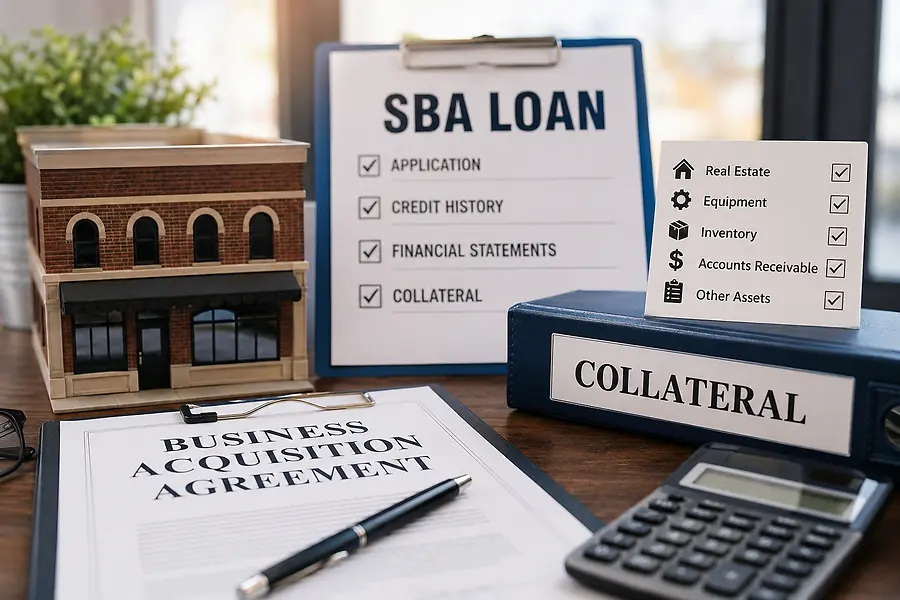
Understanding SBA Loan Collateral Requirements When Buying a Business
Purchasing an existing business is one of the fastest ways to become an entrepreneur, but securing financing often raises an important question:
What collateral will I need to qualify for an SBA loan?
Many buyers assume they must own significant real estate or have substantial personal assets before an SBA lender will approve their application. In reality, SBA collateral requirements are more nuanced. Understanding how lenders evaluate collateral can help you prepare a stronger loan application and avoid surprises during underwriting.
What Is Collateral?
Collateral is any asset pledged to secure a loan. If the borrower defaults, the lender may have the legal right to seize and sell the collateral to recover a portion of the outstanding balance.
Common forms of collateral include:
- Commercial real estate
- Residential real estate
- Equipment and machinery
- Business furniture and fixtures
- Inventory
- Accounts receivable
- Vehicles
- Other valuable business assets
Collateral reduces the lender's financial risk, making it easier to approve qualified borrowers.
Does Every SBA Loan Require Collateral?
Not necessarily.
The SBA's flagship 7(a) Loan Program allows participating lenders to make credit decisions based on both the strength of the business and the borrower's overall financial profile. While collateral is often required for larger loans, the SBA generally does not decline an otherwise sound loan solely because the available collateral does not fully cover the loan amount.
Instead, lenders are expected to secure all available collateral to the maximum extent practical while evaluating the borrower's ability to repay the loan.
Collateral Requirements by Loan Size
Although each lender has its own underwriting standards, SBA guidance generally follows these principles:
Loans of $50,000 or Less
Many SBA 7(a) loans at this level do not require collateral. Approval is based primarily on the borrower's creditworthiness, repayment ability, and the financial strength of the business.
Loans Between $50,001 and $350,000
For these loans, lenders typically follow the same collateral policies they use for comparable conventional commercial loans. Assets purchased with the loan proceeds often serve as collateral.
Loans Above $350,000
For larger SBA loans, lenders generally seek to collateralize the loan as much as possible using available business assets. If business assets are insufficient, lenders may also request liens on personal real estate owned by the guarantors.
What Assets Can Be Used as Collateral?
When financing a business acquisition, lenders typically review both the business being purchased and the buyer's personal financial position.
Business assets may include:
- Equipment
- Inventory
- Furniture
- Fixtures
- Accounts receivable
- Commercial real estate
Personal assets may include:
- Primary residence
- Investment properties
- Vacant land
- Savings or investment accounts (when applicable)
Not every asset will be required, but lenders generally evaluate all available collateral during the underwriting process.
Personal Guarantees Are Usually Required
One area that often surprises first-time buyers is the personal guarantee.
For most SBA 7(a) loans, every individual who owns 20% or more of the borrowing business is generally required to sign a personal guarantee. This means the owners personally agree to repay the loan if the business cannot.
A personal guarantee is separate from collateral and may be required even when the business has sufficient assets to secure the loan.
Collateral Isn't the Only Factor
While collateral plays an important role, lenders evaluate many other factors before approving an SBA loan, including:
- Personal credit history
- Business cash flow
- Debt Service Coverage Ratio (DSCR)
- Industry experience
- Management experience
- Financial statements
- Business tax returns
- Purchase price and valuation
- Seller financing structure
- Down payment or equity injection
Strong cash flow, experienced management, and a well-supported business acquisition often carry more weight than substantial collateral alone.
How Buyers Can Strengthen Their SBA Loan Application
Before applying, consider taking these steps:
- Organize three years of personal financial information.
- Prepare current personal financial statements.
- Gather business tax returns and profit-and-loss statements.
- Understand the value of any real estate you own.
- Review your credit report for accuracy.
- Be prepared to explain your management experience.
- Work with an experienced SBA lender early in the acquisition process.
Being organized demonstrates professionalism and can significantly streamline the underwriting process.
Final Thoughts
An SBA loan can be one of the most attractive financing options available for purchasing an existing business. Although collateral remains an important part of the underwriting process, lenders evaluate the entire financial picture—not just the value of pledged assets.
The strongest loan applications combine healthy cash flow, experienced ownership, sound financial records, and realistic acquisition terms. By understanding collateral requirements before submitting an offer, buyers can negotiate with greater confidence and move through the financing process more efficiently.
Disclaimer: This article is intended for educational purposes only and should not be considered legal, financial, or tax advice. SBA loan policies and lender underwriting standards may change over time. Always consult an SBA-approved lender or qualified financial or legal professional for guidance specific to your transaction.


