
An apology means being honest about the hurt, taking accountability, and changing the behavior. Real healing requires truth, humility, and consistency.
Crystal Lockett · In Her Own Words
Her Story
About Crystal
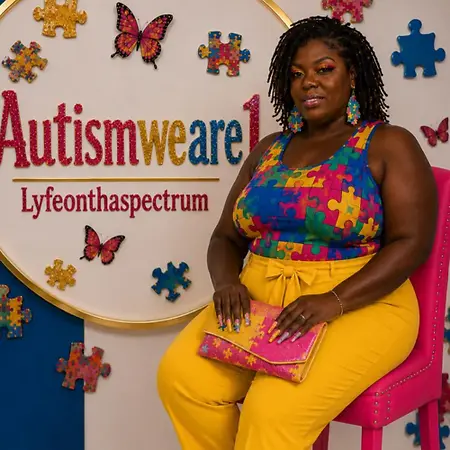
Crystal Lockett is a nonprofit founder, neurodivergent family advocate, and sales and customer experience professional with more than a decade of experience supporting individuals and families in complex and high-stress environments. A former Texas-certified Community Healthcare Worker, she has assisted clients with Medicaid and Medicare applications, needs assessments, resource referrals, and healthcare-system navigation. Her approach incorporates motivational interviewing and client-centered advocacy, helping individuals better understand available services and advocate for their needs. Drawing from her experiences as a parent and advocate, Crystal is developing Autism We Are 1, a Wisconsin-registered nonprofit focused on supporting parents and families of autistic and neurodivergent children. She is also the founder of Lyfe on the Spectrum as an educational platform and resource community covering autism and ADHD, special education, IEPs and 504 Plans, behavior support, parenting, and service navigation. Her work combines lived experience, community outreach, education, and program development to create practical resources and peer-support opportunities for families. Alongside her advocacy work, Crystal is pursuing Foundations of Teaching studies at Gateway Technical College and continues to build her professional experience in sales and customer service. She is also developing her writing career through Unstructured Reconstructed, a memoir exploring hardship, motherhood, systems navigation, and resilience, with an anticipated 2026 release. Across her professional, educational, and entrepreneurial pursuits, Crystal focuses on advocacy, education, community connection, and creating supportive environments for neurodivergent individuals and their families.
Her Interview
Ten minutes with Crystal
01What do you attribute your success to?
I attribute my success to faith, perseverance, and a strong sense of purpose. Raising two neurodivergent children has given me firsthand insight into the challenges families face when navigating education, healthcare, and support services. Those experiences strengthened my commitment to advocacy and inspired my work with Autism We Are 1 and Life on the Spectrum. I continue to invest in my education and professional growth while pursuing training in education and phlebotomy. I have learned to grow through setbacks, stay open to learning, and keep showing up for my family and community. My progress comes from resilience, consistency, and the belief that lived experience can become meaningful support for others.
02What’s the best career advice you’ve ever received?
The best career advice I’ve received is to stay consistent, remain open to learning, and keep my purpose in view. I carry that advice into my education, my work , and my advocacy for families navigating disability services. I’ve learned that progress comes from showing up, adapting, and taking the next step—even when the whole path isn’t clear.
03What advice would you give to young women entering your industry?
My advice to young women entering education, behavioral health, or disability advocacy is to build both compassion and skill. Listen closely to individuals and families, respect different ways of communicating, and stay open to learning. Your lived experience can be a strength, especially when paired with professional training, healthy boundaries, and a willingness to collaborate. You don’t have to know everything on day one. Be dependable, ask thoughtful questions, and keep the people you serve at the center of your work.
04What are the biggest challenges or opportunities in your field right now?
In disability advocacy and family support, one of the biggest challenges is helping families access timely, consistent services while navigating complex education and healthcare systems. Many parents are left to coordinate support on their own, often without clear information or culturally responsive guidance. There is also a strong opportunity to improve collaboration among families, schools, providers, and community organizations. By listening to families and including people with lived experience in decision-making, we can make support more practical, respectful, and accessible. My work is focused on helping families feel informed, heard, and better equipped to advocate for their children.
05What values are most important to you in your work and personal life?
Family is the most important value in both my work and personal life. They inspire me to stay motivated, responsible, and committed to doing my best in everything I pursue.
Join Influential Women and start making an impact. Register now.