Beyond Resilience: Why Women's Bodies Were Designed for Recovery
Understanding the Female Body's Natural Cycles of Effort and Restoration

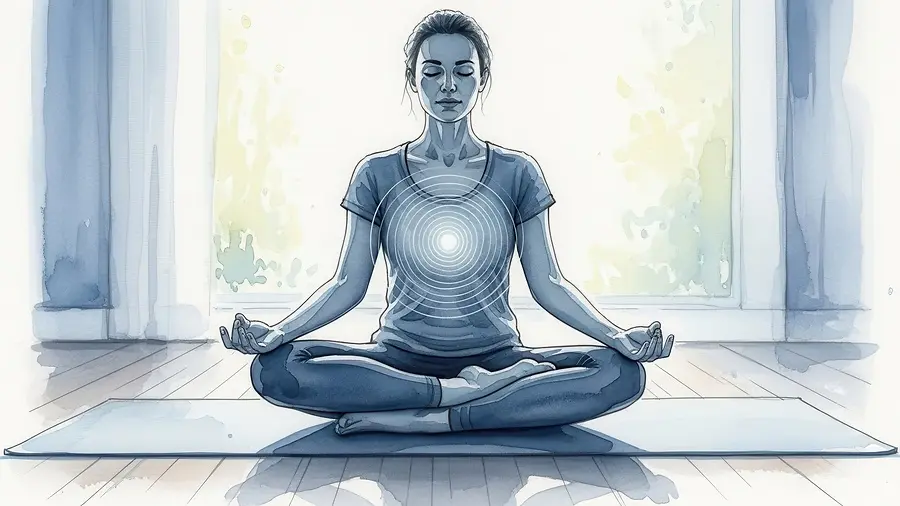
Beyond Resilience: Why Women's Bodies Were Designed for Recovery
By Toni Curtis, CD(DONA), LCCE, CLC, CVD(TVL), CHW, GPBA, NT, SpBAP
Women are often praised for their resilience.
We celebrate the executive who leads a company while caring for her family. We admire the mother who continues showing up despite exhaustion. We applaud women who overcome adversity, manage competing responsibilities, and carry extraordinary emotional and physical loads without complaint.
Resilience is valuable.
But I believe we have become so focused on a woman's ability to endure that we have forgotten something equally important:
A woman's body was never designed to live in a constant state of endurance.
It was designed for cycles.
- Cycles of challenge and recovery.
- Cycles of effort and restoration.
- Cycles of giving and receiving.
Modern life often disrupts those rhythms. Many women spend years balancing professional demands, caregiving responsibilities, financial pressures, relationship challenges, and the invisible labor that keeps families, workplaces, and communities functioning. Over time, the body adapts to those demands.
At first, that adaptation can look like strength.
Eventually, it can look like depletion.
The Body as an Integrated System
As a Nutritional Therapist, Doula, Yoga Instructor, Bodyworker, Craniosacral Coach, and Community Health Worker, I have worked with women across every stage of life. Whether supporting fertility, pregnancy, postpartum recovery, chronic health conditions, or emotional wellbeing, I have observed a recurring theme: many women have become disconnected from their body's natural capacity for restoration.
The consequences extend far beyond fatigue.
Sleep becomes less restorative. Digestion changes. Hormones become less predictable. Recovery takes longer. Emotional resilience begins to decline. What many women interpret as personal failure or lack of discipline is often a physiological response to years of accumulated stress and insufficient recovery.
One of the greatest misunderstandings in women's health is the belief that the body functions as a collection of separate systems. We discuss mental health, reproductive health, digestive health, hormone health, and physical health as though they exist independently of one another.
The body does not experience them that way.
A woman's body functions as an integrated system in which the brain, nervous system, endocrine system, digestive system, immune system, and reproductive system are in constant communication. The nervous system serves as the conductor of that conversation, continuously interpreting signals from both the internal and external environment.
This matters because the nervous system influences far more than mood. It influences digestion, hormone production, sleep, fertility, recovery, immune function, and pain perception. Every system in the body depends upon its ability to move between activation and restoration.
Chronic Stress and the Body's Response
When women experience chronic stress, the body adapts by prioritizing survival. This response is remarkably intelligent and necessary in moments of danger. However, the body was never intended to remain in a prolonged state of protection.
Over time, chronic activation affects nearly every aspect of health. Stress hormones influence nutrient absorption, inflammation, immune function, reproductive health, cardiovascular health, and emotional wellbeing. The body begins directing resources toward immediate survival rather than long-term restoration.
What makes this especially significant for women is the extraordinary interconnectedness of the female body.
The nervous system does not stop at the brain. It extends throughout the entire body, including the reproductive organs and pelvic floor. As a bodyworker and craniosacral coach, I often observe patterns that illustrate this connection. The jaw, diaphragm, abdomen, hips, and pelvic floor are deeply related. A woman who struggles to take a full breath frequently struggles to fully release tension elsewhere in the body. Chronic stress often appears not only in thoughts and emotions but also in posture, movement, breathing patterns, digestion, and physical tension.
The body often tells the story before words do.
The Pelvic Floor Connection
Perhaps nowhere is this connection more evident than in the pelvic floor.
Most people understand that stress can cause tension in the shoulders, neck, or jaw. Fewer realize that the pelvic floor often responds in the same way. When women experience chronic stress, anxiety, trauma, grief, or prolonged periods of responsibility, the body shifts into protection. Breathing patterns become shallower. Muscles tighten. The nervous system becomes increasingly vigilant.
The pelvic floor is not immune to this response.
Like the jaw, shoulders, and diaphragm, it can unconsciously hold tension. Over time, that tension may contribute to discomfort, urgency, pain, dysfunction, and difficulty fully relaxing. Yet the relationship works in both directions. Pelvic floor symptoms themselves often create additional emotional distress, affecting confidence, relationships, intimacy, body image, and overall quality of life.
The result is often a feedback loop in which emotional stress contributes to physical tension, and physical symptoms create additional stress.
The body does not separate emotional experiences from physical experiences as neatly as healthcare systems often do.
For many women, healing begins when both are acknowledged.
Stress, Pain, and the Nervous System
The relationship between stress and pain is equally complex. Emerging research suggests that women may experience a different relationship between nervous system regulation and pain modulation than men. While higher parasympathetic activity is often associated with lower pain perception in men, women's experiences appear to be influenced by a more dynamic interaction between hormones, nervous system activity, and reproductive physiology.
This reminds us of something important: women's health cannot be reduced to a single hormone, a single system, or a single intervention.
- The nervous system influences hormones.
- Hormones influence pain perception.
- Pain influences stress responses.
- Stress influences digestion, immunity, fertility, sleep, and recovery.
The body is engaged in a continuous conversation with itself.
The Tend-and-Befriend Response
One of the most fascinating developments in women's health research is the growing recognition that female physiology does not always respond to stress in the same way male physiology does.
For decades, discussions about stress focused primarily on the fight-or-flight response. While that response remains essential for survival, it does not fully explain how many women regulate stress.
Researchers have proposed what is often called the "tend-and-befriend" response. Rather than relying solely on confrontation or escape, women often regulate stress through connection, caregiving, community, and relationship-building. This response is closely associated with oxytocin, a hormone that supports bonding, trust, attachment, childbirth, breastfeeding, and social connection.
This distinction is important because it suggests that connection is not merely a social preference.
It may be a biological strategy.
The female body was designed to create and sustain relationships. Pregnancy depends upon it. Birth depends upon it. Breastfeeding depends upon it. Child development depends upon it. Communities have depended upon it for generations.
Yet modern women are increasingly asked to function in environments that reward independence while often minimizing connection. We celebrate self-sufficiency, productivity, and endurance while overlooking the biological importance of support, belonging, and recovery.
The consequences may extend far beyond emotional wellbeing.
If women are biologically wired to regulate through connection, then isolation, chronic caregiving without support, loneliness, and the absence of meaningful community may have physiological consequences we are only beginning to understand.
Recovery as Biological Necessity
This is one reason practices such as yoga, breathwork, somatic healing, bodywork, craniosacral therapy, Bio-Touch, and traditional healing approaches can be so valuable. Their purpose extends far beyond relaxation. They help create conditions in which the body can release patterns of protection and return to a state where healing becomes possible.
We often think of rest as passive.
Biologically, it is one of the most active states the body can enter.
During periods of restoration, the body performs some of its most important work. Tissues repair. Hormones regulate. Digestion improves. Memories are processed. The immune system functions more effectively. Recovery is not the absence of productivity. Recovery is where the body's most important maintenance occurs.
For too long, we have measured women's strength by their capacity to carry more.
- More responsibility.
- More stress.
- More sacrifice.
- More expectations.
Perhaps it is time to measure health differently.
Perhaps true wellbeing is not defined by how much a woman can endure but by how effectively she can recover.
This shift requires us to rethink more than individual wellness practices. It requires us to examine the environments women live in, the support systems available to them, the expectations placed upon them, and the resources that allow recovery to occur.
- Nutrition matters.
- Sleep matters.
- Movement matters.
- Touch matters.
- Community matters.
- Connection matters.
Not because they are luxuries.
Because they are biological necessities.
Human beings were designed to move between effort and restoration.
Women were designed to move between creation and recovery.
When recovery disappears, depletion takes its place.
Resilience Was Never Meant to Replace Recovery
The future of women's health may not depend on teaching women how to become more resilient.
It may depend on helping them remember that resilience was never meant to replace recovery.
Women are often told to become stronger - stronger leaders, stronger mothers, stronger partners, stronger caregivers. Yet the female body was never designed to prove its strength through endless endurance.
It was designed to create, nurture, adapt, connect, and recover.
Perhaps the future of women's health is not teaching women how to withstand more stress.
Perhaps it is creating a world where women no longer have to.
Because the most remarkable thing about the female body is not how much it can survive.
It is how much it can heal when given the opportunity.
Toni Curtis, CD(DONA), LCCE, CLC, CVD(TVL), CHW, GPBA, NT, SpBAP
Founder, BirthWise Doula Services | Creator of The Lifespan Birth Method™ | United Nations Representative, Africana Women Working Group (AWWG) ECOSOC | Member, Forttuna Global Council
© 2026 Toni Curtis. All Rights Reserved.


