Beyond the Resume: The Value of Flexibility in a Woman's Professional Journey
What if we looked beyond professional achievements and recognized the life, responsibilities, and determination behind every woman's career?


Beyond the Resume: The Value of Flexibility in a Woman's Professional Journey
What if we looked beyond professional achievements and recognized the life, responsibilities, and determination behind every woman's career?
The Story Behind the Resume
A resume tells us a great deal about a professional: experience, education, achievements, promotions, and skills. But it rarely tells the whole story.
Behind every career is a personal journey shaped by decisions, opportunities, responsibilities, and sometimes difficult trade-offs. Many women build their careers while also being mothers, partners, daughters, caregivers, or the people their families depend on.
These responsibilities do not diminish their ambition or abilities, but they can influence their career paths, opportunities, and the way success unfolds.
Throughout my professional career, I have seen how much discipline, dedication, and persistence it takes to build a career. I have also come to appreciate that professional achievements are only one part of a person's life. Sometimes, the effort required to manage both worlds is far greater than anything a resume can show.
Consider two equally qualified professionals. One may have followed a relatively uninterrupted career path, while the other may have experienced pauses, changes, or different priorities along the way. Their resumes may look different, but that does not necessarily reflect their capabilities, commitment, or potential.
A resume captures milestones. It does not always capture the circumstances behind them.
Not Less Commitment, Just More Understanding
This is not about lowering expectations or creating different standards. Women want the same opportunities to contribute, grow, lead, and be recognized for their work.
Professional accountability and high standards are essential. But perhaps it is worth asking whether commitment should always be measured through traditional expectations, regardless of the responsibilities people carry outside the workplace.
For many women, family responsibilities do not end when the workday begins. They are an ongoing part of life. Having some flexibility can make it possible to meet professional expectations while also being present for the people who depend on them.
The goal is not to do less, but to create conditions in which people can continue giving their best without feeling that professional success must come at the expense of everything else that matters.
Are We Measuring Performance the Right Way?
In many workplaces, performance is still closely associated with fixed schedules, constant availability, and physical presence.
Of course, some roles require employees to be on-site or available at specific times. Flexibility cannot look the same in every position or industry.
However, for roles where work is measured by deliverables and results, it may be worth reconsidering whether time spent at a desk is always the best indicator of productivity.
Flexibility requires communication, organization, accountability, and trust. It does not mean the absence of expectations. In fact, when managed well, it can benefit both employees and organizations by allowing people to work effectively while managing their broader responsibilities.
Perhaps the question should not simply be how many hours someone is visible, but what they contribute and the quality of the work they deliver.
The Pressure Behind Having It All Together
Many women feel the pressure to excel professionally while also being present for their families and meeting the expectations they place on themselves.
The reality is that no one can do everything perfectly, all the time. Life has different seasons, and priorities sometimes shift. There may be moments when a career requires greater attention and others when family responsibilities demand more time.
That does not mean ambition has disappeared or that professional goals have become less important.
We should be able to recognize that professional achievement and personal fulfillment do not have to compete. A meaningful career should have room for the different dimensions of a person's life.
The Human Side of Leadership
Leadership is not only about policies, procedures, and performance indicators. It is also about understanding people and recognizing the human relationships behind an organization.
Empathy does not mean lowering expectations or making exceptions without reason. It means taking the time to understand that employees have lives and responsibilities beyond their professional roles.
Research supports the importance of this human connection. A global study by Harvard Business Publishing Corporate Learning found that 77% of senior leaders considered empathy important, yet only 47% said their organizations valued it (Harvard Business Publishing Corporate Learning, 2023).
Furthermore, Gallup's extensive 2024 meta-analysis, which examined 736 studies across 347 organizations and more than 183,000 work units, found a strong relationship between employee engagement and business performance. Teams with the highest engagement levels showed 23% higher profitability and 18% higher sales productivity compared with teams with the lowest engagement levels (Harter et al., 2024).
The message for leaders is simple: caring about people and expecting great work are not competing priorities. They can reinforce one another.
When people feel valued and supported, they have greater reason to contribute, grow, and remain committed. Sometimes, a conversation, a little understanding, or a willingness to be flexible can make a greater difference than we realize.
The Meaning of True Influence
A person's professional value cannot always be understood through a resume, job title, or list of achievements.
A woman's career may not follow a straight line. It may include progress, setbacks, pauses, and moments when she has to begin again. But how much growth, resilience, perspective, and wisdom can come from those experiences?
Challenges teach us lessons, shape the way we approach our work, and often strengthen us as professionals. Some of the most meaningful experiences in a career may not appear as promotions or new titles, but in what we learn along the way.
And perhaps this is where the idea of influence becomes even more meaningful.
Our influence is not limited to professional accomplishments or leadership positions. It is also reflected in the lives we touch, the values we pass on, the people we support, and the example we set.
How we lead, encourage, care for others, and treat the people around us can have an impact that extends far beyond the workplace.
A successful society is not built on professional achievements alone. It also depends on empathy, understanding, human connection, and the recognition of contributions that cannot always be measured on a resume.
Perhaps looking beyond the resume means recognizing the whole person: the professional, the individual, and everything in between.
Because our influence is not defined only by what we achieve, but also by the difference we make in the lives of others.
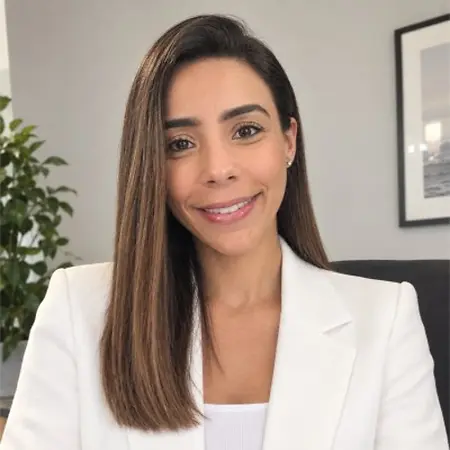
Marian Mieres is a senior accounting professional with over 15 years of experience in corporate accounting, financial reporting, and international business environments. Her career includes experience with multinational companies and Big Four public accounting, where she developed a strong foundation in financial operations, month-end and year-end closing, reconciliations, and process improvement. Known for her…