Can Purpose Increase Revenue? Yes, If It Pulls Its Weight
How Purpose Becomes a Revenue Driver When It Stops Being Decorative Corporate Wallpaper

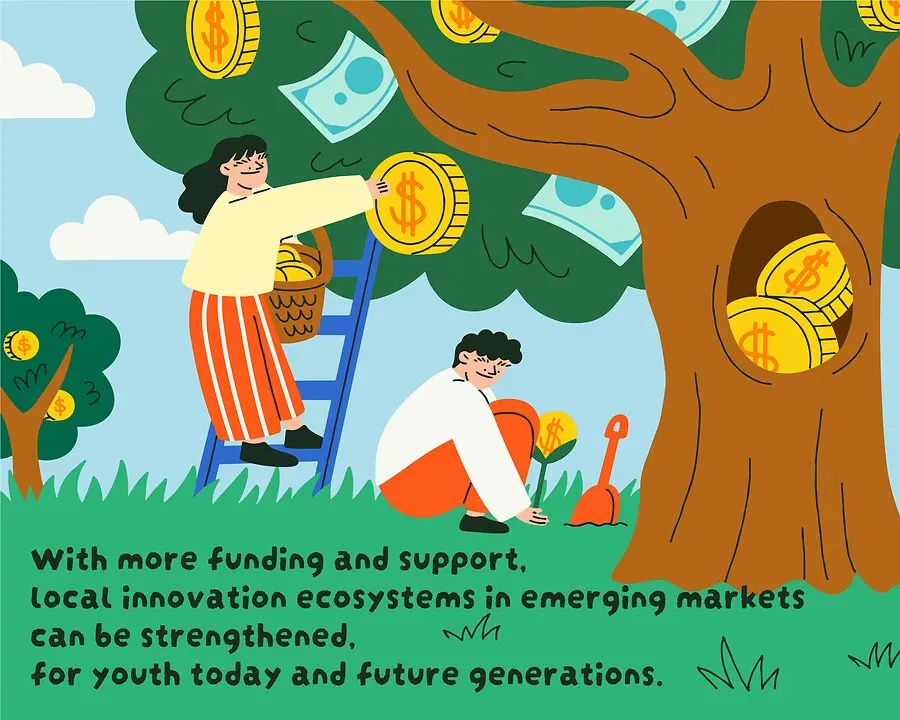
A purpose statement on a lobby wall does not pay the bills. A purpose that changes what you make, how you show up, and why customers choose you? Different story. Can purpose increase revenue? Absolutely, but only when it stops behaving like decorative corporate wallpaper and starts doing commercial work.
Marketing leaders are right to be skeptical. Plenty of brands have posted a lofty mission, produced a glossy impact report, and watched precisely zero new customers appear. Purpose is not a magic revenue button. It is a strategic choice that can make a brand more relevant, more differentiated, and harder to replace. Those are revenue levers. The rest is theater.
Can Purpose Increase Revenue Without Becoming a Gimmick?
Yes, but purpose has to be specific enough to create trade-offs. If your purpose could belong to every company in your category, it is not positioning. It is a pleasant sentence looking for a job.
A commercially useful purpose answers a sharper question: What meaningful problem are we uniquely equipped to solve, for whom, and how does that conviction change our behavior? The answer should influence product decisions, partnerships, messaging, customer experience, and the kinds of opportunities you decline.
That last part makes people uncomfortable. It should. A purpose that asks nothing of the business will ask nothing of the market, either.
Consider the difference between "we care about a better future" and "we help organizations make lower-impact choices without making their customers work harder." The first is mood music. The second can drive innovation, claims, content, sales conversations, and a credible reason to choose one brand over another.
Purpose earns revenue when customers can see it, feel it, and use it to justify a decision. That may mean paying a premium, switching from a familiar competitor, signing a longer contract, or recommending the brand to someone else. None of those outcomes happens because the company used the word "purpose" 14 times in a campaign deck.
Where Purpose Actually Shows Up in the Revenue Model
The strongest purpose-led brands do not isolate mission in the corporate communications corner. They connect it to the mechanics of growth.
It creates distinction when products look alike
When every competitor claims quality, service, innovation, and a troubling amount of "passion," purpose can give people a clearer way to understand why your brand exists. That clarity matters most in crowded categories where features are easy to copy and price pressure is relentless.
A meaningful point of view can shift the buying conversation away from "Who is cheapest?" to "Who best aligns with what we need to achieve?" That does not eliminate price sensitivity. It gives the customer another reason to resist treating your offering like a commodity.
The catch: the purpose must be relevant to the purchase. A social-impact platform that has no connection to the category, audience, or experience may earn polite applause but not preference. Customers can smell a random cause partnership from several zip codes away.
It builds trust before the sales conversation
Trust is not soft. Trust lowers friction. It makes a prospect more willing to take a meeting, believe a claim, share data, renew a relationship, or give a new offering a chance.
Purpose can accelerate that trust when it is backed by visible proof. Show the operational change, the community partnership, the redesigned product, the measurable commitment, or the difficult decision. Do not make audiences hunt for evidence beneath a mountain of inspirational copy.
For B2B brands, this can be especially valuable. Decision-makers are buying competence, yes, but they are also managing career risk. A credible brand with a clear point of view can make the internal case easier for the person championing it. Give them language, proof, and a story their finance team will not roll their eyes at.
It makes marketing more memorable
Attention is expensive. Purpose can provide a larger narrative system for campaigns, content, experiences, and social media—provided it has some teeth.
Instead of inventing a new promotional angle every quarter, the brand has a durable lens for deciding what to say and do. That creates greater consistency without turning every post into a sermon. The work can be funny, useful, provocative, or emotionally direct. It simply needs to point in the same strategic direction.
This is where many brands fumble the handoff. They have a thoughtful purpose, then produce generic creative that could run under anybody's logo. Purpose should make the work more distinctive, not more beige.
It supports retention and advocacy
Acquisition gets the applause. Retention pays for the party.
Customers who feel a genuine connection to what a brand stands for are more likely to stick around when a competitor offers a small discount or a shinier promotion. Employees who believe the company is serious about its commitments are also more likely to deliver an experience consistent with the promise. That consistency compounds.
This does not mean purpose excuses poor service, inflated pricing, or a mediocre product. It means a strong offering has more emotional and reputational staying power when customers see their own values reflected in the relationship.
The Revenue Test: Make Purpose Answer to the Business
If purpose is going to receive budget, it should receive scrutiny. Not because every meaningful initiative can be measured in a week, but because vague claims of brand goodness are how smart teams lose credibility internally.
Start with the business problem. Are you trying to improve consideration among a new audience? Support premium pricing? Increase loyalty? Enter a category where incumbents own the functional conversation? Attract partners? The purpose platform should be designed to help solve a real growth challenge, not placed beside it like a decorative plant.
Then identify the leading signals and commercial outcomes that matter. Depending on the objective, that might include qualified traffic, search lift, conversion rate, repeat purchase, customer lifetime value, share of voice, partnership pipeline, or sales-cycle velocity. Brand measures such as awareness, association, and trust belong in the picture, too. They often explain why the revenue number moves later.
Do not demand that every purpose initiative produce an immediate spike in checkout activity. That is how long-term brand building gets strangled by quarterly panic. But do demand a credible theory of change: If we make this commitment visible and useful to this audience, what behavior should change, and how will we know?
Purpose Can Fail Spectacularly. Here's How.
The biggest mistake is treating purpose as a communications layer rather than a business decision. A campaign cannot carry the weight of an organization that behaves in contradiction to its own claims. If the proof is weak, more media spend simply spreads the disappointment faster.
The second mistake is confusing broad approval with relevance. Everyone may agree that a cause matters. That does not mean your brand has permission, authority, or a useful role in it. The closer the connection between the purpose and your actual expertise, the more credible the platform becomes.
Third, do not confuse values with differentiation. Values describe how you operate. Purpose explains the change you are here to create. Both matter, but neither becomes commercially potent until customers can connect it to an actual choice.
Finally, beware of overpromising. Ambitious commitments can be powerful, especially for brands navigating sustainability and social impact. They can also invite deserved scrutiny if the organization cannot substantiate the claims. Honest progress beats inflated perfection every time. It is less glamorous in the kickoff meeting and far more useful when someone starts asking questions.
Build a Purpose People Can Buy Into
The practical work is not to invent a noble sentence. It is to find the overlap between a real audience tension, an authentic business capability, and a meaningful market opportunity. That intersection is where purpose gets its commercial legs.
Pressure-test it with the people closest to the work. Can your sales team explain it without sounding rehearsed? Can product teams use it to make a decision? Can a customer recognize it in the experience? Can a campaign dramatize it in a way that is culturally relevant, not corporate oatmeal?
If the answer is no, the purpose may need sharpening. If the answer is yes, it can become an operating advantage—one that guides better creative, earns stakeholder buy-in, and gives customers a reason to choose you beyond the spreadsheet.
Purpose is not charity wearing a business suit. Done well, it is a growth strategy with a conscience and a job description. Make it prove its worth, then give it enough conviction to do the work.