COP30 IN THE AMAZON
Progress and Promises at COP30: Why Nuclear Energy and Honest Action Must Define Our Climate Future

INTRODUCTION
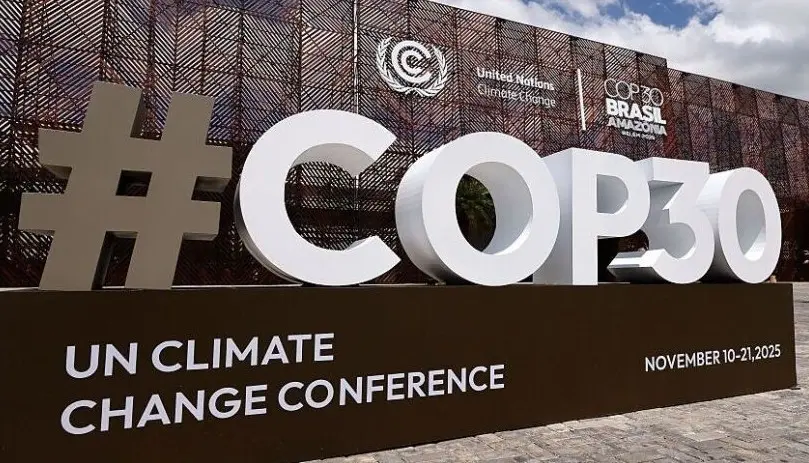
In November 2025, the world gathered in Belém, Brazil—deep in the heart of the Amazon—for the 30th annual United Nations Climate Change Conference, known as COP30. For three decades, COP gatherings have served as the global forum for confronting climate change: a place where nations review scientific evidence, negotiate emissions goals, and determine how best to protect communities from escalating climate impacts.
COP30 was historic not only because of where it took place, but when. The conference unfolded at a moment defined by record-breaking heat, surging electricity demand, intensifying storms, and mounting stress on the planet’s forests and water systems. Delegations from nearly 200 countries—along with scientists, Indigenous leaders, business executives, youth advocates, and sub-national U.S. officials—arrived in the Amazon seeking solutions equal to the magnitude of the crisis.
Yet the outcomes were a familiar blend of progress and hesitation. The world is awakening to the urgency, but we remain unwilling—or politically unable—to act with the decisiveness this moment demands.
As a nuclear scientist and climate advocate, and as someone who cares deeply about the world our children will inherit, I offer this analysis of COP30’s achievements, its shortcomings, and what must happen before COP31 if we are to secure a livable, stable planet for generations to come.
WHAT COP30 GOT RIGHT
Despite political tensions and slow-moving negotiations, COP30 delivered meaningful progress—progress that will directly improve the resilience of communities and ecosystems worldwide.
1. New Protections for the Amazon’s Indigenous Lands
Brazil formally demarcated ten Indigenous territories, safeguarding nearly 1,000 square miles of rainforest.
This is carbon kept in the ground.
This is biodiversity preserved.
This is cultural heritage protected.
Indigenous stewardship remains one of the world’s most effective climate solutions, and this action represents a landmark win.
2. A Commitment to Triple Global Adaptation Finance
Nations endorsed, in principle, a plan to triple adaptation funding—resources that support communities facing heat waves, floods, storms, drought, and rising seas.
The commitment is not binding, but it signals a crucial shift: the world increasingly recognizes that climate change is not a future threat. It is a current reality.
3. Improved Monitoring of Methane and Agricultural Emissions
Methane warms the planet more than 80 times faster than CO₂ over 20 years.
For the first time, nations agreed to develop a stronger and more transparent global methane-monitoring framework. Enhanced monitoring is among the fastest, most cost-effective strategies to slow near-term warming, and this advancement matters.
WHERE COP30 FELL SHORT
Even substantial progress can coexist with serious omissions—and COP30 had several.
1. No Agreement on Fossil-Fuel Phaseout
After intense debate, nations could not reach consensus on language or timelines for reducing fossil-fuel use.
The science is unequivocal.
The politics remain stubborn.
2. A Near Silence on the Global Electricity Crisis
We are entering an era of unprecedented electricity demand, driven by:
- AI and data centers
- Vehicle and building electrification
- Extreme heat and cooling needs
- Industrial growth and modernization
These pressures are pushing grids to their breaking point.
Yet COP30 barely addressed the global electricity crisis—a critical oversight.
3. Nuclear Energy Was Ignored
Not criticized.
Not debated.
Simply omitted.
This is scientifically indefensible.
Every credible decarbonization model—including those from the International Energy Agency—relies on substantial deployment of clean, reliable, always-available power. Nuclear energy is one of the few technologies capable of delivering that scale. Excluding it is equivalent to ignoring the laws of physics.
4. Adaptation Funding Is Still Not Binding
Tripling adaptation finance is encouraging, but without enforcement mechanisms, promises remain aspirational. Communities cannot build seawalls, cooling centers, flood defenses, or resilient infrastructure with intentions alone. They need implementation.
WHAT MUST HAPPEN BEFORE COP31
With Australia set to host COP31, the global community must move beyond symbolic gestures and toward decisive action.
1. Recognize Nuclear Energy as Essential
Nuclear is not the only solution—but without it, every global climate target becomes mathematically unreachable.
2. Address the Electricity Demand Crisis Honestly
The world needs a realistic, science-based plan for powering AI, electrification, cooling, and industry in an increasingly hot world. Aspirational rhetoric will not keep the grid online.
3. Make Adaptation Funding Binding and Operational
A clear pathway—financial, operational, and enforceable—is needed to protect the communities most vulnerable to climate impacts.
4. Convert Forest-Protection Promises Into Enforcement
The Amazon plays a central role in regulating rainfall, storing carbon, supporting biodiversity, and stabilizing global climate systems. Protecting it cannot rely solely on goodwill or voluntary pledges.
THE FUTURE OUR CHILDREN WILL INHERIT
COP30 was not the sweeping breakthrough many hoped for, but it delivered genuine signs of progress:
- More protected forests
- A stronger global focus on climate resilience
- Improved methane accountability
- Growing awareness of the realities of energy demand
Yet it also illuminated the gaps that stand between the world and a safe, stable climate future.
As a scientist, I look to the evidence.
As a citizen, I look to our leaders.
As someone who cares deeply about future generations, I look to the choices we make today.
Because our children will inherit the consequences—good or bad.
COP30 demonstrated that hope and urgency can coexist. What remains is the will to act with courage, clarity, and the willingness to embrace every tool capable of securing the planet they deserve.
We still have time.
But time is no longer the variable we control.
Decisiveness is.


