Courage to Learn Lifesaving Lessons: Why CPR Training Belongs in High School
Equipping Students with Life-Saving Skills to Create Safer Communities

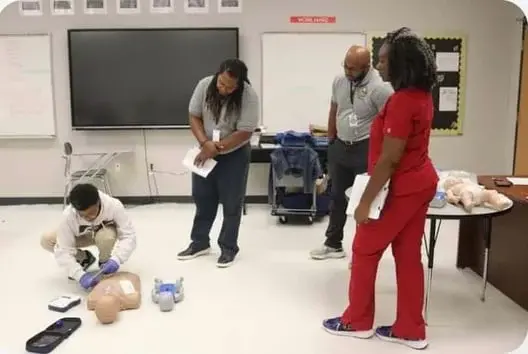
Why CPR Training Belongs in Every High School
As a high school teacher and CPR instructor, this topic is near and dear to my heart. I believe in the potential and capability of our young people to do great and amazing things, including saving lives.
Every year, more than 350,000 cardiac arrests occur outside of hospitals in the United States. When such emergencies happen, time is critical. The difference between life and death often depends on whether a bystander is prepared to step in and perform Cardiopulmonary Resuscitation (CPR).
Imagine the lives that could be saved if every high school student graduated with this essential skill.
In this blog, we will explore the compelling reasons CPR training belongs in high schools, the impact it could have on communities, and how we can advocate for its inclusion in education systems nationwide.
Why High Schools?
High school is the perfect time to teach CPR for several key reasons.
Early Exposure Builds Confidence
Introducing CPR at a young age helps students overcome the fear of intervening during emergencies. Through hands-on practice and proper instruction, teens gain the confidence needed to act decisively in life-threatening situations.
Empowering the Next Generation of First Responders
High school students are frequently present in public spaces such as parks, malls, and sports arenas where emergencies can occur. By training these students, we equip communities with more potential lifesavers.
A Skill for Life
CPR training is not just a graduation requirement—it is a lifelong skill. Whether at home, work, or in public, students can carry this knowledge with them throughout adulthood, creating a ripple effect of preparedness.
The Impact of CPR Training in High Schools
The statistics speak for themselves:
- Immediate CPR can double or triple the chances of survival during cardiac arrest.
- Yet, fewer than 40% of bystanders provide CPR when it is needed.
By making CPR training part of the high school curriculum, we can dramatically increase the number of people prepared to act during emergencies.
States such as Texas and New York already require students to learn CPR before graduation, and these initiatives demonstrate the value of equipping young people with lifesaving skills. Communities become safer when more individuals are prepared to respond.
Breaking Down Barriers
Some schools hesitate to implement CPR training because of perceived challenges, such as:
Cost of Equipment
CPR manikins and training materials may seem expensive, but partnerships with organizations like the American Heart Association and other community organizations can help make programs more accessible.
Time Constraints
CPR training requires only a few hours and can easily be incorporated into physical education classes, health courses, or dedicated workshop days.
Instructor Availability
Many community health organizations, certified instructors, hospitals, and first responders offer affordable or community-based training opportunities.
Real Stories, Real Impact
Consider Derranea Wilford, a 19-year-old who became CPR-certified while in high school. After a shooting occurred during a festival, several bystanders captured her performing CPR on a young woman who had been shot.
Wilford courageously used the skills she had learned and was able to find a pulse in the 17-year-old victim from New Orleans. Unfortunately, the young woman later passed away. However, Wilford's willingness to act with compassion and confidence demonstrates the powerful impact CPR training can have.
In her words:
"I felt a pulse. I heard her heartbeat. That's somebody's child. I saw myself in her."
Her story reminds us that CPR training is not just about learning a technique. It is about empowering people to respond when someone needs them most.
Advocating for Change
If your school or community has not adopted CPR training, here are ways you can help make a difference:
Start the Conversation
Speak with school administrators about the benefits of CPR education. Share success stories, statistics, and resources to build a compelling case.
Partner with Organizations
Work with local hospitals, fire departments, nonprofit organizations, and certified CPR instructors to bring training opportunities to your school.
Engage Lawmakers
Advocate for statewide legislation that requires CPR training as part of high school graduation requirements.
A Ripple Effect of Preparedness
When high schools prioritize CPR training, they do more than create better-prepared individuals—they create stronger communities.
Every student trained in CPR becomes a potential lifesaver, capable of protecting others and inspiring those around them to do the same.
It is time to make CPR training as fundamental as math or science in our schools. No one should feel powerless during an emergency, and every student deserves the opportunity to become someone's lifesaver.
What You Can Do Today
- Check whether your local schools offer CPR training. If they do not, begin advocating for its inclusion.
- Learn CPR yourself and encourage your family members to do the same.
- Support organizations working to make CPR education accessible to everyone.
Together, we can build a future where saving lives is a skill everyone possesses—starting with our high schools.
If you are interested in getting your high school student or youth organization CPR trained, contact us at (985) 247-8560 or hello@couragetosavecpr.com.
Remember: It Takes Courage To Save A Life... Including Your Own!
#Courage #CPRSavesLives #YoungLivesMatter #Compassion #Empowerment #HeartsForLife
About the Author
Candice Whigham is the founder of Courage To Save CPR Training, LLC, a certified BLS/CPR instructor, educator, author, speaker, and life coach with more than 20 years of experience in education and community empowerment.
She blends lifesaving skills with life-building tools to help individuals, professionals, schools, churches, and communities respond with confidence, live with purpose, and lead with courage.
Through CPR training, empowerment education, and coaching, Candice equips others to save lives—including their own.


