Curiosity
What We Gain When We Stop Assuming

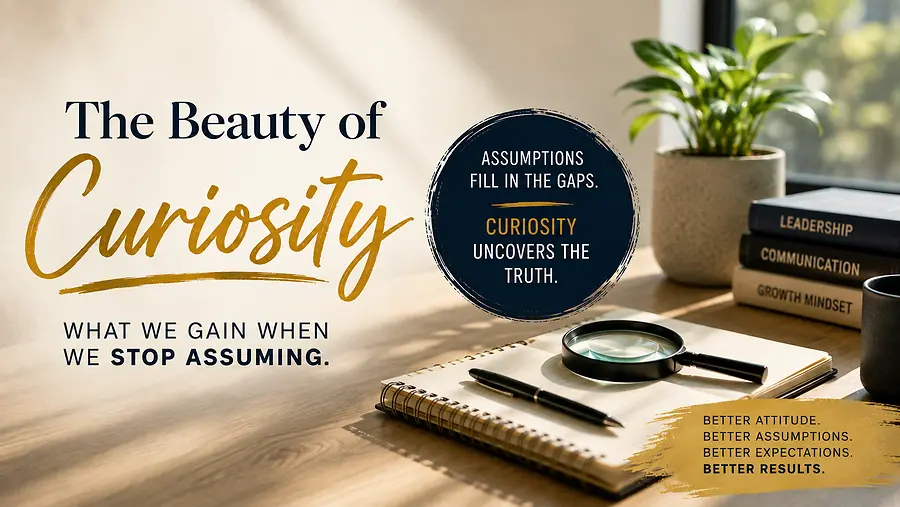
Curiosity
Curiosity may be one of the most beneficial tools in our arsenal. And yes, I believe curiosity is a tool. When we are genuinely curious, we communicate something before we ever find the perfect words. Curiosity says, I’m interested. I’m interested in you as a person. I’m interested in your ideas, your perspective, and your experiences. I’m interested in what you are trying to accomplish. I’m interested in your struggles, your challenges, and your celebrations. Most importantly, I’m interested enough to ask rather than decide that I already know. That is what makes curiosity so powerful.
Curiosity requires courage. It takes courage to ask the question instead of filling in the blanks ourselves. It takes courage to engage in a conversation when the answer may surprise us. It takes courage to admit that perhaps we do not have all the information. And sometimes, it takes courage to discover that the story we have been telling ourselves isn’t true at all. Curiosity gives us the opportunity to support, encourage, understand, challenge, lift up, and learn from one another. Most importantly, curiosity keeps us from creating stories in the absence of information. And that is where assumptions become dangerous.
One of the principles I discuss through the AAE™ Framework—Attitude, Assumptions, and Expectations—is how quickly assumptions can fill the space where information is missing. We assume we know how someone feels. We assume we know what they want or expect. We assume we know what they can or cannot handle. We assume we understand their strengths, weaknesses, abilities, intentions, or level of understanding. Sometimes, we even make decisions for people based entirely on assumptions they never had the opportunity to confirm or correct. And every time we do that, we remove something incredibly important from the relationship: choice.
Curiosity creates space for conversation, communication, collaboration, connection, and innovation. Assumptions can quietly close those same doors. Think about how often this happens in our workplaces, marriages, friendships, families, and communities. She probably doesn’t want to be involved. He won’t understand. They’re not ready. She can handle it. He should already know. They don’t care. If they wanted to, they would. Perhaps. But what if we’re wrong?
What opportunities have we missed because we assumed instead of asked? What relationships have become distant because we interpreted instead of investigated? What ideas never made it to the table because someone decided another person wasn’t interested, capable, ready, or willing? Assumptions can rob us of joy, connection, understanding, opportunity, and choice. They can create unnecessary battlefields between people who may not actually be at war. They create distance where a conversation could have created connection. And sometimes, they set us up for disappointment because we are holding people accountable to expectations they never knew existed.
We often hear the saying, “Comparison is the thief of joy.” I’ve been thinking about what assumptions are. Perhaps assumption is the author of stories that were never written. It takes incomplete information, adds our experiences, fears, expectations, biases, and emotions, and hands us a completed narrative. Then, if we aren’t careful, we begin responding to that narrative as though it were fact.
That is why curiosity matters. Curiosity interrupts the story. It causes us to ask, What am I missing? What else could be true? Have I actually asked? Do I know this—or am I assuming it? Those questions can change everything. In leadership, curiosity helps us understand before we direct. In relationships, it helps us listen before we react. In conflict, it helps us seek clarity before assigning intent. In community, it allows us to encounter people as they actually are rather than as we have imagined them to be.
Curiosity doesn’t mean we abandon discernment or ignore what experience has taught us. It simply means we remain willing to gather information before turning our interpretation into someone else’s truth. That is the beauty of curiosity. Curiosity opens doors that assumptions quietly close.
So perhaps the challenge for all of us is simple: the next time we catch ourselves filling in the blanks, creating the story, predicting someone’s response, or deciding what another person thinks, feels, wants, or needs, pause long enough to get curious. Ask the question. Start the conversation. Listen to the answer. Because sometimes, the difference between disconnection and understanding is nothing more than the courage to ask.
Dr. Moni Kay
Author | Speaker | Creator of the AAE™ Framework


