Dressing for Your Age: How Style Evolves Into Confidence, Power, and Presence
Why True Style Is About Confidence, Restraint, and Knowing Who You Are

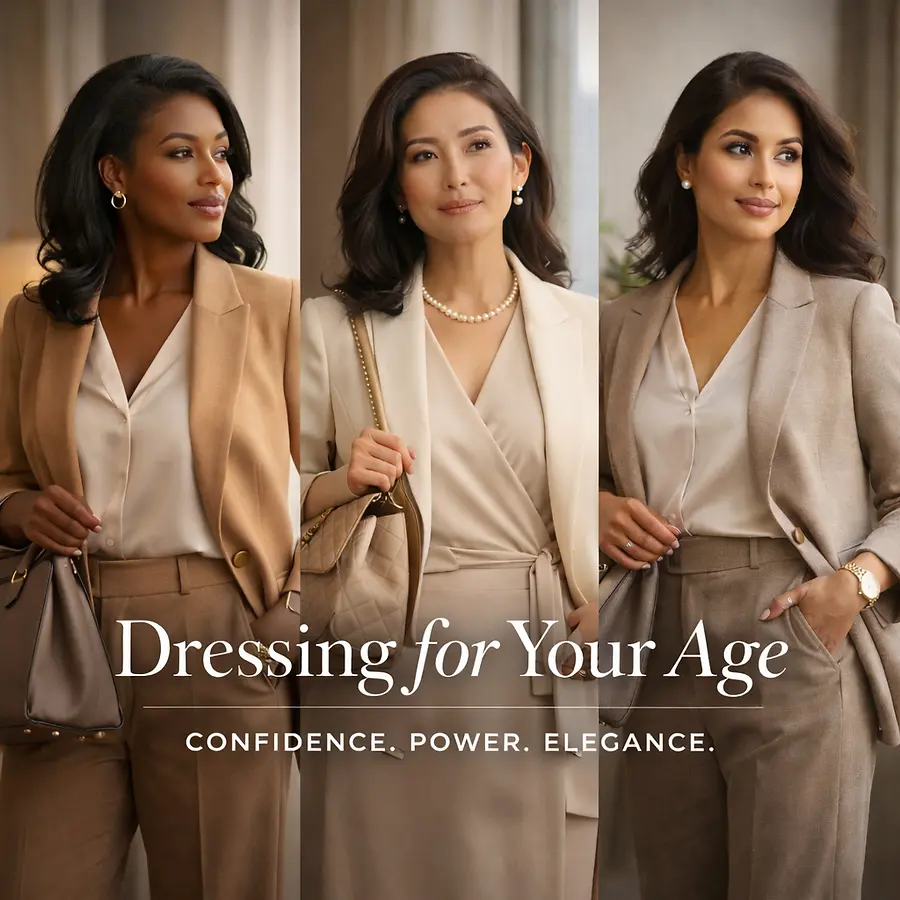
In a culture that glorifies youth and fast fashion, many women feel silent pressure to either cling to trends or slowly disappear into “safe” clothing as they grow older. Both extremes miss the truth.
Style does not diminish with age.
It deepens.
Dressing for your age is not about limitation. It is about evolution. It reflects self-awareness, confidence, and respect for one’s journey. As women mature, their wardrobes should reflect not only how they look—but who they have become.
True elegance is not found in imitation.
It is found in authenticity.
The Shift From Trend to Intention
In our twenties and thirties, fashion is often experimental. We try trends, silhouettes, and aesthetics in search of identity.
Clothing becomes a form of exploration.
With time, that experimentation transforms into intention.
By the forties and beyond, most women understand what suits their bodies, lifestyles, and personalities. They no longer dress for validation. They dress for alignment.
This shift marks the beginning of refined personal style.
It is the moment when fashion stops being about attention and becomes about presence.
The Power of Style in Your 40s and 50s
The forties and fifties are often described as a woman’s prime—and for good reason.
These years bring clarity, emotional intelligence, and professional confidence. Style during this phase should mirror that inner strength.
Women at this stage benefit most from:
- Tailored blazers and jackets
- Midi-length dresses and skirts
- High-quality blouses in silk or satin
- Structured trousers
- Neutral, well-crafted handbags
- Comfortable yet elegant footwear
Color palettes also tend to become more refined. Shades such as camel, navy, cream, olive, and burgundy communicate sophistication and stability.
The visual message is subtle yet powerful:
“I am confident in who I am. I do not need to prove it.”
Rethinking “Old Money” and Brand Culture
In modern fashion conversations, certain brands are frequently labeled as “old money” simply because they are recognizable, colorful, or long-established. Yet true quiet luxury has little to do with visibility and everything to do with restraint, craftsmanship, and timeless design.
Take Lilly Pulitzer or Vineyard Vines, for example. Known for bright prints and repetitive seasonal patterns, these brands have built strong recognition and intensely loyal customer bases. Their followers often identify as much with the lifestyle they represent as with the clothing itself.
“Brands with loyal followings don’t just sell clothes—they sell identity.”
Such mass-market lifestyle labels don’t merely sell dresses; they sell belonging—to a specific social image, mood, and community. While this creates impressive brand loyalty, it does not reflect understated wealth or refined minimalism. Instead, it often communicates predictability and creative stagnation rather than elevated style.
When fashion relies heavily on loud motifs and formulaic palettes, it risks appearing commercial rather than cultivated. True “old money” style is defined by subtle tailoring, neutral tones, and thoughtful construction—not visual excess.
Authentic elegance whispers.
It never shouts.
Timeless Sophistication After 50
After fifty, style becomes less about following fashion cycles and more about cultivating legacy. This is the era of quiet luxury—where simplicity, comfort, and quality take precedence.
Women in this stage often gravitate toward:
- Soft tailoring
- Wrap and column dresses
- Monochrome ensembles
- Scarves and minimal jewelry
- Structured handbags
- Supportive yet stylish shoes
The preferred palette shifts toward calming, timeless tones such as ivory, taupe, grey, navy, mocha, and soft pink.
Here, fashion becomes an extension of wisdom.
It reflects grace, composure, and self-assurance.
Common Style Pitfalls to Avoid
Many women struggle with age-related dressing because they fall into one of two traps.
The first is trying too hard to appear youthful. Overly tight clothing, extreme hemlines, excessive logos, and trend overload often look forced rather than fashionable.
The second is giving up entirely. Oversized, dull, or shapeless clothing can hide personality and diminish presence.
Neither serves a woman’s true potential.
The goal is balance—modern, refined, and authentic.
The Golden Principles of Age-Elegant Style
Regardless of age, three principles define timeless dressing:
- Polish over trends
- Fit over brand names
- Quality over quantity
A well-fitted blazer from a modest retailer will always outshine an expensive garment worn without intention.
Elegance is not purchased.
It is curated.
Building a Timeless Wardrobe
A refined wardrobe does not require excess. It requires purpose.
Every woman over forty benefits from investing in:
- A structured blazer
- A classic midi dress
- Neutral trousers
- A silk blouse
- A trench coat
- Nude and black heels
- A leather tote
- Minimal jewelry
These pieces form the foundation of countless outfits suitable for professional, social, and personal settings.
The Role of Grooming and Presentation
Clothing alone does not create elegance.
Presentation completes it.
Well-maintained hair, natural makeup, clean nails, pressed garments, and subtle fragrance communicate self-respect. These details often matter more than brand labels.
Grooming reflects how seriously a woman takes herself—and how she expects to be treated.
Why Dressing Well Matters at Every Age
Clothing sends silent messages before a word is spoken.
It signals competence.
It reflects boundaries.
It communicates confidence.
When a woman dresses intentionally, she reinforces her sense of worth—both to herself and to others.
Style becomes a form of self-advocacy.
Aging as an Advantage
Aging is often framed as something to resist. In reality, it is a privilege.
Each year adds perspective, resilience, and depth. When style evolves alongside personal growth, it becomes a visual narrative of strength.
Lines become stories.
Confidence becomes visible.
Presence becomes undeniable.
Dressing for your age does not mean surrendering beauty.
It means redefining it.
Conclusion: Style as Self-Respect
True style is not about appearing younger.
It is about appearing grounded.
It is not about trends.
It is about truth.
When a woman dresses in alignment with her life experience, values, and self-respect, she becomes effortlessly elegant.
She does not compete.
She elevates.
And that is the highest form of style.