Freckles, Fire, and Quiet Places
From farm girl to resilient leader: How childhood bullying and invisible disability shaped my journey toward empathy.

Freckles, Fire, and Quiet Places
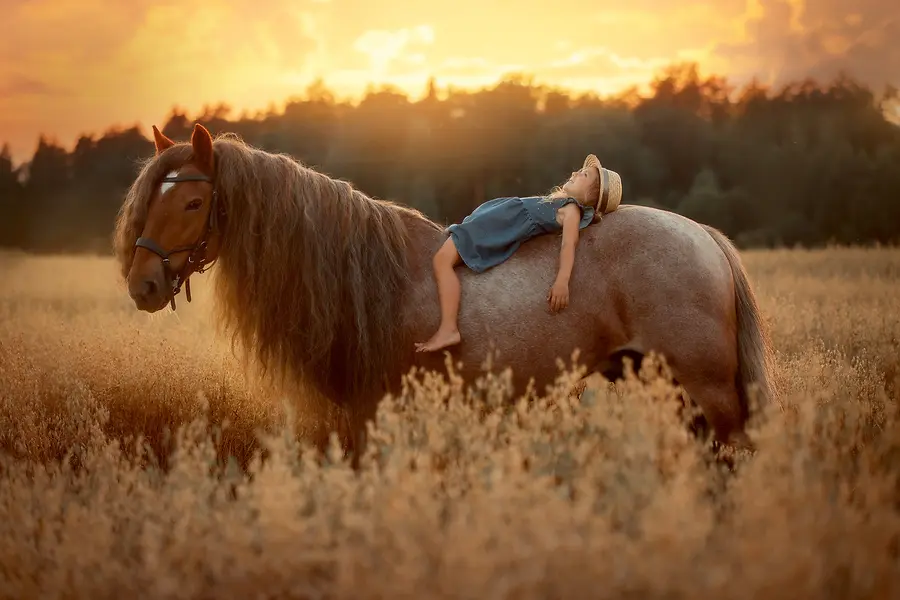
I grew up on a farm nestled deep in the countryside of Minnesota, where the closest town with any real shopping was miles away, and the smell of freshly turned earth was a constant reminder of the life my family lived. While most children my age learned to ride bicycles and played in manicured parks, I was on the back of a horse before I ever touched the handlebars of a bike. The farm was my playground, and the animals were my closest companions. I learned to drive a tractor before I could reach the pedals of a car, and my world was defined by harvest seasons, sunrises, and sunsets.
From this description, it may sound like the perfect place to grow up, and in many respects, it was perfect—for me and for what I needed.
My family was not wealthy by any means. My father worked long hours, while my mom managed the house, crocheted hats, mittens, sweaters, and ponchos, and made sure everything was always clean and tidy. My wardrobe was a mix of Goodwill finds and handmade pieces my mother created with love.
I did not visit my first mall until I was in junior high.
The other children at school noticed that I never had anything new, while they always seemed to. There was one boy in particular who made sure I felt every bit of my difference. He had a cruel streak that I could not understand. He picked on me relentlessly, calling me names because I was short, chunky, wore haircuts my mother gave me, and had glasses. It was the perfect combination for what was to come.
I was "Tree Stump," "Fatso," "Four-Eyes," "Barn Girl," "Ugly," and "Cross-Eyes." That last one is a label I still will not tolerate to this day. I have a lazy eye that turns inward, especially when I am tired, which is why I started wearing glasses at age two.
But it did not stop at words.
Jeffery sat behind me in class and cut my hair once, right there while the other children laughed. He also took scissors to a beautiful poncho my mother had crocheted with care and cut it straight up the middle of the back. One time, he threw a hard rubber ball at my face, breaking my glasses and giving me a bloody nose.
I was left in tears, and I had to wear my glasses taped together for a long time until my parents could afford a new pair. That only led to more harassment.
In the 1970s, there was not a word for what Jeffery did. It was not called bullying; it was brushed off by teachers and even my parents as, "He likes you."
But I knew better.
At home, I found solace in nature and in the animals. The horses, cows, chickens, and dogs did not care what I looked like or what I wore. They accepted me and loved me unconditionally, and in their quiet company, I felt safe.
The ten acres I grew up on became my refuge—a place where I could escape the harshness of the outside world. I enjoyed driving the tractor to pick corn, planting and gathering wildflowers for my mom, hiding in the loft of the barn among the hay bales while reading a book, and burying time capsules around the property, hoping that one day someone would discover them and be fascinated by the life I had lived.
Years passed, and I grew up.
I carried the scars of childhood with me, tucked away where no one could see them and where I could try to forget them. On the outside, I became a woman who was always drawn to helping others.
I worked in childcare for 18 years and served as a firefighter for five years before entering the airline industry, where I worked for more than 20 years. I chose those paths because I wanted to protect, care for, and invest in others regardless of who they were, what they wore, the color of their skin, or where they lived. I wanted people to know that if they needed someone, I would be there.
For the most part, I managed to put my childhood trauma behind me.
In February 2023, I underwent surgery to remove a brain tumor. The surgery was successful, but it left me deaf in my left ear and requiring a bone-anchored hearing aid (BAHA).
Overnight, I found myself navigating a world that suddenly felt unfamiliar. Simple interactions that many people take for granted became more complicated—from following conversations in crowded rooms to determining where sounds were coming from.
Even routine decisions, such as wearing a favorite ball cap, now require additional thought and adaptation.
It is often the little things people take for granted—things I once took for granted myself—that bring back the feelings of that elementary school girl.
Take that ball cap, for example. Wearing a hat is no longer simple unless I modify it with a hole so my hearing aid is not covered. Then I become self-conscious because the hearing aid is highly noticeable.
Those moments are difficult because I just want to grab a hat, put it on, and go like most people. Instead, I have to adjust it carefully, and sometimes it takes more effort to wear the hat than to leave it off altogether.
That has been especially hard because I love hats—all of them.
Like many people living with an invisible disability, I initially worked hard to make my new reality appear "normal," often carrying challenges that others could not see.
However, rather than allowing those challenges to define my limitations, I chose to let them deepen my perspective as a leader.
My journey strengthened my empathy, resilience, and appreciation for the unseen struggles that many people carry. Today, when designing learning programs, leading teams, or creating employee experiences, I intentionally consider the diverse needs of others, particularly those living with challenges that may not be immediately visible.
My experience has reinforced a simple but powerful belief: when leaders lead with empathy and create environments where everyone can fully participate, everyone benefits.
At the same time, while voices can be difficult to decipher and loud environments often trigger anxiety, I still find comfort in the vibration of my cats purring on my lap, the tickle of whiskers when my dog nestles into my neck, and the warmth of sunshine or a gentle breeze on my face during a long walk outside.
Those moments remain my sanctuary.
The quiet moments are often the only times I feel truly at peace.
Sometimes I wonder, "Why me?" But then I ask myself, "Why not me?"
I have been seen as different my entire life, and this is simply one more chapter in my testimony.
A couple of years ago, I heard a song that resonated deeply with me. While walking, I found myself crying as I listened to She's Been Through the Fire by Brian Rhea.
The second verse seemed as though it had been written specifically for me:
"Freckles on her skin,
Lines on her face,
Silver in her hair,
But every hair in place.
If she let you in,
You may see a scar,
But she'd never let you know
Just how deep they are."
The lyrics resonated with me in a way that felt both painful and validating, as though someone had peered into my soul and put my life into words.
I know there are others who feel the same way—people who have been through the fire and who carry their scars hidden deep inside.
The song has become my anthem, a reminder that I have come through the fire. I encourage you to listen to it in its entirety. And if it speaks to you, I am happy to let you claim it as your anthem too.
I continue to find comfort in quiet places and in the company of animals who never judge me.
Though I still struggle with my self-image and the insecurities born from years of torment, I also know that I have survived.
I have been through the fire, and though the scars run deep, I am still standing.
And that, I realize, is enough.


