Ghosting Isn’t Just a Dating Problem—HR Does It Too
Why employers should treat rejected candidates with the same professionalism they expect from job applicants.

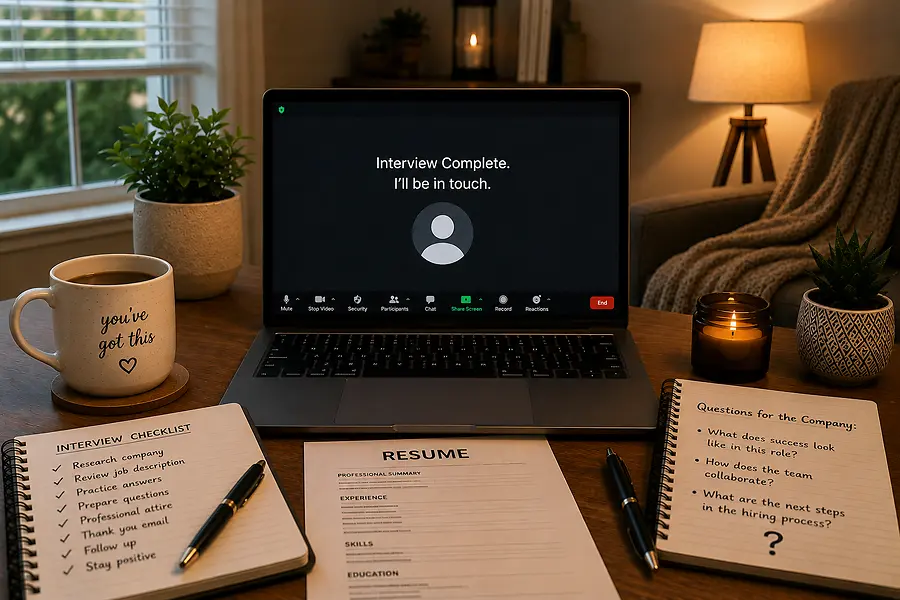
We've all heard the interview advice.
Research the company. Prepare your answers. Dress professionally. Ask thoughtful questions. Send the thank-you email. Follow up—but don't follow up too much.
Candidates are taught how to make a good impression on employers.
But I have a different question:
What kind of impression are employers leaving on candidates?
Today, that interview might happen without anyone ever stepping into an office.
The candidate finds a quiet space. Checks the camera. Tests the microphone. Reviews their notes one last time. Takes a breath and clicks Join Meeting.
The interview goes well.
Then comes another.
Maybe even a third.
Eventually, someone says the familiar words:
“We'll be in touch.”
And then...
Nothing.
No update. No rejection. No closure.
The candidate has been ghosted.
We usually associate ghosting with dating. But somewhere along the way, it found its way into recruiting, too.
And maybe the bigger question isn't simply why it happens.
Maybe we should be asking what it says about us when it does.
Professionalism Should Go Both Ways
We expect a lot from candidates.
Be responsive. Be prepared. Be punctual. Communicate professionally. Respect the interviewer's time.
I agree with every one of those expectations.
But shouldn't they work both ways?
I'm not suggesting HR personally call every person who submits an application. That's unrealistic.
But once we invite someone to interview, something changes.
They're no longer just a résumé in a system.
There's a person on the other side of the process.
They gave us their time, their preparation, and, in many cases, several hours across multiple interviews.
I believe that deserves closure.
Hiring Has Changed. Has Feedback?
The hiring process has evolved dramatically.
Applications are digital. Interviews are virtual. Scheduling can be automated. Candidates and interviewers can meet from opposite sides of the country without leaving home.
And, to be fair, some organizations are doing candidate communication very well.
Some recruiters follow up. Some hiring managers personally call candidates. Some companies provide feedback.
That deserves to be acknowledged.
But even when we do communicate, I think there's another question worth asking:
Is the feedback enough?
“We've decided to move forward with a candidate whose experience more closely matches our needs.”
That provides closure.
And closure matters.
But what does the candidate actually learn from it?
Maybe their interview answers needed stronger examples.
Maybe they had the right experience but didn't communicate it clearly.
Maybe the selected candidate had more experience in one specific area.
Imagine what one or two sentences of constructive feedback could do for that person's next interview.
We spend entire careers telling people that feedback creates growth.
We coach employees. We conduct performance reviews. We develop leaders. We talk constantly about continuous improvement.
So here's the question I keep coming back to:
If feedback is valuable enough to develop the people who already work for us, why does its value suddenly disappear for the people trying to work for us?
Could AI Actually Make This More Human?
This is where the conversation gets interesting.
AI and automation are already becoming part of recruiting.
So rather than asking only how technology can make hiring faster, perhaps we should also ask how it could make hiring better.
Imagine an interviewer finishes an interview and documents the candidate's strengths and the job-related reasons another candidate was ultimately selected.
Instead of keeping that information within the hiring system, could technology help convert interviewer-approved feedback into a short, respectful message?
Something like:
“Thank you for interviewing with our team. Your leadership and communication experience were strengths. For this position, we selected a candidate with more direct project-budgeting experience. Building additional experience in that area could strengthen your candidacy for similar roles.”
That's not a coaching session.
It's three sentences.
But those three sentences give the candidate something a generic rejection doesn't:
Direction.
There needs to be a clear boundary here.
AI should never decide, assume, or invent why someone wasn't selected.
People made the hiring decision, and people should remain accountable for the feedback.
But if the feedback has already been documented and approved?
AI shouldn't create the feedback. Maybe it can help us deliver it.
Technology doesn't have to make hiring less human.
Used thoughtfully, perhaps it can help us put some humanity back into it.
Your Hiring Process Is Part of Your Culture
Companies spend a lot of time talking about culture.
People first. Transparency. Respect. Communication. Employee engagement.
But culture doesn't begin when someone accepts an offer.
Culture begins before the offer letter.
Candidates experience it every time they interact with us.
How we schedule the interview says something.
How we conduct it says something.
How we communicate afterward says something.
And how we treat someone once we know we're not hiring them may say the most.
That candidate may never become an employee.
But they could become a customer. They could apply again. They could recommend your company to someone else.
Or they could tell someone:
“I interviewed there three times and never heard from them again.”
Either way, you've left an impression.
The only question is which one.
Maybe Rejection Can Be Better
I don't believe every rejection needs to become a coaching session.
Recruiters and HR professionals are balancing hiring managers, deadlines, changing business needs, and sometimes hundreds of candidates.
I understand that.
But efficiency and humanity don't have to compete with each other.
So maybe the goal isn't to eliminate rejection.
Maybe it's to handle rejection better.
What if one thoughtful response helped someone walk into their next interview more prepared?
What if the candidate we couldn't hire today became exactly who we needed six months from now?
And what if someone remembered our organization—not because we hired them—but because of how respectfully we treated them when we didn't?
We ask candidates to show us who they are throughout the interview process.
Their preparation. Their experience. Their communication. Their professionalism.
Maybe we should remember something.
They're interviewing us, too.
Every interview tells us something about the candidate.
How we treat them afterward tells them something about us.
KDS


