History of a Chronological Lynchpin
From Lenin's Vision to Modern Sanctions: The Turbulent History of Russia's Flag Carrier Aeroflot

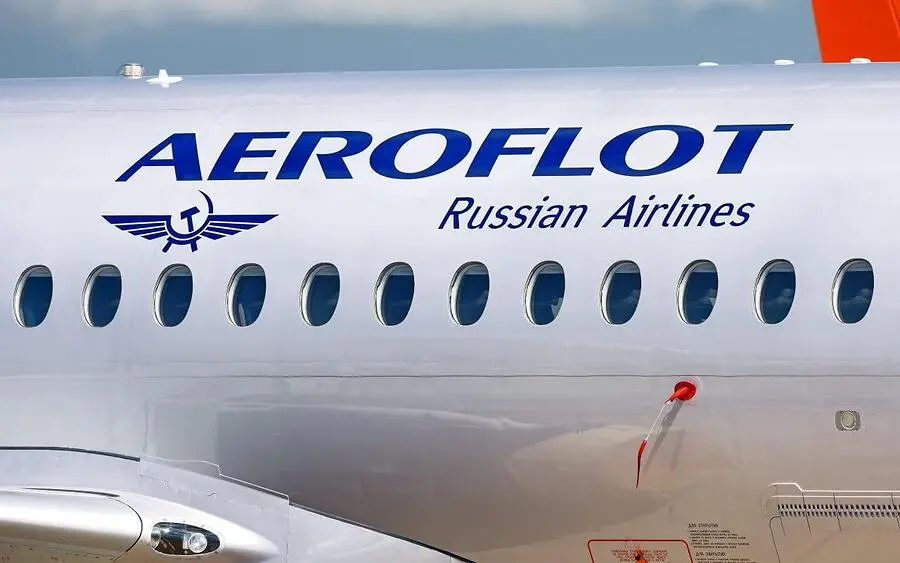
The flag carrier and state airline of Russia can be traced back to 1921, with an order from Vladimir Lenin to explore civil aeronautics throughout the then-new Soviet Union. After the founding of a commission, a civil airmail service was established between four cities in the Soviet Union—Moscow, Oryol, Kursk, and Kharkov—following that specific route.
The first air carrier and Aeroflot’s direct (and early) predecessor, Dobrolyot, was founded in March 1923. There was also Ukrvozdukhput, founded in April 1923 and based in Kharkov, which is known as Ukraine’s first airline (historically within the Ukrainian SSR, or Soviet Socialist Republic), offering strictly domestic scheduled flights.
But back to Russia. The idea of an actual civil air service was the brainchild of none other than Leon Trotsky. These aforementioned airlines eventually combined to form Russia’s state-owned airline, later known in the 20th century as Aeroflot. Artist Alexander Rodchenko was hired to develop the company’s corporate identity and advertising strategy.
Rodchenko designed posters encouraging citizens to buy stock in early Aeroflot and also created the “Winged Hammer and Sickle” logo (pictured). The founding charter of the airline read (quoting directly): “for the development of the civil air fleet within the USSR by organizing air lines for the transportation of passengers, mail and cargo, aerial photography, and other areas of air fleet application based on the domestic aviation industry.” The early airline, then known solely as Dobrolyot, combined with Ukrvozdukhput in Ukraine to offer joint long-haul and domestic short-haul service (in modern parlance, this would be known as a codeshare).
Historically—and currently—employing more than 600,000 Russian citizens, more than U.S. carriers combined (which top out at around 535,000 people across all major airlines), Aeroflot is one of the largest employers not just in Russia but in the world. The airline has four current hubs, all within the Russian Federation, and an additional five focus cities across the country.
At its height, Aeroflot was significantly larger than even Pan Am at the time. While now defunct, Pan Am—more formally, Pan American World Airways—served for several decades as the unofficial flag carrier of the United States, making it a worthy comparison. Aeroflot carried five times Pan Am’s average annual passenger numbers. However, 95% of Aeroflot’s passenger traffic was purely domestic. It was also a distinctly communist airline due to the nature of its state ownership.
It is important to clarify that state ownership of an airline is not, in itself, an indication of communism. In Europe and the Middle East, numerous nations own their flag carriers while operating within highly capitalistic systems. Aeroflot simply made state ownership part of its identity. This was also a defining characteristic of the so-called Soviet or Warsaw Bloc countries, which owned roughly 98% of their flag carrier airlines. By the time Mikhail Gorbachev came to power in the 1980s, Soviet Bloc states owned all state airlines.
In 1979, Aeroflot was banned from the United States following the Soviet Union’s invasion of Afghanistan. Shortly thereafter, the 1980 Summer Olympics suffered a boycott by a record 64 countries (including Russia’s political ally, the People’s Republic of China), leaving only 80 nations represented—the smallest number on record. This Olympic boycott dealt a significant economic and morale blow to Aeroflot, as the airline had been counting on the Games to boost its declining financial position.
In 1992, immediately after the fall of the Soviet Union, Aeroflot was broken up into roughly 400 so-called “babyflots,” or small regional airlines. Notable examples include Bashkirian Airlines (B.A.L.), based in Ufa, Bashkortostan—a republic within the Russian Federation located between the Volga River and the Ural Mountains. KrasAir, or Krasnoyarsk Airlines, was another key carrier formed after the USSR’s dissolution, based in Krasnoyarsk Krai, home to one of Siberia’s largest cities. Moscow Airlines was a third “babyflot,” based in Moscow and regarded as the “capital airline.”
Today, Aeroflot has certainly seen better days. In 2014, after significant contraction and the absorption of several smaller regional airlines—many of them former “babyflots”—competing airline Rossiya was absorbed into Aeroflot. However, Aeroflot retained Rossiya’s branding, continuing to operate it in its traditional red-and-white livery as a subsidiary, similar to Air Canada’s absorption of Air Transat in the Western Hemisphere.
That same year, following Ukraine’s Revolution of Dignity, Ukraine’s president was removed and new elections were called by parliament. Aeroflot subsequently announced it would no longer fly over or to Ukraine, as Kyiv had previously been a focus city throughout the 1990s and 2000s.
As Aeroflot continues to operate under international sanctions stemming from the Russian Federation’s invasion of Ukraine, which began in 2022 and is now in its fifth consecutive year, the airline faces increasing challenges. Many of its aircraft are reportedly being cannibalized to keep others operational. At present, there is effectively no straightforward way to book flights on Aeroflot unless you are a Russian citizen, have access to an insider agent, or are willing to navigate unofficial booking channels.
Aeroflot is now effectively banking its future on the Chinese-developed (now Russian-owned and Yakovlev-built) MC-21 long-haul aircraft, which it hopes will become its flagship. Deliveries are expected to begin in late 2026.
Defying many economic predictions, Aeroflot continues to operate—and not only that, it maintains a fleet of at least 171 aircraft: 112 Airbus planes and 59 Boeing planes, with the forthcoming Yakovlev MC-21 poised to become the centerpiece of its fleet.
Thank you all for reading, and as always, book your travel consultation through brookeintheairtravel.squarespace.com!