Discover the enchanting Christmas markets of Vienna, Salzburg, Brussels, Berlin, Ulm, Freiburg, and Frankfurt. Experience festive atmospheres, traditional crafts, mulled wine, and authentic holiday traditions across Europe's most magical destinations.

Influential Woman · Travel Concierge - Travel Service
Brooke Bobincheck
Owner, Chief Operator, Brooke In The Air Travel LLC
Oakland, CA 94612
4Years experience
113Articles published
2Awards received
“
I've struggled with impostor syndrome since college. Despite earning awards and success, I still feel driven by vengeance against those who doubted me.
Brooke Bobincheck · In Her Own Words
Her Story
About Brooke
Brooke is a woman of the world, dedicated to growing her business and brand as a travel concierge for Brooke In The Air Travel.
The Foundation: Industrial Mass and Strategic Grit
Currently based in the high-intensity environment of San Francisco, Brooke serves as a vital link in the global supply chain, working Cargo Operations for Delta Airlines. Operating at the intersection of logistics and physics, she manages the "Industrial Mass" of the aviation world. Her work on the ramp is defined by "Tactile Intelligence"—the rare ability to identify, secure, and move the world’s most critical goods in an environment where "Robotized" logic fails and human judgment remains the ultimate safety net.
The Philosophy: The Gettysburg Proposition
Brooke is driven by a deep-seated belief in the "Gettysburg Proposition"—that every individual, regardless of origin, gender, or creed, deserves a fair chance at life. She views the current global drift toward the "Security State" not just as a political shift, but as a structural threat to human dignity. Her perspective is unique: she has seen how the world works from the belly of the plane up, giving her a grounded understanding of how systems can either protect or exploit the people they serve.
The Transition: From Logistics to Law
Recognizing that the "Guardrails" of democracy require constant maintenance, Brooke is transitioning from the physical logistics of the ramp to the intellectual logistics of the German Legal System. She is moving to Germany to study the Basic Law ('Grundgesetz'), drawn by its "Anti-Fascist DNA" and its foundational commitment to Article 1: The Inviolability of Human Dignity.
As a future "Transatlantic Jurist," she aims to translate the "Poetry" of American ideals into the "Armor" of enforceable law. She is dedicated to challenging the criminalization of poverty and the dehumanization of the vulnerable, ensuring that no person—citizen or otherwise—is ever reduced to a mere "object" or "data point" by the state.
Her Vision: The Thinking Actor
Whether she is overseeing the "Turnaround" of a massive Boeing 787-9 Dreamliner or analyzing the "Nuremberg Code," or working out logistics for a client at Brooke In The Air Travel, Brooke operates as a "Thinking Actor." She is a strategist who understands that true security comes not from compliance, but from Institutional Integrity. She moves forward with the "Academic Intelligence" of a scholar and the sustained power of a woman who has mastered the hard work of the world, ready to defend a "New Birth of Freedom" on both sides of the Atlantic and find inter-mobility for all women and persons.
Her Interview
Ten minutes with Brooke
01What do you attribute your success to?
The patience and dedication of my husband is my backbone and strength as well as my video editor. I also credit my drive and passion for travel and to make the world better for women to travel.
02What’s the best career advice you’ve ever received?
To study everything I want to know before I jump in. Thoroughly. Leaving no doubt in my mind.
03What advice would you give to young women entering your industry?
To study, examine in detail, watch as many videos as you can, take detailed notes, be focused. Additionally, go on a few trips from time to time. Know that this is a male dominated industry and you have to know everything about the industry and be better than men in order to be taken remotely seriously.
04What are the biggest challenges or opportunities in your field right now?
By far the male exclusion and domination of the industry. I'm not exaggerating there at all. There's typical day-to-day challenges as well, but males tend to make for fewer colleagues and more competition added to the fact that there are places in the world we just cannot go as opposed to men.
05What values are most important to you in your work and personal life?
Values to me include fairness, trustworthiness, empathy, compassion, ambition, intelligence and overall kindness.
Her Content Hub
Articles by Brooke
The Best Christmas Markets in Europe!
Discover the enchanting Christmas markets of Vienna, Salzburg, Brussels, Berlin, Ulm, Freiburg, and Frankfurt—where festive atmosphere and local culture shine brighter than holiday lights.

Christmas Markets Around the World
Welcome back, dearest value travelers and readers! In this article, we're switching to a lighter topic. Since we're heading into the holidays, let's take a look at some of the world's very best Christmas markets!
This list is in no particular order, as one is not necessarily better than another; it is all based on personal preference.
Let's get some things clear first, however. Once you've seen one Christmas market, you've pretty much seen them all. They're essentially all, as my very Jewish grandmother used to say, "kitchy shtetles full of tchotchkes." I realize many do not speak or understand Yiddish, so I'll translate a bit here. "Kitchy" essentially means quaint, cute, or old-timey for visitors' sake. "Shtetl" is loosely translated as "small town," and lastly, tchotchkes are simply "bric-a-brac" or "knickknacks." You can put it together.
But these are not the reasons to go; never go for the shopping. €18–€45 for a small souvenir is ridiculous, and all Christmas markets sell more of these little souvenirs—i.e., figurines, mugs, beer steins, shot glasses, and more—than the U.S. sells guns. The cities in which they are located bring a different atmosphere and vibe to the Christmas markets. The atmosphere and people are the reasons to go. The vibes in general, the people, and the conversations are the reasons to stay. You can learn a great deal about a country and its people just by visiting a city's Christmas market.
Now then, let's uncover the best Christmas markets together!
- A few tips on what to wear: warm clothes, vests, hoodies, boots, light gloves, hats, but nothing that will overheat you. You're not going to the Arctic; you just want to keep warm, not hot, and you'll often be surrounded by hundreds, if not thousands, of other people. Use your best and sound judgment.*
Vienna, Austria
With its palaces and horse-drawn carriages, Vienna is fantasy stuff—and never more so than during Advent (December 1st through 25th), when you're only ever a step away from the next Christmas market. Go for fairground rides, ice skating, and mulled wine at the buzzy market in front of the neo-Gothic Rathaus or high-quality crafts at the romantic market in the narrow Biedermeier lanes of Spittelberg. Fairest of the lot, though, is the market on the grounds of Schloss Schönbrunn, with its magnificent tree, choirs, brass bands, carousel, and 80 huts selling everything from nostalgic wooden toys to beeswax candles, felt figurines, Alpine cheese, and candied nuts.
Salzburg, Austria
Christmas markets glitter all over Austria come Advent, but few are as magical as Hellbrunn Advent Magic, as the market is called by its official name. The market is held at Salzburg's Schloss Hellbrunn, with carolers, handicraft stalls, a Christmas train ride, and a petting zoo for kids, while the Baroque palace's 24 windows are transformed into a giant Advent calendar. A Christmas parade, brass bands, Alphorn blowers, nativity scenes, and a veritable forest of 400 twinkling trees make Yuletide here special.
Brussels, Belgium
With its step-gabled townhouses, cobbles, and strikingly lit Grand Place, Brussels is like a scene behind the door of an old-fashioned Advent calendar. And at Christmas, it's a knockout. Winter Wonders sprinkles the city with fairy dust, with sound and laser shows and a fabulous tree lighting up the Grand Place, ice and curling rinks, and a merry-go-round on Place de Brouckère. The 200-stall market spreads out from Place Sainte-Catherine, where you can shop for stocking fillers, scoff waffles, and pick up Belgian beer and chocolate. Let me tell you, authentic Belgian chocolate is heavenly!
Berlin, Deutschland (Germany)
Berlin turns the Christmas fun up to the max, with more than 80 Weihnachtsmärkte (literally, Christmas markets) switching their lights on for Advent and shimmering brightly until the New Year. If you have kids in tow, don't miss WeihnachtsZauber on Bebelplatz, overlooked by the grand State Opera. Street entertainers deliver a full-on fairy tale, with acrobats, dance troupes, ice queens, golden angels, choirs, and performers on stilts, and white, star-topped tents selling everything from quality ceramics to wood carvings, marzipan, fondue, and schnitzel with champagne. If you fancy a shot of snow fun, head over to Potsdamer Platz for ice skating, sledding, and mulled wine.
Ulm, Deutschland
If you've never heard of the city of Ulm, you're not alone, but you're likely missing a key city on this holiday run. Midway between Munich and Stuttgart, this southern German city on the Danube River is a stunner. The birthplace of Albert Einstein and home to a whopping Gothic cathedral crowned by the world's tallest steeple (161 m/528 ft high), this is a place that enchants visitors with its canal-woven, half-timbered old quarter. Oh, and its Christmas market is a cracker, with a live nativity scene, a carousel to ride, a tree glimmering with 18,000 lights, a storytelling yurt, and 120 stalls trading in everything from Steiff toys to beeswax candles and edible snowballs.
Freiburg, Deutschland
In Germany's Black Forest (Schwarzwald in Deutschland), snug against the border with Switzerland and France, the vivacious university city of Freiburg hosts one of the country's most lovely Christmas markets in its alley-woven medieval heart. Lights illuminate the gabled houses on Rathausplatz, where 120 wooden chalets keep things traditional with regional food and crafts. Nose around the stalls for folk carvings and nativity figures, Moravian stars, beeswax candles, sheepskin rugs, and Black Forest ham. Snacks like roasted almonds and local Langer Rote sausages pair well with Glühwein. Kids will have a blast baking cookies, making candles, and riding the Ferris wheel.
Frankfurt am Main, Deutschland
The Frankfurt Christmas market (pictured), the largest Christmas market in Europe, winds its way through the entire city center like a glowing ribbon for one month, traditionally from the 22nd of November through the 22nd of December. From the WeihnachtsRoßmarkt (Christmas market) to the Hauptwache, Friedrich-Stoltze-Platz with its Rosa Weihnacht and Paulsplatz, down to the Römerberg and the Mainkai with its children's Christmas market, there are over 230 elaborately decorated stalls. Visitors will find handicrafts, Christmas decorations, gifts, and Christmas specialties from all over the world. On the Römerberg, the huge Christmas tree shines against the picturesque backdrop of the old town.
A special highlight is the traditional Frankfurt specialties, which you should definitely try! The famous Bethmännchen, a sweet marzipan pastry you can eat on the go, are a must during the Advent season. They go wonderfully with a mug of hot apple wine (Apfelwein), which is an integral part of Frankfurt—especially on cold winter days. Truly, entire shop stands specialize in Apfelwein.
The traditional Quetschemännchen makes a lovely souvenir. These little ladies and gentlemen are made from dried plums and nuts held together with wire. Originally, the Quetschemännchen was a chimney sweep or musician who was supposed to bring good luck.
If it seems that I spent an inordinate amount of time on Frankfurt and its festivities, I must congratulate you on your perception, dear readers. It was the most amazing time I had in Deutschland, so you must forgive some civic favoritism. Berlin was fun but touristy, Munich was great, Stuttgart had its definitive charm, but Frankfurt am Main was where I found my heart, and where I'll be moving to.
There are several other Christmas markets in Europe, but these are, by far, the best by traveler consensus.
Enjoy this festive time, and we hope you'll plan your holiday itinerary with Brooke In The Air Travel at brookeintheairtravel.net!
Brooke In The Air Travel critiques the AI boom in travel, arguing that current "artificial intelligence" is merely virtual intelligence marketed deceptively. The company champions human expertise over algorithmic shortcuts, offering authentic, personalized travel planning without AI involvement.
On Artificial Intelligence
Why Brooke In The Air Travel Rejects AI in Favor of Authentic Human Service
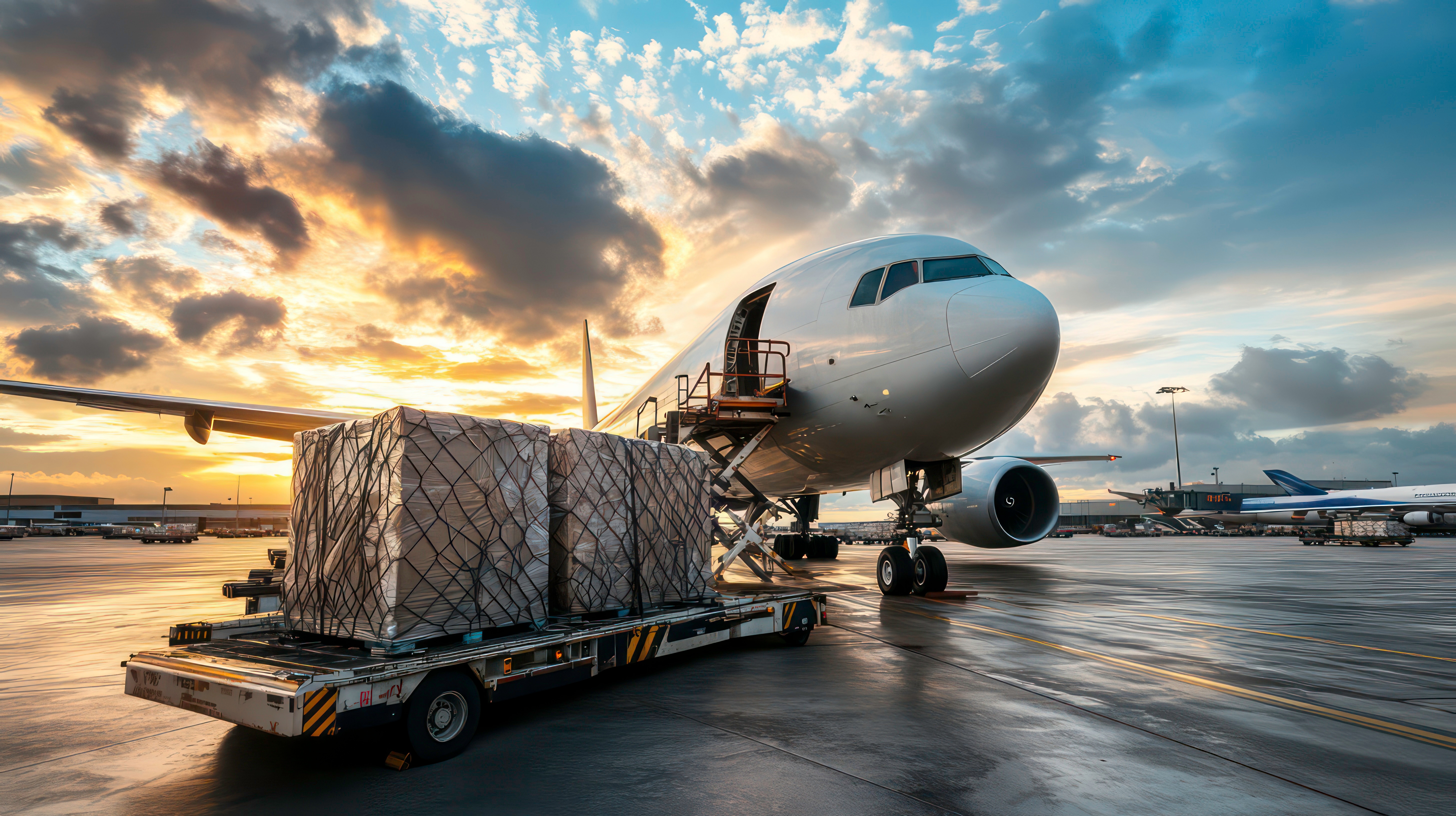
Artificial Intelligence is supposed to be the wave of the future, yet it is proving to be more trouble than it's worth. People also have differing conceptions of what that future looks like, and virtually all those views are erroneous.
Welcome back, everyone. Today's article is more of a delicate statement on where Brooke In The Air Travel stands on Artificial Intelligence and its presence in the travel industry. First, let's clarify some things. What people think of as “A.I.” is not true Artificial Intelligence. True Artificial Intelligence is a man-made entity that is not only generative, but can realistically think for itself and has the ability to self-determine; realistically, Artificial Intelligence is just that: “Artificial,” meaning false or unnatural, and “Intelligence,” meaning one of high intellect. The three main types of Artificial Intelligence, agentic, agentive, and generative, are not true Artificial Intelligences. Agentic, as the descriptor implies, refers to autonomous-use artificial intelligence systems powered by large language models (LLMs) that can independently plan, reason, use tools, and execute multi-step workflows to achieve a goal with limited human supervision. Thus, they have their own agency—in theory.
Generative A.I. is what most laypeople use and is installed on chatbot programs and most cell phones. Generative artificial intelligence is a type of computer technology that creates original content—like text, images, music, and code—in response to user prompts and guidance. In other words, it “generates” user-desired results, programs, and code. Agentive artificial intelligence is arguably the most advanced overall, as it is the closest to developing its own agency. Agentive artificial intelligences are systems designed to autonomously execute tasks, make decisions, and manage multi-step workflows based on human-defined goals and procedures.
Rather, they are marketed as such, but in reality, they are simplistic V.I.s, or Virtual Intelligence Interfaces, being marketed as Artificial Intelligences. Each company has its own “dedicated” A.I. program, but they are all modeled after the same basic “blueprint.”
Companies are taking advantage of this “A.I. Boom,” as economists are calling it, with immense fervor. They generally seek to reduce costs and general overhead at the expense of random or minute software and, more importantly, hundreds to thousands of people's jobs. Google alone cut more than 14,000 jobs from its Silicon Valley headquarters and main office in a mere two-month span, according to the Wall Street Journal. That is a 40 percent staff reduction from its primary location. That was just one stark example. Banks, telecom companies, auto companies, logistics firms, and even the travel industry, just to name a few, are all starting to use Artificial Intelligence at the cost of good jobs and skilled employees. These are, for the most part, not companies that are in financial duress. In fact, to use Google as another example, a company firmly in the financial black, according to numerous quarterly reports from Bloomberg financial news, was already making a sizable net profit when it started the shift to using Artificial Intelligence. The motive for this can be summed up simply as, to put it bluntly, corporate greed.
Small independent companies are using A.I. as well for similar reasons. They find it is easier and simpler to buy access to an “A.I.” and therefore use its algorithms to build and market their brand, market their product, and ultimately expand their company's reach.
This reasoning is entirely understandable, as it costs less to buy access to an algorithmic predictor program (which is really what it is) than to go through the interview process and hire employees. However, Brooke In The Air Travel prefers to use a tried-and-true methodology. We do not shun technology; we are not Luddites. We simply prefer not to use artificial intelligence when we can employ actual humans to do the jobs we would have to program conventional A.I. to do in the first place, only to have A.I. get it wrong 70% of the time regardless.
When people accuse us of using Artificial Intelligence, it is an apathetic method of dismissing discourse on travel. Further, it is a lazy way of easily writing off hours, if not days, of dedicated research, writing, and analysis—skills originating from years of higher education on Brooke's part.
Please know that when you book an itinerary through Brooke In The Air Travel, you are getting what you pay for: authenticity. We sit down with you over Zoom or MS Teams and methodically plan out your vacation or business trip itinerary from the very first day onward. Whether your trip is international or domestic, we plan with you for what you want to see or experience and sort out what you don't. Our team is with you the entire trip over text and WhatsApp, at least 18 hours a day. We make sure the flight is appropriate per the itinerary agreed upon, and we make sure you get to your hotel via train, bus, shuttle, or private transfer. When it is time to go home, we ensure your transit from the hotel to the airport is booked, and your return flight is on time. We charge a fair amount at Brooke In The Air Travel, and we believe you should get the “real deal,” as the saying goes.
There is no A.I., be it agentive, agentic, or generative, involved at all. Even our website, brookeintheairtravel.net, is built by hand.
When we post news stories, we do not use Artificial Intelligence for any research or writing. It is all done by human minds and hands. We refuse to deprive human beings of good jobs just to make our bottom line look two percent better at a quarterly meeting.
An in-depth exploration of JetBlue's 25-year evolution from low-cost disruptor to hybrid carrier, examining its strategic pivots, financial challenges, international expansion, and uncertain future in a competitive airline industry.
America’s Enigma of the Air: AvHistory #27
From low-cost disruptor to hybrid carrier: Understanding JetBlue's evolution, struggles, and uncertain future in a cutthroat aviation market.
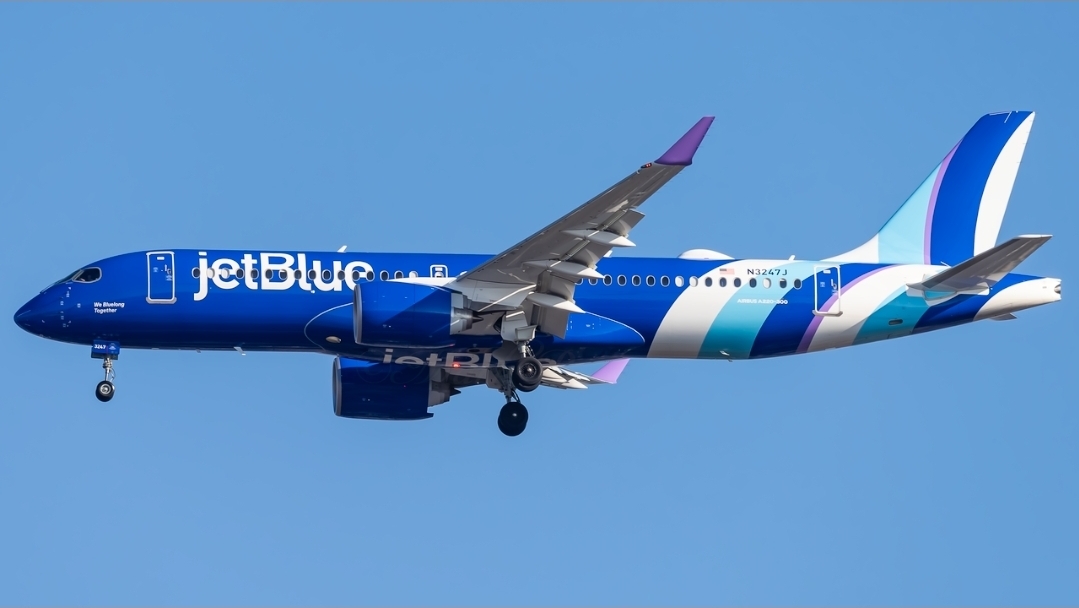
Aviation History #27: What Exactly Is JetBlue?
For years, people—passengers, analysts, and everyday travelers alike—have been asking, “What exactly is JetBlue?” Well, for Aviation History #27, I will, on behalf of the Brooke In The Air Travel team, attempt to answer this question!
From JetBlue’s initial founding in 2000 to its evolution today, JetBlue both delights and confounds passengers who have no idea what exactly the airline is. JetBlue began as a low-cost carrier, just as Spirit Airlines did. Of course, we know how Spirit Airlines went. If there were ever a museum of extinct airlines, Spirit would be the newest member. JetBlue will be joining the proverbial dustbin of history as well, and the “C-suite” knows that quite well, which is exactly what they are desperately trying to avoid. JetBlue, last year in 2025, would be best identified as a hybrid carrier; in other words, neither legacy nor low-cost. The airline was designed to disrupt legacy carriers and their route monopolies. This sounds rather heroic in a Hollywood sort of way, until one realizes the realities JetBlue has to navigate with this hybrid model and how it is changing in order to survive in an increasingly cutthroat market.
Currently, and for all of its history (though there was brief talk of moving south once it bought Spirit Airlines’ gates at Fort Lauderdale), JetBlue is headquartered in Long Island City, in Queens, New York City. Primarily a point-to-point carrier, as Southwest Airlines is, JetBlue's network features six focus cities, including its main hub and de facto base at New York City's John F. Kennedy International Airport (JFK), with destinations across the Americas and Europe. Although not a member of any global airline alliances, JetBlue has codeshare agreements with airlines from Oneworld, SkyTeam, and Star Alliance, though many such agreements were made throughout 2024–2025.
To truly dive in, we need some brief history. Let’s go!
David Neeleman founded the company in August 1999 under the temporary name "NewAir." JetBlue was incorporated in Delaware in August 1998 but did not start flying until 2000. JetBlue started by following Southwest's approach of offering low-cost travel but sought to distinguish itself through its amenities, such as in-flight entertainment, live TV at every seat, and SiriusXM satellite radio. These were revolutionary amenities that no other low-cost carrier had!
JetBlue sought to primarily use the Airbus A320 family to ease maintenance, taking a similar approach to Southwest, which primarily uses the Boeing 737 (as discussed in prior articles, especially on Southwest Airlines). Indeed, Neeleman used Southwest as a blueprint for his airline. Neeleman would go on to found or co-found other airlines, such as Canada’s WestJet, Mexico’s Azul Air, and current low-cost rising star Breeze Airways. With David’s exit, Joanna Geraghty was soon made CEO of JetBlue.
As a slightly comedic aside, JetBlue's founders had set out to call the airline "Taxi" and therefore have a yellow livery to associate the airline with New York. However, the idea was dropped after threats from investor JP Morgan (now JPMorgan Chase) to pull its share ($40 million of the total $128 million) of the airline's initial funding unless the name was changed. Thus, the name “Taxi” was dropped, and JetBlue was born.
JetBlue was one of only a small number of U.S. airlines that made a profit during the sharp downturn in airline travel following the September 11 attacks, 16 months after JetBlue first started flights and was awarded its very first set of 75 gates at New York (JFK). The company's planned initial public offering was put on hold due to the attacks and subsequent downturn. The IPO eventually took place in April 2002, raising $260 million at its NASDAQ debut.
Mini-Rivals Quickly Emerged From the Shadows
The airline sector responded to JetBlue and Southwest's market presence by starting mini-rival carriers: Delta Air Lines started Song, and United Airlines launched another rival called Ted. Song had a lime-green color scheme inside that hurt passengers’ eyes upon boarding and, after a short, failed experiment, was disbanded and reabsorbed by Delta. Ted faced similar issues. There was nothing positively distinguishing it from the mainline United fleet, and passengers truly found the aircraft, marketing, and branding annoying when the marketing was noticed as being different from United at all. The experiment with Ted lasted about six months, with the Ted aircraft subsequently reabsorbed by United and, after being refitted to United's standards, incorporated back into United’s mainline fleet.
JetBlue experienced its first-ever quarterly loss during the fourth quarter of 2005, when the airline lost $42.4 million, enough to make it unprofitable for the entire year of 2005. The loss was the airline's first since going public in 2002. In addition to that, JetBlue forecasted a loss for 2006, citing high fuel prices, operating inefficiency, and fleet costs. An especially critical factor was the ongoing Iraq War (2003–2012), which drove prices up, not just for fuel but across the board. In 2005, and for many years after, analysts had predicted that JetBlue's growth rate would become unsustainable. Despite this dour prediction, the airline continued to add planes (new A320s) and routes to the fleet at an incredibly brisk pace.
In addition, in 2006, the IAM (International Association of Machinists) attempted to unionize JetBlue's ramp service workers, in a move that was described by JetBlue's then-COO Dave Barger as "pretty hypocritical," as the IAM opposed JetBlue's creation when it was founded as New Air in 1998. The union organizing petition was dismissed by the National Mediation Board because fewer than 35 percent of eligible employees supported an election.
Note: Even as a small business, Brooke In The Air Travel supports unionization by employees and supports all stances/pillars the AFL-CIO stands for, as the U.S. was founded by union labor, and unions make us all stronger as workers, women, and, most of all, citizens. The only exception for a non-unionized company/corporation would be a company that provides for its employees willingly, making a union unnecessary in the first place. In law school, Brooke herself specialized in labor law and labor rights, so her passion is invested in the subject.
Moving back to JetBlue, in 2006, during the first-quarter report, CEO David Neeleman, President Dave Barger (former Chief Operating Officer), and then-CFO John Owen released JetBlue's "Return to Profitability" ("RTP") plan, stating in detail how they would curtail costs and improve revenue to regain profitability. The plan called for $50 million in annual cost cuts and a push to boost revenue by $30 million. In October 2006, JetBlue announced a net loss of $500,000 for the third quarter of that fiscal year, and a plan to regain that loss by deferring some of its Embraer E190 deliveries and selling five of its mainline Airbus A320s.
In December 2006, JetBlue, continuing as part of its RTP plan, removed a row of seats from its A320s to lighten the aircraft by 904 lb. and reduce the cabin crew size from four to three (per the FAA regulation requiring one flight attendant per every 50 seats), thus offsetting the lost revenue from the removal of seats and further lightening the aircraft, resulting in less fuel burned. As a result, in January 2007, JetBlue returned to profitability with a fourth-quarter profit in 2006, reversing a quarterly loss in the year-earlier period. As part of the RTP plan, 2006's full-year net loss was $1 million compared to 2005's full-year loss of $20 million.
While its financial performance started showing signs of improvement, in February 2007, JetBlue faced a crisis when the blizzard of 2007 hit the Northeast and Midwest, throwing the airline's operations into chaos. Because JetBlue followed the practice of never cancelling flights, it desisted from calling flights off, even when the ice storm hit and the airline was forced to keep several planes on the ground. Because of this, passengers were kept waiting at the airports for their flights to take off, which never did. In some cases, passengers who had already boarded their planes were kept waiting on the apron for several hours and were not allowed to disembark, resulting in numerous class-action lawsuits that JetBlue subsequently lost and forcing the FAA to create new rules for airlines. However, after all this, the airline was eventually forced to cancel most of its flights because of prevailing weather conditions. This reportedly cost JetBlue $30 million USD.
On October 22, 2008, JetBlue opened its new primary hub at John F. Kennedy International Airport Terminal 5, or simply T5, costing approximately $800 million to build. The first flight arrived from Bob Hope Airport (formerly Hollywood Burbank Airport, IATA code: BUR) at 5:06 a.m., followed by arrivals from Oakland International Airport (OAK) and Long Beach Airport (LGB), respectively. The new T5 replaced JetBlue's old hub at JFK in Terminal 6. The last flight to operate out of T6 was a departure to Rafael Hernández Airport in Aguadilla, Puerto Rico, departing at 11:59 p.m.
Moving ahead just a bit, on June 13, 2012, JetBlue ranked "Highest in Customer Satisfaction Among Low Cost Carriers in North America" by J.D. Power and Associates for the eighth year in a row.
In 2013, things truly began to change as JetBlue introduced Mint. Mint is a premium cabin service on transcontinental and select Caribbean flights (now offered on JetBlue's limited European routes, too). The service began in 2014, using the Airbus A321-200 aircraft ordered by JetBlue. These planes are outfitted with winglets, as well as "lie-flat" seats and moveable partitions that can create small suites on the airplane. Called "Mint" by JetBlue, these planes are configured with 16 business-class seats and 143 economy seats, instead of an all-economy configuration of 190 seats that the airline had started out with.
The next year, in 2014, JetBlue's pilots voted to officially unionize for the first time since the airline was founded, with 71% casting ballots in favor of joining the ALPA.
On September 18 of that year, Dave Barger announced his resignation from the company, effective February 16, 2015, following several reports that investors and the board were unhappy with his performance. He was replaced on the board and as CEO by Mr. Robin Hayes.
On August 31, 2016, JetBlue Flight 387 from Fort Lauderdale–Hollywood International Airport to Abel Santamaría Airport in Santa Clara became the first scheduled commercial flight between the United States and former-Soviet Cuba in 55 years, a first for international relations.
In July 2017, JetBlue announced it was taking qualifications to develop a terminal at JFK that would not only occupy Terminal 5 but also the space of Terminals 6 and 7. In April 2018, JetBlue announced its return to Ontario International Airport in Southern California after ten years, as well as commencing new service to Steamboat Springs in Colorado and Bozeman in Montana.
During Fiscal Year 2018, JetBlue, along with 90 additional Fortune 500 companies, "paid an effective federal tax rate of 0% or less" as a result of Donald Trump's Tax Cuts and Jobs Act of 2017, while standard line employees at JetBlue paid upwards of 8.9% state income tax, on top of hiked federal tax rates and federal interest rate hikes.
While COVID destroyed global aviation and travel, JetBlue did take proactive measures. By August 2020, JetBlue, along with Southwest Airlines, implemented strict policies for the wearing of face masks, which did not allow for any medical exemptions, as part of its procedures during the pandemic. The airline also announced that it would continue to block middle seats through at least mid-October, perhaps later into 2021.
On July 9, 2020, JetBlue announced the imminent closure of its base at Long Beach Airport and transfer of the base's operations to Los Angeles International Airport (LAX) from October 6, 2020. JetBlue had spent years negotiating to create a U.S. Customs and Border Protection station at the airport, and in 2017, despite a favorable recommendation from the city administration, the city council voted against the plan. The city and the airline also had disputes over late landings and slot usage. However, this was short-lived because, in September 2024, JetBlue officially closed its LAX focus city due to the federal court blocking its merger with Spirit Airlines, causing massive cuts and downgrading LAX from an operating base to a mere “spoke city” in its system for now. As of late 2026, it remains to be seen if JetBlue will reopen its LAX operating base or instead replace it with a different city in the region, such as Ontario, Burbank, or Santa Ana, all three of which are LAX network airports and cities JetBlue currently serves.
On July 16, 2020, American Airlines joined JetBlue in a strategic partnership called the "Northeast Alliance," which allowed the two carriers to share passengers and revenue and coordinate schedules for flights to and from New York's three major airports and Boston. While the deal with American had the blessing of the Trump administration, the Department of Justice under then-President Biden, along with six states (New England) and the District of Columbia, initiated an antitrust lawsuit in 2022.
On May 19, 2023, after a year-long court battle, the court ruled against the two airlines, holding that the JetBlue–American partnership was anticompetitive and ordering the alliance to be unwound on grounds of antitrust law violations. Despite American announcing it would appeal, JetBlue said it would follow the judge's order and terminate its three-year alliance. In court, JetBlue said ending the alliance would render "entirely moot" the Justice Department's objections that led to its separate lawsuit to block JetBlue's proposed merger with then-active Spirit Airlines, which would be the largest in the U.S. airline industry since 2013, when American Airlines finalized its merger with US Airways. American said it "respected JetBlue's decision to focus on its other antitrust and regulatory challenges" but still planned to proceed with its appeal. In late 2023, the appeal was later denied by a federal judge.
When the Spirit Airlines case finally went to trial in the holiday season of 2023, JetBlue argued that if it acquired Spirit and thus grew its fleet by 70%, it would be more able to compete with the Big Four airlines (United Airlines, American Airlines, Delta Air Lines, and Southwest Airlines). The Justice Department argued that an independent Spirit fills a role for price-conscious consumers that needs to be protected. JetBlue said the vacuum Spirit Airlines would leave in the market would be filled by growth from other budget carriers. The Justice Department said that was unlikely because the limits to growth that airlines face, such as shortages of planes and pilots, affect all airlines, including the discount carriers.
In a ruling on January 16, 2024, a federal judge officially blocked JetBlue's acquisition of Spirit Airlines. The two airlines initially said they would appeal, but on March 4, 2024, they announced they were calling off the merger, with JetBlue paying Spirit a breakup fee of $69 million and Spirit's shareholders $400 million. Of course, Spirit Airlines filed for bankruptcy in late April 2026 and went out of business on May 3, 2026.
On February 1, 2021, JetBlue introduced its new Mint product called Mint Suite, which was to be configured on its entire Airbus A321LR fleet for its future transatlantic flights to London and on some of its A321neo aircraft for select flights initially to Los Angeles.
In April, JetBlue announced that the airline would finally be expanding into Canada, announcing new routes between Vancouver (YVR) and both New York City (JFK) and Boston (BOS). Just days later, JetBlue held its inaugural Airbus A220-300 flight, which flew from Boston Logan International Airport to Tampa International Airport.
In November 2022, JetBlue confirmed plans to fly from New York (JFK) to Paris (CDG) starting in summer 2023.
In April 2023, JetBlue continued its sizable international expansion, announcing that it would add Amsterdam to its list of international destinations with a new route from John F. Kennedy International Airport to Amsterdam Airport Schiphol in late summer 2023.
Robin Hayes, JetBlue's CEO, said that the New York (JFK) to Amsterdam (AMS) route is "long overdue for some competition.”
In October 2023, JetBlue announced it would add flights from both Boston and New York (JFK) to Dublin, Ireland (DUB), and New York (JFK) to Edinburgh, Scotland (EDI), in 2024. Service from Boston to Amsterdam would also begin that year. The announcement brought JetBlue's list of transatlantic destinations to six.
In January 2024, JetBlue announced that CEO Robin Hayes would step down effective February 12 and would be replaced by President Joanna Geraghty. She became the first woman to lead a major U.S. airline and still leads JetBlue today.
On February 7, 2024, the airline announced that Marty St. George would return to the airline as president starting on February 26, 2024, after leaving the airline back in 2020 to become the COO of LATAM Airlines Group.
In April 2025, American Airlines announced it was suing JetBlue for over $1 million in unpaid obligations dating back to their dissolved Northeast Alliance. Litigation is still continuing, and the lawsuit is pending as of this article's writing.
In May 2025, JetBlue and United Airlines announced a new partnership involving reciprocal frequent-flier benefits and shared booking access. This is officially known as the BlueSky Alliance. United will return to JFK via at least seven JetBlue gate slots by mid-2027.
In March 2026, it was confirmed that JetBlue hired financial advisors to manage a possible sale of itself and all of its assets as it talked to rival airlines about a possible acquisition of the company. In April 2026, founder David Neeleman warned that JetBlue may not be able to continue operating as normal and claimed that it was on the verge of filing for Chapter 11 bankruptcy. United Airlines was listed as one possible buyer, though CEO Scott Kirby has disputed this entirely and dismissed talk of a merger or buyout.
However, CEO Joanna Geraghty disputes these claims, stating that the airline had no plans to file for bankruptcy in 2026, despite rising jet fuel prices. Geraghty claimed that JetBlue secured over $500 million in debt financing to support up to 22 aircraft.
In terms of JetBlue's network, it has fingers in tons of cookie jars, if you'll forgive the metaphor.
As of January 2025, JetBlue Airways flies to 104 destinations in the Americas, with most of them in the United States and the Caribbean, a smaller selection of destinations in parts of Central and South America, and four destinations in Europe.
As of late 2025, JetBlue has expanded Mint offerings to routes to cities in the United States, Canada, Latin America, the Caribbean, the United Kingdom, France, Ireland, the Netherlands, and Spain.
This is where codeshare agreements make their presence known.
JetBlue has officially entered into a number of codeshare agreements with other airlines, meaning airlines agree to share certain flights, which both airlines market and publish on their own flight schedules under their respective airline designators and flight numbers. This is most visibly represented by JetBlue's alliance with United Airlines, the BlueSky Alliance.
Here we present a brief overview of JetBlue's current cabin offerings.
Core
On most of its aircraft, JetBlue offers a uniquely unified cabin experience called Core. In Core, some rows offer customers as much as 7 extra inches of legroom, referred to as “Even More Space” seats.
The Core cabin includes leather seats, complimentary Wi-Fi, complimentary snacks and non-alcoholic drinks, and entertainment screens with DirecTV, SiriusXM Radio, and movies.
The airline restyled Core seats in 2014 with the debut of JetBlue's first Airbus A321. The revamped Core seats started to appear on the airline's A320 aircraft in 2018, with further modifications in 2019. This seat design carried over to JetBlue's Airbus A220 aircraft upon launch.
Mint / Mint Suites
In 2014, the airline introduced its version of a business-class cabin, called Mint. The service was originally available only on transcontinental domestic routes on select Airbus A321s starting in 2014. The seat design includes fully lie-flat seats, some of which have sliding panels for more privacy.
Mint has since been expanded to select Caribbean routes, and in 2021, a newly reimagined version of the service and seating was announced. The average cost of a one-way Mint ticket is around $2,200 USD.
The Mint sub-fleet consists of exclusive A321 aircraft with 159 seats, including 16 flat-bed Mint seats. The Mint seat is a version of the Thompson Aero Vantage business-class seat, with extra storage and dual 120 V + USB power outlets at every seat.
Four of the 16 Mint seats are mini-suites, which include a sliding door for privacy. The seats have a width of up to 22.3 inches and can convert to a flat bed of up to 6 ft. 8 in. in overall length. Pairs of non-suite Mint seats alternate with single mini-suite seats. The seats use air cushioning, allowing passengers to adjust the firmness of the seats.
Main cabin (economy class) on JetBlue's premier Mint A321 aircraft uses specialized B/E Aerospace Pinnacle slimline seats, with a seat pitch of 33 inches in the main cabin and up to 37 inches in the "Even More" extra-legroom product (premium economy on other airlines). There are two power outlets per row of economy-class seats.
Mint (business-class) and Mint Suite passengers receive deluxe in-flight meal service. Amenity kits are provided by the CARRA brand, with other companies as seasonally required by the contract between the airline and the toiletry brand.
JetBlue's in-flight entertainment options are available to all passengers and consist of gate-to-gate “Fly-Fi” internet access, over 100 channels of DIRECTV, SiriusXM Radio, and movies, and, on the Airbus A321 and newer retrofitted Airbus A320 aircraft, a 15-inch interactive video screen that is not available on the rest of the fleet. JetBlue's partnership with Amazon lets customers watch Amazon Prime videos by connecting to Wi-Fi and downloading the Amazon Video app on their mobile phone or tablet.
The in-flight Wi-Fi is under the "Fly-Fi" network name and is complimentary on all flights, at speeds of 12–15 megabits per second.
Will JetBlue be bought out? Every analyst, including us, has opinions. We may be wrong, but we heartily believe United Airlines will buy out or at least merge with JetBlue by 2028. What is JetBlue's corporate identity and identity in general? Looking at JetBlue's network and the growth they have put themselves through since COVID, JetBlue can best be described as a leisure carrier with an option for first-class offerings. Their alliance with United, their expansion of overseas destinations, their making the Caribbean their own proverbial sandbox, and their leisure-oriented marketing all point to this definition of JetBlue.
Thank you all for reading, and we hope you don't necessarily agree, but that you preferably draw your own conclusions before booking a ticket on JetBlue. Instead, book a travel consultation with Brooke In The Air Travel at brookeintheairtravel.net!
Join Influential Women and start making an impact. Register now.