Let's Talk About the Fallacy of Stealth
Understanding the misconceptions, costs, and limitations of stealth technology in modern military aviation.

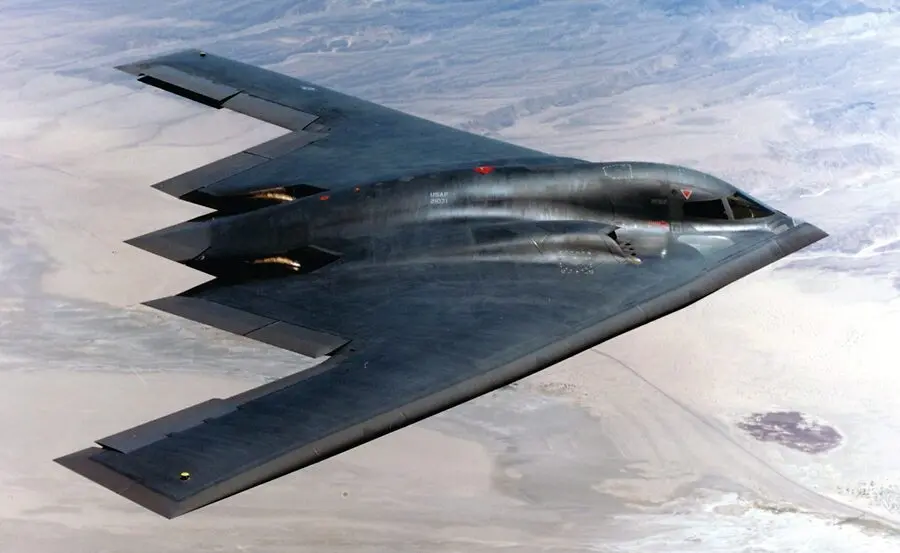
Stealth Is Not Invisibility: The Cost, Complexity, and Reality of Modern Stealth Technology
Stealth needs to be discussed given the current state of military affairs and the Pentagon's continued emphasis on stealth as the pinnacle of technological capability. If you're looking for one of my civilian or travel articles, don't worry-they will be back very soon. In the meantime, indulge this diversion from my usual content as a former military analyst; my team does (haha).
The reason for this focus is simple: the United States military is deeply invested in the concept of stealth.
However, many people misunderstand what stealth actually means. A common misconception is that stealth equals invisibility. According to the laws of physics, that belief is erroneous and fundamentally flawed.
Stealth does not make an aircraft disappear.
It reduces detectability.
Radar-Absorbent Materials (RAM) are specialized materials designed to scatter and disperse incoming radio waves, reducing an aircraft's radar signature and making detection more difficult for ground-based or airborne radar systems. These materials may include carbon-based treatments, foam-absorbing layers, and specialized polymers incorporated into an aircraft's structure.
However, this technology comes at an extraordinary cost.
The development and construction of stealth aircraft are among the most expensive endeavors in military aviation history. The Northrop Grumman B-2 Spirit stealth bomber cost approximately $2.1 billion per aircraft, while the Lockheed F-117 Nighthawk stealth fighter cost approximately $1.68 billion per unit during the period when both aircraft represented the height of American technological innovation.
The United States military's fascination with stealth is understandable. The ability to reduce detection provides a significant tactical advantage. However, stealth is not a guarantee of victory, nor does it make an aircraft invulnerable.
The Cost of Stealth
The financial burden of stealth technology is especially apparent when examining the Lockheed Martin F-35 Lightning II program.
The F-35 exists in three variants: the F-35A, F-35B, and F-35C. According to publicly available estimates, the approximate flyaway costs are:
- F-35A: approximately $82.5 million per aircraft
- F-35B: approximately $109 million per aircraft
- F-35C: approximately $102 million per aircraft
For comparison, the Boeing F-15EX Eagle II, a modernized version of the classic F-15 platform, costs approximately $91 million per aircraft.
Although the F-15EX may appear more expensive compared with certain F-35 variants, operational costs are a significant consideration. The F-15EX is generally less expensive to maintain and operate because it does not require the specialized facilities, equipment, and personnel needed to preserve stealth coatings and materials.
The same principle applies to other non-stealth aircraft, including the Lockheed Martin F-16 Fighting Falcon and Boeing F/A-18E/F Super Hornet.
According to estimates from the Congressional Budget Office, the F-35's operating costs average between approximately $33,000 and $42,000 per flight hour depending on the variant, upgrades, and maintenance requirements. By comparison, the F-15EX is estimated at approximately $29,000 per flight hour.
These costs ultimately affect taxpayers.
The Three F-35 Variants
To understand the F-35 program, it is important to understand the differences between the three variants.
The F-35A is the conventional takeoff and landing version designed primarily for the United States Air Force. It carries a larger internal payload capacity and uses a traditional runway-based operating system.
The F-35B was developed primarily for the United States Marine Corps. It features short takeoff and vertical landing (STOVL) capability through a complex propulsion system.
The F-35C is the carrier-based variant designed for the United States Navy. It includes larger wings, reinforced landing gear, and an arrestor hook system for aircraft carrier operations.
While the United States is increasingly adopting unmanned systems and drone technology, the F-35 remains a central component of American airpower.
However, the aircraft's stealth advantages are often misunderstood.
Stealth Is Not Invisibility
The F-35's radar-absorbent coatings provide a reduced radar signature, but they do not eliminate detection.
When the aircraft opens its internal weapons bays, its radar profile changes. The weapons bay doors and internal surfaces create additional challenges because stealth optimization is not identical throughout every exposed area of the aircraft.
Furthermore, when external weapons are mounted on the aircraft's hardpoints, the stealth advantage is reduced significantly. The F-35A, for example, has external hardpoints that allow increased weapons capacity but compromise its low-observable characteristics.
At that point, the aircraft transitions from a stealth platform into a conventional combat aircraft with additional limitations.
Stealth reduces risk.
It does not remove risk.
The idea that stealth creates an unbeatable aircraft is a misunderstanding of both technology and warfare.
Stealth Does Not Guarantee Victory
Stealth provides advantages, particularly during the opening stages of conflict. It can allow aircraft to penetrate defended airspace, gather intelligence, and conduct precision strikes with reduced probability of detection.
However, if an adversary survives the initial attack, the situation becomes significantly more complicated.
The enemy will adapt.
They will analyze tactics.
They will improve detection methods.
They will adjust their defensive strategies.
Modern warfare rarely produces an "instant-win" scenario.
History demonstrates this clearly.
During Operation Allied Force in 1999, a Yugoslav air defense unit commanded by Zoltán Dani successfully shot down an Lockheed F-117 Nighthawk using a modified Soviet-era S-125 Neva surface-to-air missile system.
Whether the engagement was the result of careful planning, intelligence gathering, timing, or opportunity, the event demonstrated one important reality:
Stealth aircraft can be detected.
The F-15 and F-16 by Contrast
The F-15 and F-16 represent a different philosophy of military aviation.
The F-15 was designed primarily for air superiority. It is fast, powerful, and capable of carrying significant weapons loads.
The F-16 was designed as a lightweight, multirole fighter capable of air combat, ground attack, and support missions.
The F-16 is often affectionately compared to the "Honda" of fighter aircraft because it is:
- Relatively affordable.
- Reliable.
- Highly adaptable.
- Easy to operate and maintain.
The F-16 Fighting Falcon has become one of the world's most widely used combat aircraft, including through international partnerships and transfers to countries such as Ukraine.
By comparison, the F-35 requires extensive specialized training due to the complexity of its sensors, systems, and stealth capabilities.
An F-35 pilot must learn not only how to fly the aircraft but how to integrate its advanced technology into tactical operations.
Training, Ego, and the Illusion of Stealth
The advanced nature of the F-35 has contributed to a perception that American pilots are unmatched worldwide.
The reality is more nuanced.
The pilots of the United States Air Force and United States Navy are among the most highly trained aviators in the world. However, military effectiveness is not determined solely by technology or training.
Combat experience matters.
Organizations such as the Ukrainian Air Force have gained extensive operational experience through ongoing combat conditions. The Hellenic Air Force of Greece is also widely respected for its pilot training and operational proficiency despite its smaller size.
The issue is not whether stealth technology works.
It does.
The issue is whether stealth has been presented as something it is not: an invincible shield.
Stealth is a tool.
It is not magic.
The Reality of Stealth Technology
The challenges surrounding stealth include:
- High construction costs.
- Expensive maintenance requirements.
- Complex operational demands.
- Increased training requirements.
- The public perception that stealth equals superiority in every situation.
Stealth provides strategic advantages, but it does not eliminate uncertainty, human error, or enemy adaptation.
The future of military aviation will likely involve a combination of stealth aircraft, drones, advanced sensors, artificial intelligence, and traditional platforms working together.
Technology changes warfare.
But technology does not eliminate warfare's fundamental realities.
The aircraft may become harder to detect.
The weapons may become more advanced.
The systems may become more intelligent.
But no technology makes victory automatic.
Stealth is not invisibility.
It is simply another tool in the ongoing competition between innovation and adaptation.