George Welch: Hero of Pearl Harbor & Pioneer of Supersonic Flight
The remarkable story of 2nd Lieutenant George Welch Jr., America's Pearl Harbor hero and aviation pioneer.

Aviation Heroes of History
I feel the need to start yet another new series. We shall see whether this becomes a true series or simply a one- or two-article sub-series. Here's hoping.
This series will be known as Aviation Heroes of History, capitalizing on my background with the Institute for the Study of War scholarship program, my love of aviation, and my passion for historical research. I hope you'll forgive this indulgence because I think you'll enjoy learning a thing or two about aviation history.
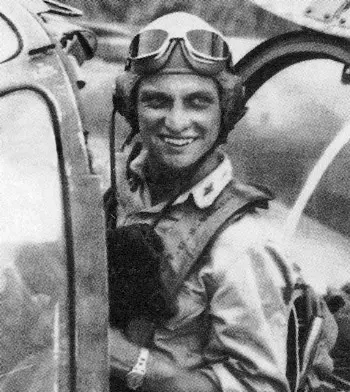
We'll start the series with an airman of the United States Army Air Corps (now the U.S. Air Force) on Sunday, December 7, 1941. I refer to none other than American hero and aviation pioneer 2nd Lieutenant George Welch Jr. Welch is famed for his exploits during the horrific day when the Imperial Japanese Navy attacked the American naval base at Pearl Harbor, resulting in nearly 2,000 deaths.
The focus of this series is aviation heroism, so I will do my best not to get sidetracked. I apologize in advance if that happens. We'll begin with a brief biography of each airman.
A Short Bio
Lieutenant George Schwartz Welch was born George Lewis Schwartz Jr. to George Lewis Schwartz Sr. and Julia Ann Welch. His parents later changed the family's surname to Welch to avoid the anti-German sentiment in American society that followed World War I. His father was a senior research chemist at DuPont's Experimental Station in Wilmington, Delaware, while his mother gave up her career aspirations to become a homemaker.
George had a younger brother, Dehn Schwartz Welch, who lived until 1999 and served in the U.S. Army until the end of World War II in 1945. Unfortunately, little is known about his brother.
George attended St. Andrew's School, a private coeducational boarding school in Delaware, although little—even in his biography—is documented about his time there.
George completed three years of a mechanical engineering degree at Purdue University before joining the Army Air Corps in 1939. He later completed his degree after the war while serving as a test pilot for the U.S. Air Force. While attending Purdue, he was initiated into the Delta Upsilon fraternity.
His Army Air Corps flight training included Brooks Field, Kelly Field, and Randolph Field (now Randolph Air Force Base) in San Antonio, Texas, as well as Hamilton Field in Novato, California. Most of these installations remain active military facilities; only Brooks Field and Hamilton Field have been closed. These schools taught him flight operations, gunnery, navigation, and the foundational skills that would eventually make him an ace.
After receiving his wings and commission in January 1941, Welch was assigned to the 47th Pursuit Squadron, 15th Pursuit Group, U.S. Army Air Corps, at Wheeler Field on Oahu, Hawaii, in February 1941.
This assignment set the stage for his moment of glory.
December 7, 1941
In the early morning hours of December 7, 1941, 2nd Lieutenant Welch and fellow pilot 2nd Lieutenant Kenneth Taylor were returning from a Christmas dinner and dance at a rooftop hotel in Waikiki that had ended with an all-night poker game. They were still wearing their mess dress uniforms when the Japanese launched the first wave of attacks on Pearl Harbor.
Welch telephoned the auxiliary Haleiwa Fighter Strip on Oahu's North Shore and instructed personnel to prepare two Curtiss P-40B Tomahawk fighters for takeoff.
Taylor immediately drove his Buick at high speed to Haleiwa to join the battle. As they climbed into their P-40s, the crew chiefs informed them they should disperse the aircraft rather than engage the enemy.
"To hell with that," Welch reportedly replied.
Taking off with only .30-caliber ammunition in the wing guns, Welch claimed two Aichi D3A "Val" dive bombers over Ewa Mooring Mast Field. The first Japanese aircraft was damaged but managed to return to its carrier. The second was finished off by Kenneth Taylor shortly before he landed at Wheeler Field, which was under attack, to reload his two cowl-mounted .50-caliber machine guns. Welch landed minutes later to do the same.
The P-40B (the P-40 would eventually be produced in five variants, the P-40B, P-40C, P-40D, P-40E, and the P-40F, such was its extreme popularity) carried four machine guns: two wing-mounted .30-caliber guns and two cowl-mounted .50-caliber guns.
On his second sortie, Welch shot down another "Val" dive bomber that was attacking Taylor. The aircraft crashed near the town of Wahiawa, a suburb of Honolulu. He then destroyed a Mitsubishi A6M Zero approximately five miles west of Barbers Point.
For geographical context, Ewa Mooring Mast Field later became Marine Corps Air Station Ewa (MCAS Ewa), which is now closed per order from Congress.
The Distinguished Service Cross
Welch was promoted to captain and nominated for the Congressional Medal of Honor. However, the nomination was denied because he and Taylor had technically violated standing orders by flying into combat without authorization.
Instead, President Franklin D. Roosevelt, on behalf of the Army Air Corps, awarded Welch the Distinguished Service Cross, the Army's second-highest award for valor.
Part of Welch's Distinguished Service Cross citation reads:
"...During this combat, his plane was struck by three bullets from the rear gun of the ship he was attacking, one striking his motor, one the propeller, and one the cowling... Lieutenant Welch's initiative, presence of mind, coolness under fire against overwhelming odds in his first battle, expert maneuvering of his plane, and determined action contributed to a large extent toward driving off this sudden unexpected enemy air attack..."
American Equipment Losses at Pearl Harbor
For context, American losses at Pearl Harbor included eight battleships, one training ship, three cruisers, four destroyers, and numerous support vessels. Below is a summary of the major losses.
Battleships
- USS Arizona - hit by four armor-piercing bombs; exploded and was a total loss. 1,177 dead.
- USS Oklahoma - hit by five torpedoes; capsized and was later salvaged before sinking en route to scrapping in 1947. 429 dead.
- USS West Virginia - hit by two bombs and seven torpedoes; returned to service in July 1944. 106 dead.
- USS California - hit by two bombs and two torpedoes; returned to service in January 1944. 104 dead.
- USS Nevada - hit by six bombs and one torpedo; beached and returned to service in October 1942. 60 dead.
- USS Pennsylvania - damaged while in dry dock; remained in service. 9 dead.
- USS Tennessee - hit by two bombs; returned to service in February 1942. 5 dead.
- USS Maryland - hit by two bombs; returned to service in February 1942. 4 dead.
Most of the salvaged battleships later fought in the Battle of Surigao Strait, the last battleship-versus-battleship engagement in history.
Training Ship
- USS Utah - hit by two torpedoes; capsized and became a total loss. 64 dead.
Cruisers
- USS Helena - hit by one torpedo; returned to service in January 1942.
- USS Raleigh - hit by one torpedo; returned to service in February 1942.
- USS Honolulu - sustained light damage from a near miss and remained in service throughout the war.
Destroyers
- USS Cassin - heavily damaged in dry dock; rebuilt and returned to service in February 1944.
- USS Downes - burned after catching fire from USS Cassin; rebuilt and returned to service in November 1943.
- USS Helm - damaged by near misses but remained operational.
- USS Shaw - hit by three bombs; returned to service in June 1942.
Auxiliary Support Vessels
- USS Oglala - capsized after damage from a torpedo explosion; later returned to service.
- USS Vestal - damaged by bombs and the explosion aboard USS Arizona; returned to service by August 1942.
- USS Curtiss - damaged by a bomb and a crashing Japanese aircraft. 19 dead.
- USS Sotoyomo - damaged by the explosion aboard USS Shaw; later repaired.
- USS YFD-2 - damaged and sunk before later returning to service.
Test Pilot for North American Aviation
In the spring of 1944, Welch was approached by North American Aviation to become a company test pilot. With General Arnold's recommendation, Welch resigned his commission in the U.S. Army Air Forces and accepted the position.
His final military rank was major in the Air Force Reserve. His military career spanned from November 13, 1944, until his retirement on April 1, 1953, encompassing service during both World War II and the Korean War.
As a North American Aviation test pilot, Welch flew prototypes of the Navy's FJ-1 Fury and later the Army Air Forces' XP-86.
North American initially proposed a straight-wing XP-86, which the Army Air Forces accepted on May 1, 1945. On November 1, using captured German aerodynamic research, the company proposed a major redesign featuring 35-degree swept wings.
This aircraft evolved into the legendary F-86 Sabre, one of the U.S. Air Force's first premier jet fighters.
Did Welch Break the Sound Barrier Before Yeager?
In Aces Wild: The Race for Mach 1 (1998), fellow North American test pilot Al Blackburn speculated that Welch may have broken the sound barrier two weeks before Chuck Yeager during an early XP-86 test flight. Welch himself never made that claim.
Robert Kempel, co-author of The Race for Mach I, disputed Blackburn's theory, arguing that the XP-86's underpowered engine made supersonic flight impossible.
Kempel acknowledged that the airframe was capable of transonic speeds, but the interim J35-C-3 jet engine limited its performance.
Legendary test pilot Bob Hoover, who flew chase aircraft for both Welch and Yeager, also disputed the claim, stating that Welch's aircraft was undergoing repairs on the day in question.
Official flight records indicate Welch reached approximately Mach 0.93 during a powered dive from 45,114 feet on November 13, 1947. North American documented these results during its High-Mach Number Investigation, and the U.S. Air Force later confirmed them during Phase II testing.
Korea and the F-100 Super Sabre
During the Korean War, Welch served as North American Aviation's chief test pilot, engineer, and instructor. He reportedly shot down several MiG-15s while supposedly supervising student pilots. Because he had been ordered not to engage in combat, official credit for those victories was reportedly given to his students.
Following the war, Welch returned to flight testing, this time flying the F-100 Super Sabre while Chuck Yeager piloted the chase aircraft.
On May 25, 1953, Welch became the first person to break the sound barrier in level flight in an F-100.
Welch's Death
Stability issues plagued the F-100 flight test program. On October 12, 1954, Welch's F-100A Super Sabre disintegrated during a 7-G pullout at Mach 1.55 from 45,000 feet and crashed on Rosamond Dry Lake in California's Mojave Desert.
Welch was found still strapped into his ejection seat and critically injured. He was evacuated by helicopter but was pronounced dead upon arrival at the U.S. Air Force Plant 42 hospital in Palmdale, California.
He is buried at Arlington National Cemetery.
I hope you found this article enlightening, informative, and entertaining—and perhaps that it made you think a little differently about one of aviation's greatest heroes.
If you're interested in learning more, I highly recommend the book Aces Wild: The Race for Mach 1 by Robert Kempel. It is a fascinating read and offers valuable insights into George Welch that are difficult to find elsewhere.
And remember, you can learn more about aviation history, travel tips, and itinerary planning by booking a consultation with Brooke In The Air Travel at brookeintheairtravel.net.