I Spent Years Fighting to Be Heard. Now I’m Making Sure Others Have a Voice.
From Silent Suffering to Systemic Change: How One Woman's Lupus Diagnosis Became a Call to Dismantle Healthcare's Culture of Dismissal

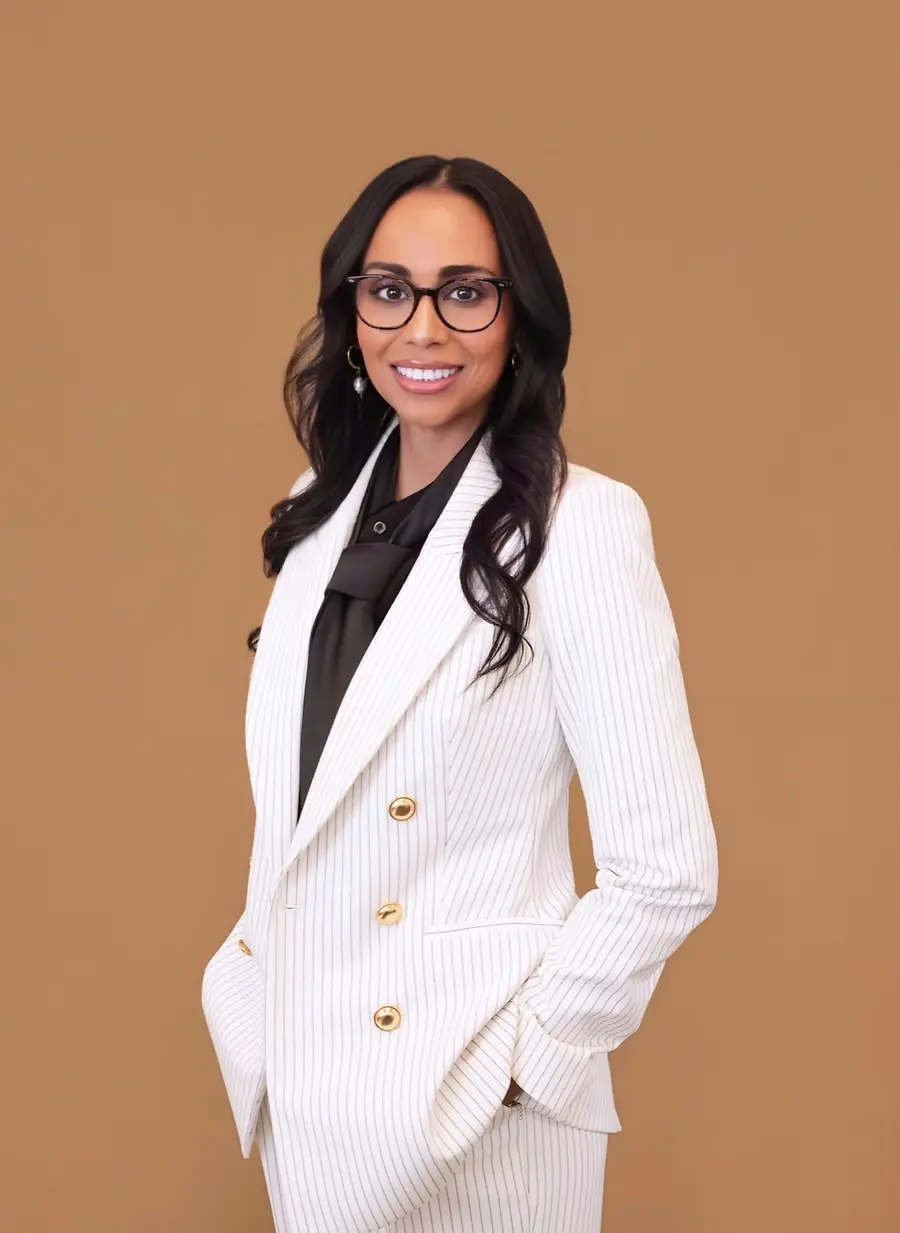
There is a particular kind of loneliness that comes from knowing something is deeply wrong and having no one believe you.
I know that loneliness intimately.
For six years, I lived with symptoms I could not explain: chronic pain, profound exhaustion, swelling, fainting spells, and a quiet, persistent instinct that my body was breaking down. I sought answers from medical professionals, but too often, my concerns were minimized or dismissed.
Over time, I internalized that dismissal. I wondered if I was exaggerating. I told myself to push through because I had responsibilities, children to raise, and a life to build. The world didn't stop simply because I was struggling.
Then, one night in an emergency room, the paradigm broke.
I was a young mother with two small children, terrified, in agonizing pain, and on the verge of being sent home with another non-answer. That night, I refused to accept it. I insisted on further testing.
Those tests revealed systemic lupus erythematosus with kidney involvement—lupus nephritis.
I finally had a diagnosis, but it arrived alongside the terrifying reality of losing my kidneys. What I remember most about that evening was not just the fear. It was the complicated, heartbreaking relief of finally being believed—and the chilling realization of how close silence had come to costing me my life.
The Cost of Silent Endurance
My story did not begin with an autoimmune diagnosis. It began in Honduras, where childhood taught me lessons about survival, responsibility, and self-reliance long before I understood their emotional price tag.
When I immigrated to the United States as a teenager, I carried that conditioning with me. At eighteen, after learning my prior schooling wouldn't be recognized for community college admission, I refused to accept defeat. I walked into a local American high school on my own, enrolled myself, earned my diploma, and worked multiple jobs to fund my education.
I was proud of that grit. But resilience has a dangerous shadow side.
I had become so accustomed to overcoming obstacles that I equated strength with silence. I believed being strong meant needing very little, keeping quiet, and carrying an unsustainable load without dropping a single plate.
This is a familiar trap for ambitious women.
We are routinely celebrated for being accommodating, self-sacrificing, and endlessly capable. But too often, the traits society praises in women become the exact reasons our needs are overlooked. A woman who consistently delivers must have everything under control. A mother who keeps showing up must be managing.
Living with lupus forced me to confront a difficult truth: surviving and living are not the same thing.
True strength is not measured by how much suffering you can conceal. I did not need to become better at enduring pain; I needed to recognize that my pain deserved attention. That realization didn't just save my health; it fundamentally redefined how I lead.
When Science Became Personal
A year after my diagnosis, our family faced another medical crisis: my husband was diagnosed with cancer. We watched him enter a clinical trial, securing the final available spot. Today, because of that research, he is cancer-free.
That experience fundamentally altered my understanding of biomedical research. Science was no longer an abstract discipline confined to academic journals and laboratory benches. It was time. It was another chance at life.
It also forced an unavoidable question: Why weren't autoimmune diseases treated with the same urgency, resources, and transformative clinical focus as oncology?
That question propelled me into microbiology, immunology, and data science. I didn't want to remain a patient, passively waiting for answers. I wanted to help generate them.
Today, as Co-Founder and Chief Operating Officer of Resonance Life Sciences, I sit on the other side of the laboratory bench, helping develop microbiome-based therapeutics for chronic inflammatory and autoimmune conditions.
In biotech leadership, we often talk about biomarkers, data integrity, and regulatory frameworks. Those standards are vital. But true healthcare innovation requires an additional layer of insight: the perspective of the person waiting on the other side of the diagnosis.
Data can tell us what is changing biologically in the body. Patients tell us what is changing in their lives. We need both.
Improving a lab value means very little if a patient still cannot work a full day, think through debilitating brain fog, or spend an afternoon with her children without crushing exhaustion. Integrating lived experience into drug discovery is not an act of charity; it is an operational necessity for building therapeutics that actually work in the real world.
Advocacy: Translating Lived Experience into Systemic Change
Yet discovering therapies in a laboratory solves only half of the equation. Scientific innovation without accessible, compassionate healthcare leaves patients just as stranded as they were before. That is why advocacy has become just as essential to my work as biotechnology.
Through my work with patient advocacy organizations, research initiatives, and support communities, including collaborating with groups like the Lupus Research Alliance and Lupus Therapeutics, I have committed to bringing the human reality directly into rooms where clinical decisions, trial designs, and policies are formulated.
Advocacy is about fundamentally shifting the power dynamic in healthcare. It means teaching newly diagnosed patients that asking hard questions is not being “difficult”—it is self-preservation. It means pushing clinical trial designers to measure outcomes that reflect daily human function, not just clinical markers on paper. And it means demanding that health systems actively listen to women and marginalized communities who have been conditioned to stay quiet about their suffering.
Every time I sit at a table with clinicians, regulators, or fellow researchers, I carry the memory of the young mother who sat in an emergency room pleading for someone to listen. I cannot change what happened to her. But through relentless advocacy, I can ensure that her ordeal helps reshape the standard of care for the next person who walks through those doors.
Claiming a Seat at the Table
When I look back at the trajectory that brought me here, I see how every chapter informs the leader I am today: the young girl in Honduras learning resourcefulness, the immigrant teenager determined to build a future, the mother in the emergency room demanding to be heard, and the executive and advocate now shaping scientific discovery.
For decades, I operated under the belief that I had to earn my worth through relentless sacrifice and endurance. I thought that if I worked hard enough, accommodated enough, and stayed quiet through enough pain, someone might eventually invite me to take a seat at the decision-making table.
I no longer believe that.
We do not need to earn our right to be heard through silent suffering. We already belong in the room.
Influence is not merely a byproduct of titles, capital raised, or professional visibility. The true measure of leadership lies in what shifts because you were willing to use your voice:
Did you challenge a broken system?
Did you validate someone who had been dismissed?
Did you hold the door open for those still standing outside?
I never chose lupus, and I will never romanticize chronic illness as a prerequisite for purpose. Pain is not a prerequisite for wisdom, and no one should have to endure physical breakdown just to uncover their vocation.
But while I could not control the diagnosis, I have absolute authority over what I build with the perspective it gave me.
I choose to build science that honors the human beings behind the data. I choose to advocate fiercely so that no patient has to navigate the dark alone. And I choose to speak candidly—because I know exactly what silence costs.
Step Out of the Shadows of Endurance
To the women reading this who lead organizations, raise families, launch companies, and carry the weight of everyone else's expectations: stop making suffering the price of your legitimacy.
So many of us have been praised for being unbreakable. We have worn our exhaustion like a badge of honor, swallowing our pain, minimizing our symptoms, and smiling through board meetings while quietly coming undone inside. We convinced ourselves that taking up space, asking for help, or admitting we were hurting would somehow diminish our competence.
It does not.
Endurance is not the same thing as leadership. Hiding your pain does not make you strong; it only keeps you isolated.
If you are currently carrying an invisible burden—whether in your body, your mind, or your life—give yourself permission to stop pushing through. Listen to the warning signs you have spent years explaining away. Demand the answers, the care, and the boundaries you deserve.
And when you sit in rooms where decisions are made, bring your whole truth with you. Use your authority not to conform to a culture of silent burnout, but to dismantle it. Create spaces where empathy is recognized as strategic intelligence, where vulnerability is met with support, and where no one has to break in secret just to prove they belong.
You do not have to bleed for your seat at the table. You are already worthy of it. Now, use your voice for yourself and for every woman waiting just outside the door.