Inflation May Be Cooling, but Americans Are Still Feeling the Squeeze
While shelter costs stabilize, gasoline and everyday expenses continue squeezing household budgets and impacting real estate demand.

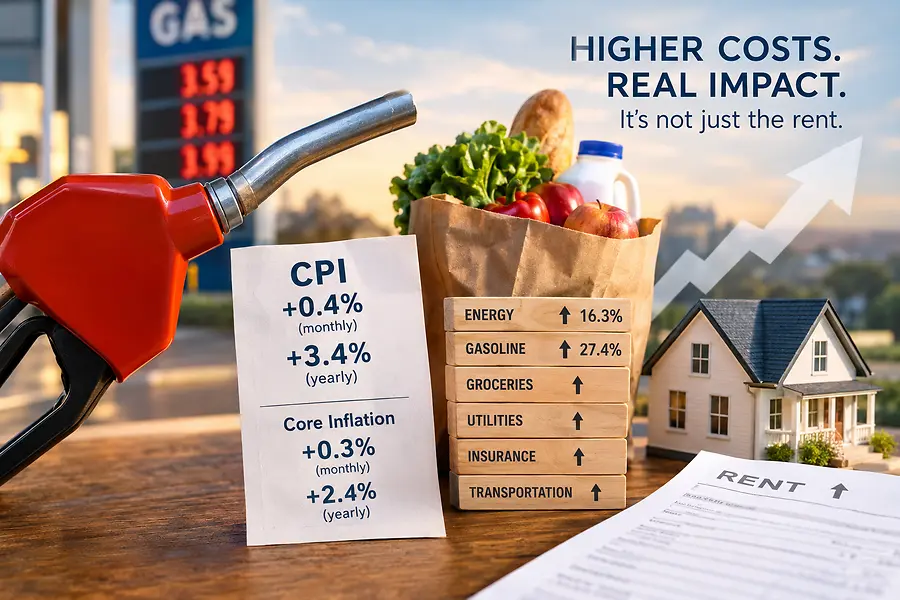
Inflation may appear to be stabilizing, but the numbers tell a more complicated story. In August, the Consumer Price Index (CPI) increased 0.4% for the month and 3.4% over the previous twelve months, while core inflation—excluding food and energy—rose 0.3% in August and 2.4% year over year.
At first glance, those numbers may suggest that inflation is becoming more manageable. But looking beneath the headline reveals where American households are still feeling the pressure.
Gasoline Is Doing Much of the Damage
Energy costs have been one of the biggest contributors to the latest inflation numbers. Energy prices were up 16.3% over the year, while gasoline prices jumped 27.4%.
Gasoline alone accounted for more than a third of the entire monthly increase in consumer prices.
That matters because gasoline is difficult for many households to avoid. People still need to drive to work, take children to school, purchase groceries, visit doctors, and handle everyday responsibilities. Higher fuel costs can also work their way through the economy as businesses pass increased transportation expenses on to consumers.
Shelter Inflation Is Slowing
One of the more interesting developments is happening in housing.
Shelter remains the largest individual component of the CPI, but its annual increase has slowed to approximately 3.0%. Both rent and owners' equivalent rent increased 0.2% in August.
For renters, this may sound like good news—and in some respects, it is. Slower rent growth can provide some relief to households that have faced significant increases over the past several years.
But there is another side to the story.
The Cost of Living Goes Beyond the Rent
A renter's monthly housing payment is only one part of the household budget.
Even if rent increases are slowing, a tenant still has to pay for gasoline, transportation, groceries, utilities, insurance, and other necessities. When those expenses rise faster than housing costs, the household can continue to feel financially squeezed even when the rent increase appears modest.
This is particularly important for real estate investors and property owners.
A tenant's ability to comfortably afford rent isn't determined by rent alone. If other essential expenses consume more of the household's income, there may be less money available for housing—even when the rent itself is not increasing rapidly.
What This Means for Real Estate
For landlords and investors, the current inflation environment is a reminder to look beyond rent growth when evaluating a property.
A property may show stable rents and a healthy rent roll, but tenants can still experience financial stress because of rising costs outside the property owner's control.
That can eventually affect occupancy, collections, tenant turnover, and demand.
For investors evaluating a market, understanding the broader cost of living can therefore be just as important as looking at rental rates, vacancy, and property values.
The Bottom Line
Inflation is not simply one number.
While shelter inflation is showing signs of moderation, gasoline and other everyday expenses can continue putting pressure on American households. The headline CPI tells us what is happening overall—but understanding where prices are rising is what reveals how inflation is actually affecting consumers.
For real estate professionals, investors, and landlords, that distinction matters. A tenant doesn't experience inflation as a statistic. They experience it every time they fill up the car, buy groceries, pay an insurance bill, or receive a utility statement.
And those costs can ultimately influence the housing decisions they make.


