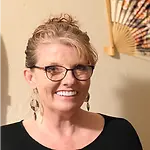
Leadership Isn't a Straight Line: Why Experience, Curiosity, and Courage Matter More Than a Traditional Path
From Pet Groomer to Chief People & Technology Officer: A Leadership Journey Built on Curiosity, Growth, and Unconventional Paths


When I started my career as a pet groomer while attending college, I certainly wasn't thinking about becoming a Chief People & Technology Officer. I was focused on learning a trade, doing good work, and figuring out what came next.
Looking back, those early experiences shaped more of my leadership philosophy than I could have imagined.
Today, I lead People, Culture, Learning & Development, and Technology for Independent Pet Partners, a specialty retail organization supporting more than 600 employees across 80+ locations. My career has taken me through operations, services, marketing, education, human resources, and technology. It hasn't followed a traditional path, but I've come to recognize that as one of my greatest strengths.
The value of understanding the work
There's something incredibly valuable about having experienced the business from the ground up.
Working on the frontline taught me things that can't always be learned in a classroom or boardroom. I learned how operational decisions affect employees, how customers experience a business, and how even small process improvements can make someone's day significantly easier.
Those lessons have stayed with me.
As leaders, it's easy to become focused on strategy, metrics, and long-term goals. All of those things matter, but so does understanding what it actually takes to execute the work.
Some of the best ideas come from the people closest to the challenges we're trying to solve. Creating opportunities for those voices to be heard isn't just good for employee engagement; it's good for business.
You don't have to know everything to lead effectively
One of the most important lessons I've learned is that leadership isn't about having all the answers.
Throughout my career, I've stepped into roles that required me to learn new disciplines, understand unfamiliar systems, and navigate challenges I hadn't encountered before.
Moving into technology leadership was another opportunity to expand how I think about the business. Technology is no longer a separate function operating behind the scenes. It influences nearly every aspect of how organizations operate, how employees work, and how customers engage with a brand.
The same is increasingly true of artificial intelligence.
I don't believe leaders need to be experts in every emerging technology, but we do have a responsibility to understand the opportunities, ask thoughtful questions, and make informed decisions about where these tools can create meaningful value.
For me, curiosity has always been more valuable than pretending to know something I don't.
The strongest teams aren't built around one person having every answer. They're built by bringing together people with different strengths, encouraging healthy debate, and creating an environment where learning is expected.
Growth rarely happens when you're comfortable
I've been fortunate to have mentors throughout my career who saw potential in me and encouraged me to consider opportunities beyond my immediate experience.
That support made a difference.
There have been times when taking the next step meant entering unfamiliar territory, making difficult decisions, or accepting that I would have a lot to learn along the way.
I've learned that being ready for an opportunity doesn't necessarily mean knowing exactly how to do the job on day one. It means having the foundation, judgment, and willingness to figure it out.
I think this is particularly important for women navigating leadership opportunities. We can sometimes place unnecessary expectations on ourselves to be completely prepared before raising our hands.
Experience matters. Preparation matters. But so does being willing to take a chance on yourself.
And as leaders, we have a responsibility to recognize potential in others, even when their experience doesn't fit a traditional mold.
Leadership lessons extend beyond the workplace
Outside of my professional career, competitive cycling has become an important part of my life.
Cycling challenges me in ways that are both physical and mental. It requires discipline, resilience, preparation, and the ability to adapt when things don't go according to plan.
Participating in Season 3 of From the Ground Up reinforced the value of taking on challenges that push you beyond what feels familiar.
My husband, Stefan, and I also own The Den Cyclery, a bicycle shop built around service, community, and a shared passion for the sport.
One of the things that matters most to us is helping make cycling more approachable, particularly for women and people who may feel intimidated getting started.
I've seen how much confidence can grow when someone feels welcomed, supported, and encouraged to try something new.
In many ways, that experience mirrors what I believe about leadership. People are more willing to challenge themselves when they know they have support, access to resources, and room to learn.
Creating opportunities for others
As my career has evolved, my definition of success has evolved with it.
Early on, success was often about individual accomplishments, learning new skills, and advancing professionally.
Today, I think much more about the impact I can have on the people and organizations around me.
Am I building a team that can succeed without me being involved in every decision? Am I creating opportunities for others to develop? Are we making thoughtful decisions that improve the experience of the people doing the work?
These questions matter to me.
They also influence my involvement in the community, including my service on the Lino Lakes Parks and Recreation Board and my support for organizations focused on animal welfare and community well-being.
I believe leadership carries a responsibility to contribute beyond our immediate roles.
There's no single path to leadership
If there's one thing my career has taught me, it's that leadership doesn't have to follow a predetermined path.
You can start in one field and find your passion in another. You can build expertise through experiences that don't fit neatly into a job description. You can be successful while continuing to ask questions, seek mentorship, and acknowledge what you still have to learn.
What matters is being willing to grow, understanding the people around you, and having the courage to take on opportunities that challenge you.
I didn't set out to build a career that spans retail operations, people leadership, and technology. I followed opportunities to learn, solve problems, and make things better.
And if I could offer one piece of advice to women building their own careers, it would be this:
Don't underestimate the value of where you've been, and don't let an unconventional path limit where you believe you can go.

Megan Turner serves as Chief People & Technology Officer at Independent Pet Partners, where she leads the intersection of people, culture, and technology to drive business performance and organizational growth. With more than 17 years of retail experience spanning frontline operations through executive leadership, Megan brings a practical, people-centered perspective to business strategy. Her leadership focuses on…