Leadership Journey: From The Margins to Systems Change
From Nigeria to the World: How One Public Health Leader is Redesigning Systems to Serve the Forgotten.

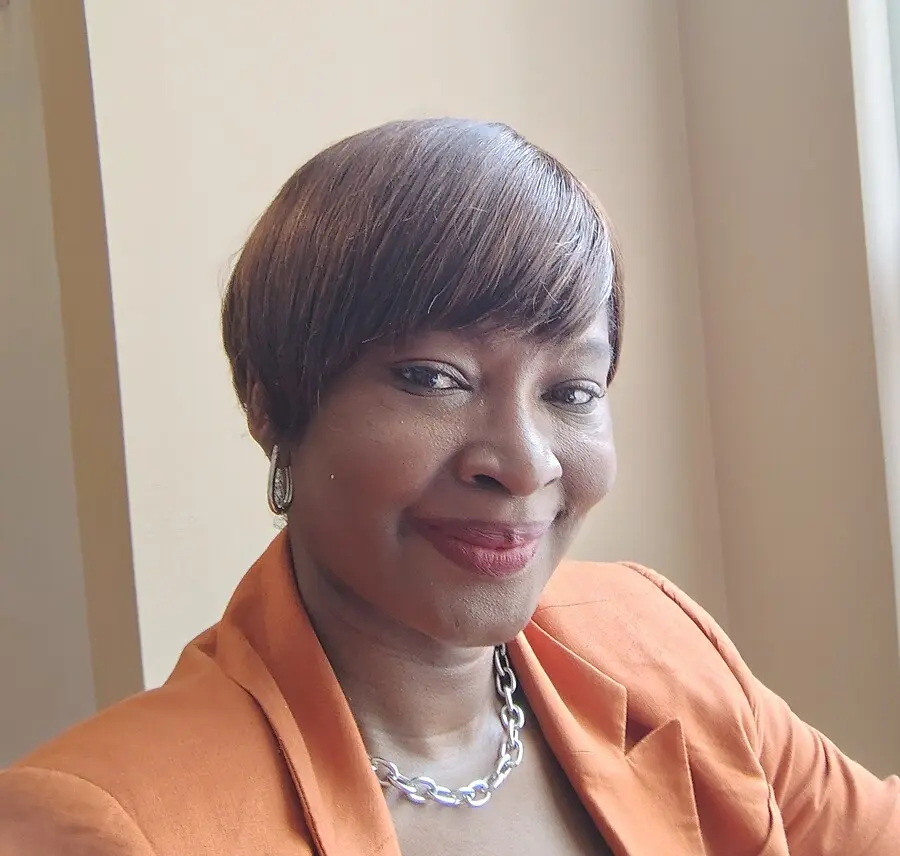
A Public Health Journey: Redesigning Systems to Serve People
My public health journey did not begin with a degree; it began because I grew up in a community where preventable illness was too common and too accepted. Born and raised in Nigeria, I watched neighbors and children suffer from diseases that were not inevitable, but structural: malaria, sickle cell disease, and lack of access to care. That early reality shaped a conviction that still drives me: health is a reflection of how systems are designed and who they are designed to serve.
I trained as a physician, but I quickly realized that treating patients one by one could not solve problems rooted in policy, infrastructure, and inequality. I shifted to public health, pursuing additional training in epidemiology and biostatistics, and later earning a Master of Public Health in the UK. That decision was not just academic; it was strategic. I wanted to understand how to change systems, not just outcomes.
From the beginning, I have focused on strategies to reach underserved populations and on developing the teams needed to execute those strategies. Whether in Nigeria, New York, or Chicago, my work has been defined by three questions:
- Who is being left out?
- What systems are keeping them out?
- How do we redesign those systems so that excellence and reach are not separate goals, but the same goal?
Imagine No Malaria
In 2014, I joined the United Methodist Committee on Relief (UMCOR) as Senior Programs Manager, leading the Imagine No Malaria campaign. My goal was to move this effort beyond a traditional aid model toward a systems transformation approach that could strengthen health infrastructure, not simply deliver medications.
Under my leadership, this program:
- Served more than 5 million mothers and children across nine countries.
- Accelerated malaria control, prevention, and treatment while simultaneously revitalizing local health facilities.
- Built operational and training plans aligned with national malaria control goals, ensuring that communities were not simply beneficiaries but partners in sustainable change.
Imagine No Malaria was about more than reducing parasite counts; it was about rebalancing power. We worked with ministries of health, local facilities, and community structures to ensure that interventions were locally owned and could endure beyond external funding cycles.
That is systems change: moving from short-term fixes to long-term capacity building.
I was promoted to Executive Director of Global Health within six months of being hired.
Executive Director, Global Health
From 2015 to 2019, I served as Executive Director, providing strategic direction for more than 300 mission hospitals and clinics globally and guiding strategic plans for 16 field offices. In this role, I helped translate the United Nations' "Every Woman Every Child" movement into concrete action.
Our team committed to reaching one million children with life-saving interventions and reducing mortality among children under five. That number was not arbitrary; it represented a promise to children who were most likely to be overlooked in global health metrics.
The results:
- Between 2015 and 2020, we reached 1,075,732 children, exceeding the one-million target.
- These children gained access to essential health services, full immunizations, and treatment for the most lethal childhood diseases.
- We trained country directors and health coordinators in 16 countries across Africa, Latin America, and Southeast Asia to identify local resources, facilities, and staff, and to design programs tailored to local barriers.
This was systems transformation with people living at the margins at the center. We did not simply "deliver services"; we redesigned how services were planned, staffed, and governed. We transitioned leadership to local hospitals and communities, ensuring that the systems we built were not dependent on perpetual external control.
"A lack of abundant health is not only when you are sick. It can also mean that your potential for good health is not fully realized. We want to connect with every child in every place to the resources they need to thrive."
New York City: Health Equity and COVID-19 Response
In New York, as Assistant Commissioner at the Bureau of Health Equity Capacity Building at the NYC Department of Health and Mental Hygiene, I focused on reducing disparities in health outcomes among 33 underserved communities. My team worked to ensure that socially disadvantaged communities were not excluded from public health services or support.
During the COVID-19 emergency, I led the Community Engagement Branch of NYC's COVID-19 Response. In that role:
- I worked with community health workers to ensure access to accurate information and testing services for more than 500,000 New York residents in priority neighborhoods and among public housing residents.
- Through community engagement, connecting people to vital resources, including vaccines, and addressing barriers to access, vaccination coverage increased from 64% to 97% in one year. Hospitalization and death rates were reduced by more than 20% in targeted communities.
I also helped develop strategies to address social determinants of health across 33 priority neighborhoods citywide and implemented place-based approaches to address mental health crises and strengthen community resilience through collaboration across agencies.
This experience reinforced a truth I carry into every role: mental health is not a separate silo. It is often worsened by poverty, inadequate housing, violence, and limited access to care. Systems that ignore those intersections will fail the people they are designed to serve.
Chicago Department of Public Health
In November 2023, I was appointed Commissioner of the Chicago Department of Public Health (CDPH), becoming the first Black woman to permanently hold this role. Mayor Johnson described me as someone who "understands the balance between hard data and community interaction" and who would lead with "compassion, competency, and collaboration."
My first priority in Chicago has been addressing the premature mortality crisis. Preventing avoidable deaths is not only a clinical challenge; it is a structural one:
- We have promoted cultural competency in healthcare.
- We expanded access to resources and services in underserved communities, including the Healthy Chicago Mental Health Collective, which serves more than 170,000 people. This represented the largest expansion of mental health services in two decades.
- We used data to identify neighborhoods where needs are most acute and designed interventions that are community-led, not simply community-targeted.
This work continues the arc of my life: centering people at the margins and redesigning systems so they serve everyone, not just those who are easiest to reach.
A Woman in the Margins
As a woman in the margins—an immigrant, a Black woman, and a woman in public health leadership—I carry more than a workload. I carry the weight of representation. When I speak, I am often seen not only as myself, but as a symbol of what is possible for women like me. That can be empowering, but it can also be exhausting.
Media coverage, public scrutiny, and the constant judgment of how I look, speak, and lead can intensify the mental burden women already carry. The pressure to be "perfect," to never show struggle, and to be both compassionate and unyielding can erode a sense of safety if not properly managed.
I've learned that leadership without mental health support is not leadership; it is attrition.
This is why mental health access is not a side issue for me; it is a core imperative. I have seen how stress, stigma, and systemic exclusion erode well-being in the very communities we are trying to serve. I have also seen how systems that ignore mental health undermine every other health gain.
Looking Ahead
As I transition into a new CEO-level role in public health, my focus and values remain the same: to lead an organization that:
- Transforms health systems so all communities have access to high-quality, culturally responsive care.
- Integrates mental health into broader public health, primary care, schools, and community services rather than treating it as an isolated specialty.
- Uses data-driven strategies to identify and close gaps in access, outcomes, and experience.
- Builds public-private partnerships that align funding, policy, and innovation with community priorities.
- Invests in community-led models where people with lived experience shape programs, policies, and metrics.
I believe systems change happens when we stop asking people to adapt to broken systems and start redesigning systems to meet human needs.


