Leading Across Cultures: How Inclusive Leadership Shapes the Future of Work.
How Creates Belonging in Culturally Diverse Organizations

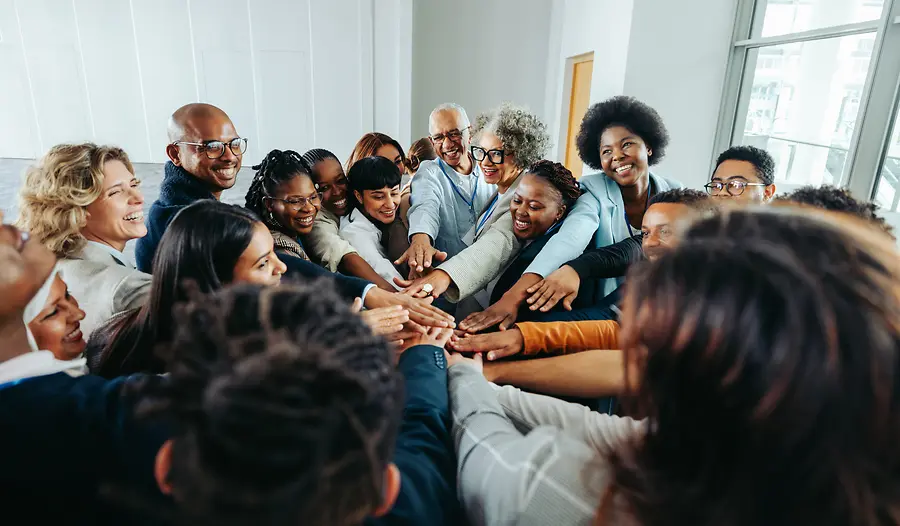
When Leadership Meets Humanity
In today’s world, organizations are no longer shaped by geography or borders. They are shaped by people. Women and men from different cultures, languages, faiths, and lived experiences now sit at the same tables, solve the same problems, and build the same futures.
But beneath the surface of this global collaboration lies a deeper question:
What does it truly mean to lead in a world that is no longer culturally uniform?
For me, leadership has never been about authority. It has been about presence — how we show up for others, how we listen, and how we create spaces where people do not feel they must shrink their identity to belong.
Cultural diversity is often described as a workplace metric. But in reality, it is something far more human. It is the lived experience of difference and the leadership responsibility to make that difference matter positively.
Diversity Is Not the Goal, Inclusion Is
We often celebrate diversity as progress, but diversity alone is incomplete.
A workplace can be diverse and still be deeply disconnected.
True transformation happens when diversity is matched with inclusion — when people are not only present but are also heard, valued, and empowered to contribute meaningfully.
In many global organizations, I have observed a recurring pattern: diversity exists in numbers, but inclusion exists only in intention. The difference between the two is leadership.
Inclusive leadership is not about perfection. It is about awareness. It is the willingness to ask:
- Who is not speaking in this room?
- Whose perspective is missing?
- Who feels they must adapt themselves to belong?
These questions change everything.
The Power of Culture in Shaping Leadership
Culture shapes how people think, communicate, and make decisions. In a multicultural workplace, these differences can either become barriers or bridges.
When poorly managed, cultural differences lead to misunderstanding, silence, and division. But when embraced with emotional intelligence, they become a source of innovation, creativity, and deeper collaboration.
I have seen teams flourish not because they were identical, but because they were intentionally different and led by someone willing to hold that difference with respect rather than fear.
Leadership in this context becomes less about directing people and more about guiding human potential across boundaries that were once seen as limitations.
What the World Taught Us Through Crisis
The COVID-19 pandemic revealed what many organizations had long overlooked: equity is not optional.
Across many countries, minority communities experienced disproportionate health and economic impacts — not because of differences alone, but because of systemic gaps in access, communication, and care.
It became clear that leadership is not only tested in moments of success, but in moments of crisis, when decisions determine who is protected and who is left vulnerable.
The pandemic reminded us that inclusive leadership is not a corporate ideal. It is a public necessity.
Leadership That Listens, Learns, and Lifts Others
The most effective leaders in culturally diverse environments share one common trait: humility.
They do not assume they know everything. Instead, they create space to learn from others. They recognize that leadership is not diminished by listening; it is strengthened by it.
Inclusive leadership is expressed in everyday actions:
- Choosing dialogue over assumption
- Creating psychological safety instead of fear
- Valuing differences instead of standardizing voices
- Building systems where fairness is practiced, not just promised
This kind of leadership does not happen by accident. It is intentional. It is learned. And it is deeply human.
The Hidden Cost of Exclusion
While diversity is often discussed in terms of innovation and performance, we must also acknowledge its emotional dimension.
Exclusion — whether subtle or overt — has a cost that cannot be measured only in productivity. It affects confidence, well-being, and identity.
When people feel unseen, they disengage. When they feel unheard, they withdraw. And when they feel they do not belong, they leave — not just organizations, but opportunities, ideas, and sometimes their own sense of possibility.
This is why leadership matters so deeply, because leadership can either amplify belonging or quietly erode it.
Redefining Success in a Global Workplace
Success in today’s organizations is no longer defined only by profit margins or expansion. It is defined by something more sustainable:
How well do we lead across differences?
Organizations that thrive in the future will be those that understand this truth early — that diversity is not a challenge to manage, but a strength to cultivate.
But this strength only emerges when leadership evolves from control to connection.
A Personal Reflection
As I reflect on my work in healthcare, leadership, and maternal mental health advocacy, one truth remains consistent:
People do not remember systems. They remember how those systems made them feel.
Whether in healthcare, academia, or corporate spaces, people flourish where they are seen not just as workers or participants, but as human beings with identity, dignity, and voice.
That is the essence of inclusive leadership.
Closing Thought
We are living in an era where leadership is being redefined in real time.
It is no longer enough to lead teams that look diverse. We must learn to lead in ways that honor diversity fully — not as decoration, but as a driving force for innovation, equity, and belonging.
Because ultimately, the future of leadership is not about managing differences.
It is about honoring them well enough for everyone to rise within them.
— Adeola Folorunso, CHE, FRSPH, FAPH
Founder of Matermental