Leading While Black, Woman, and Visible:
Navigating Power, Purpose, and Self-Preservation in Leadership

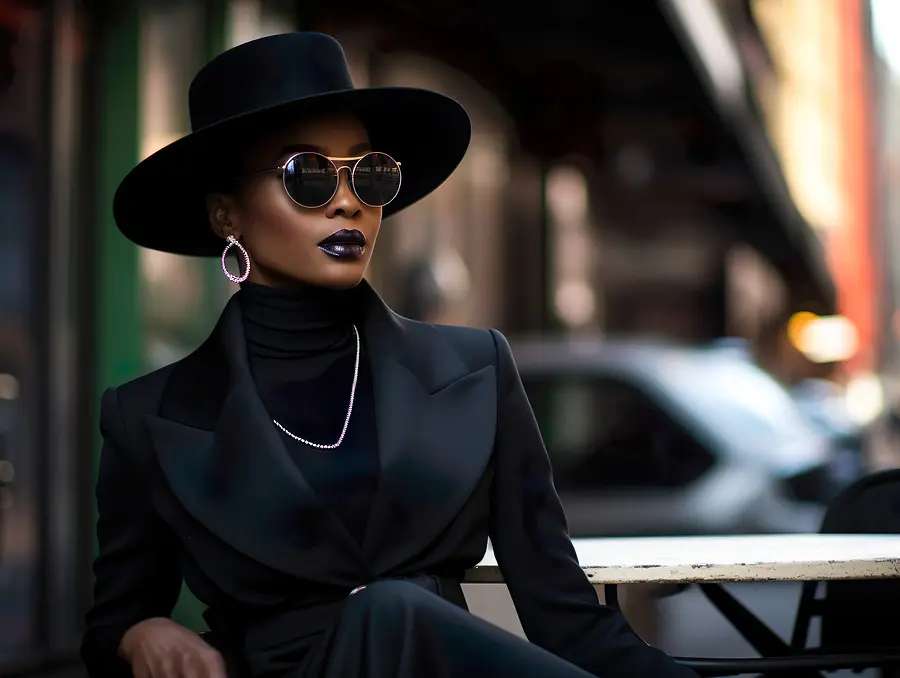
Leading While Black, Woman, and Visible:
Boundaries, Boldness, and Belonging
I didn’t realize I was visible until other people started narrating it back to me.
You’re everywhere.
You’re the face of this work.
If you’re not in the room, it doesn’t feel official.
On paper, it sounded like a compliment. In practice, it meant I was expected to be an expert, fixer, counselor, strategist, spokesperson, and role model—often all before lunchtime.
If you are a Black woman in leadership, you probably know this tension well: your visibility is both your power and your pressure. You don’t get to be just a teacher, just a manager, just a director. You are the one students seek out, the one colleagues confide in, the one leadership leans on to reach the community.
Visibility without intention will grind you down. Visibility with boundaries, boldness, and belonging can transform you—and everyone watching you lead.
Boundaries: The Most Underrated Leadership Skill
For a long time, I believed that being a good leader meant saying yes.
Yes, I can be on that committee.
Yes, I can speak at that event.
Yes, I can mentor that person.
Yes, I can fix a system I did not break.
Then one year, I hit a wall. I was running a full schedule, leading an academy, coordinating projects, supporting students through grief and trauma—and still getting asked to just take on one more thing.
My body knew I was done before my brain did. I was exhausted, resentful, and dangerously close to confusing busyness with purpose.
That’s when I reframed boundaries as a leadership practice, not a personal failure.
Now, before I say yes, I quietly run through three questions:
Is this aligned?
Does this request align with my mission, my values, or the community I serve?
Is this mine?
Is this work actually my assignment—or am I just the most convenient person?
Is this sustainable?
Can I do this well without sacrificing my health, my core responsibilities, or my joy?
If I can’t honestly say yes to all three, my answer is no—or not like that.
Here are phrases I use that you’re welcome to borrow:
This matters, but I’m not the right person for this right now.
I can contribute in a limited way by doing X, but I’m not able to lead this.
To say yes to this, I would have to say no to something I’ve already committed to. I’m not willing to do that.
Every no I say now is in service of a deeper yes—to my students, to my community, and to myself.
Boldness: Moving Even When You Feel Unready
People often assume boldness feels like certainty.
In my experience, boldness usually feels like: I might throw up, but I know I’m supposed to do this.
I felt that way applying for fellowships and awards, presenting at conferences, writing op-eds, and even agreeing to write pieces like this one. It is easy, especially as a Black woman, to look at a call for proposals or a seat at a table and think:
People like me don’t usually get this.
Someone else is more qualified.
I’ll apply next year when I’m more ready.
Here’s what shifted everything for me: I stopped asking, Am I good enough? and started asking, Will this create more opportunities and protection for my people?
Suddenly, the risk felt different. If my boldness meant more scholarships, more visibility for my students, more policy changes, and more resources for my community—then I could survive the discomfort of putting myself out there.
Practically, here’s what boldness looks like in my world:
I keep a receipts folder.
Emails, notes, outcomes, student quotes, data—evidence of impact. When self-doubt gets loud, I open the folder and remind myself: the work is real.
I apply before I feel fully ready.
I trust that I will grow through the opportunity, not before it.
I say my accomplishments out loud.
Not as ego, but as testimony. When other women see you owning your impact, they start to reconsider their own shrinking.
Boldness is not about perfection. It is about moving in the direction of your purpose, even with shaking hands.
Belonging: Creating the Spaces We Deserve
One of the heaviest burdens of being visible is feeling like you must constantly earn your seat.
There were rooms where I was the only Black woman, or one of very few. Rooms where people looked surprised that I was the one leading the work instead of the one helping with the kids. Rooms where my expertise was needed, but my full humanity was not always considered.
I decided a while ago that I would no longer live as a guest in places I help sustain.
Belonging, for me, started with an internal declaration:
I belong in every room where decisions are being made about my community.
From there, I began building micro-communities that made that belief feel real:
With students, I created rituals—check-ins, affirmations, spaces where their voices led. Their sense of belonging feeds my own.
With colleagues, I seek out other women, especially other women of color, who understand the unspoken load. We share resources, vent, laugh, pray, and problem-solve.
With partners and institutions, I am honest about what my community needs—and what it cannot tolerate.
Belonging doesn’t mean every space will feel safe or soft. It means you stop shrinking yourself to be palatable in rooms that benefit from your brilliance.
We may not control every table we’re invited to, but we can control how much of ourselves we bring—and how intentionally we create new tables when necessary.
A Closing Invitation
If you are an influential woman reading this, navigating your own visibility, I want to leave you with three questions:
Where are you over-giving because you’re visible, not because it’s aligned?
What would you apply for or say yes to if you trusted that your purpose is not fragile?
Who are your people, and how are you intentionally nurturing that circle of belonging?
Leading while Black, woman, and visible is not easy. But with clear boundaries, courageous boldness, and intentional belonging, it is possible to lead in a way that doesn’t just impress others—but actually sustains you.
Because the goal is not just to be seen.
The goal is to be whole, powerful, and free while we are seen.