Learning Begins in Wonder: How Children Learn Through Play and Exploration
Why Play, Curiosity, and Wonder Are the Foundation of Lifelong Learning and Innovation in Early Childhood

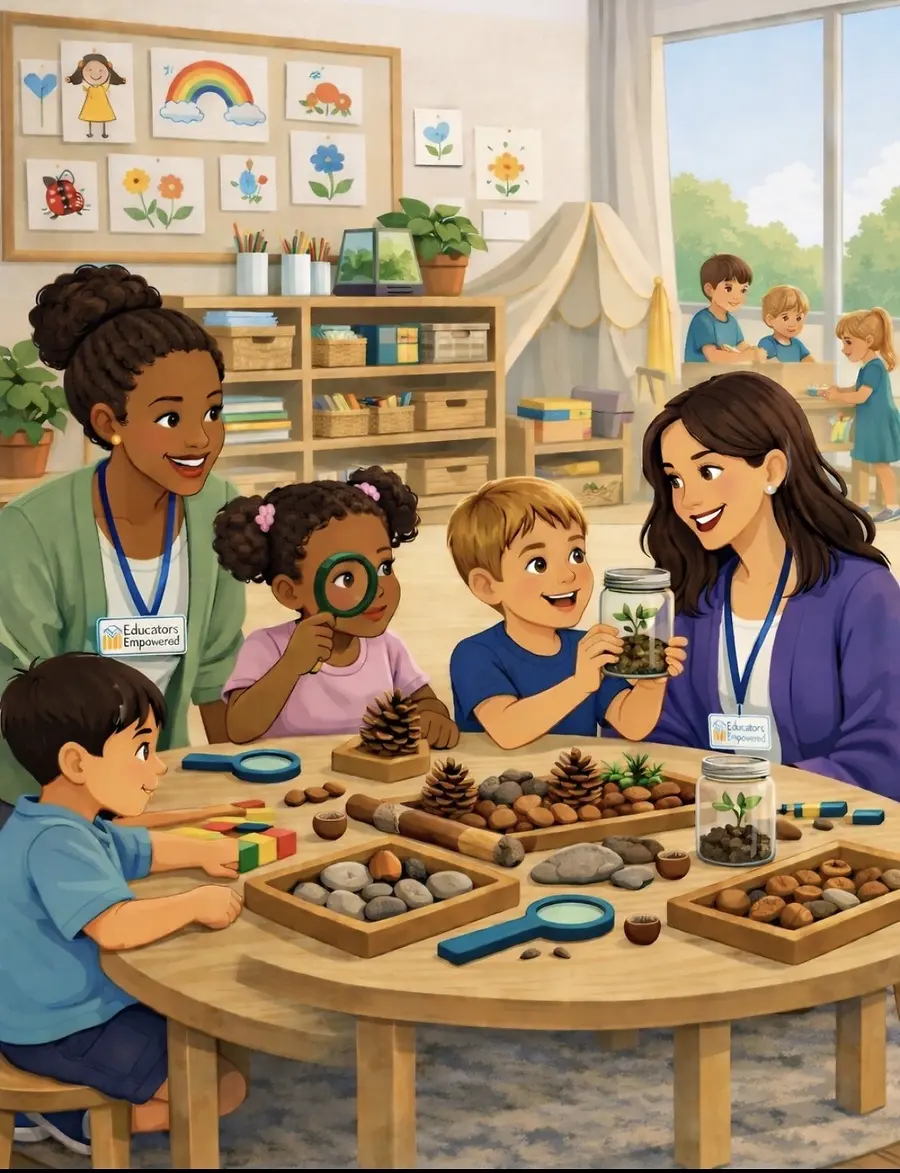
In early childhood, learning often begins not with a worksheet, a lesson plan, or a formal assessment, but with informal interactions. It begins with curiosity. It begins with a question. It begins with a child reaching for something new and asking—often without words—“What happens if I try?”
From the moment children enter the world, they are natural explorers. They learn through movement, observation, imitation, and experimentation. Long before they can read or write, they are building problem-solving skills, emotional awareness, and creativity through play.
Play is not a break from learning.
It is how learning happens.
The Power of Play, Exploration, and Wonder
When children stack blocks, pretend to cook in a play kitchen, investigate insects on the playground, or paint freely at an easel, they are doing more than “staying busy.” They are learning how the world works. They are testing ideas. They are practicing persistence. They are learning how to collaborate, negotiate, and express themselves.
Through play, children develop:
- Critical thinking and problem-solving skills
- Language and communication abilities
- Social and emotional awareness
- Confidence and independence
- Creativity and imagination
These experiences form the foundation for lifelong learning. When children feel safe to explore, make mistakes, and try again, they develop a mindset that learning is something to be embraced, not feared.
The Educator’s Role: Creating Safe Spaces for Curiosity
At the heart of every strong early learning environment is a dedicated educator who understands that their role is not to control learning, but to support it.
Early childhood educators are architects of possibility.
They create spaces where children feel secure enough to ask questions, take risks, and explore their interests. They design environments that invite discovery. They observe carefully, listen intentionally, and respond thoughtfully.
A high-quality learning environment does not happen by accident. It is built through:
- Consistent routines that provide emotional safety
- Materials that encourage exploration
- Thoughtful classroom design
- Respectful, responsive interactions
- Trust between children and caregivers
When children feel safe, seen, and valued, curiosity flourishes.
And when curiosity flourishes, learning follows.
From Curiosity to Innovation
Children who are encouraged to wonder become children who are willing to think differently. When we honor questions instead of rushing to answers, we teach children that their ideas matter.
Over time, this nurtures:
- Inquisitive thinkers
- Confident problem-solvers
- Creative innovators
- Resilient learners
- Empathetic collaborators
These are the skills our future depends on.
Innovation does not begin in adulthood.
It begins in early childhood—in classrooms where curiosity is protected and imagination is celebrated.
Supporting Learning Without Overdirecting It
One of the greatest responsibilities in early education is knowing when to step in and when to step back.
Effective educators guide without controlling. They scaffold without stifling. They offer support without taking over.
This balance allows children to:
- Develop independence
- Build self-trust
- Learn from mistakes
- Strengthen perseverance
- Take ownership of their learning
When adults trust children’s capacity to explore, children learn to trust themselves.
Honoring the Work of Early Childhood Educators
The work of early childhood educators extends far beyond teaching letters and numbers. They are emotional anchors, learning facilitators, safety providers, and lifelong role models.
They shape how children see themselves as learners.
They influence how children approach challenges.
They help determine whether learning feels joyful or intimidating.
Yet too often, this work is undervalued and misunderstood.
Supporting early educators means investing in:
- Professional development
- Mental and emotional wellness
- Fair compensation
- Strong systems and resources
- Respect for their expertise
When educators are supported, children thrive.
Looking Ahead: Protecting Wonder in a Changing World
In a world that increasingly emphasizes speed, outcomes, and performance, protecting childhood wonder is an act of intention.
We must continue to advocate for learning environments that prioritize:
- Play over pressure
- Curiosity over compliance
- Growth over perfection
- Connection over control
The early years are not a race to academic benchmarks. They are a time to build confidence, creativity, and a love of learning that lasts a lifetime.
When we honor play, exploration, and wonder, we are not lowering standards—we are raising them. Because children who learn through curiosity become adults who lead with creativity, empathy, and resilience.
That is the kind of future worth investing in.


