Letting Go of what Other People think of us
Reclaiming Your Voice: Breaking Free from the Chains of Others' Opinions

I resent so many of the new age, uber-spiritual people. And as I wrote the title of today's entry—“Coming Into Consciousness”—I felt like one of them.
You know the overly performative, overly buzzword-using, tattoo-of-some-Peruvian-pattern-by-the-eyeball kinds of people.
Well, I promise you I am not one of them, and the title refers to a different idea.
I’m currently reading The Let Them Theory by Mel Robbins (well, rumor has it she stole this idea from another author, but I digress). As I was reading the chapter on letting people think badly of you, it reminded me of a vivid memory I had as a teen.
I was about 15, maybe 16 or 17. I was standing in the cafeteria. All of my friends had graduated. I had integrated myself early into the upperclassmen party scene due to the fact that I was one of two freshmen who made varsity cheer years prior and wanted to fit in with my teammates. On that day in the cafeteria—and in the days prior and following—I didn’t have anyone to sit with. Truly. I had exiled the girls my age for superficial friendships with older girls. As I was scanning the cafeteria looking for a table I could squeeze into and be welcomed at, I had a thought that still sticks with me 15 years later:
“I wonder if people talk badly about me.”
Truly, prior to that, the thought had never crossed my mind.
And this is where the “consciousness” part of the title comes in. Or maybe it’s not even consciousness. It’s more like societal indoctrination (I guess I really like that word today). Society infiltrating my thought process, telling me I am not whole, I am not worthy, I am not enough. As if the lack of a table to sit at in the cafeteria wrapped my self-worth into a tiny little milk carton and threw it away among the half-eaten sandwiches and empty bags of chips lying beneath it.
Circling back to consciousness.
I was always a fairly conscious child.
In fact, it kind of haunted me.
I vividly remember being 4 or 5 years old and looking out of my bedroom window thinking, “Why me?” What that meant is a story for another time, but I always had a sense of greater structures and spiritual meaning in this life.
I often had ringing in my ear as a kid, which I have only recently come to understand can, in some cases, be an intuitive physical expression of alignment or danger, depending. However, when I was a child, the only way I could make sense of it was by wondering if I was part of a government study and the ringing was an update in the software they had put in my brain.
All this to say, I was fairly “conscious” from a young age—by my definition in this context meaning I questioned things. I questioned myself, how I thought, and why I was placed in the family I was placed in. I questioned things.
But I never questioned the way people thought about me or interpreted me until that day in the cafeteria, when I was looking for a place to sit. I couldn’t even wrap my head around the idea that people might talk badly about me. But surely, they did. And surely, that thought would go on to haunt me for the next 15 years, which has finally led me to The Let Them Theory.
Such a peculiar thought—other people’s thoughts of us.
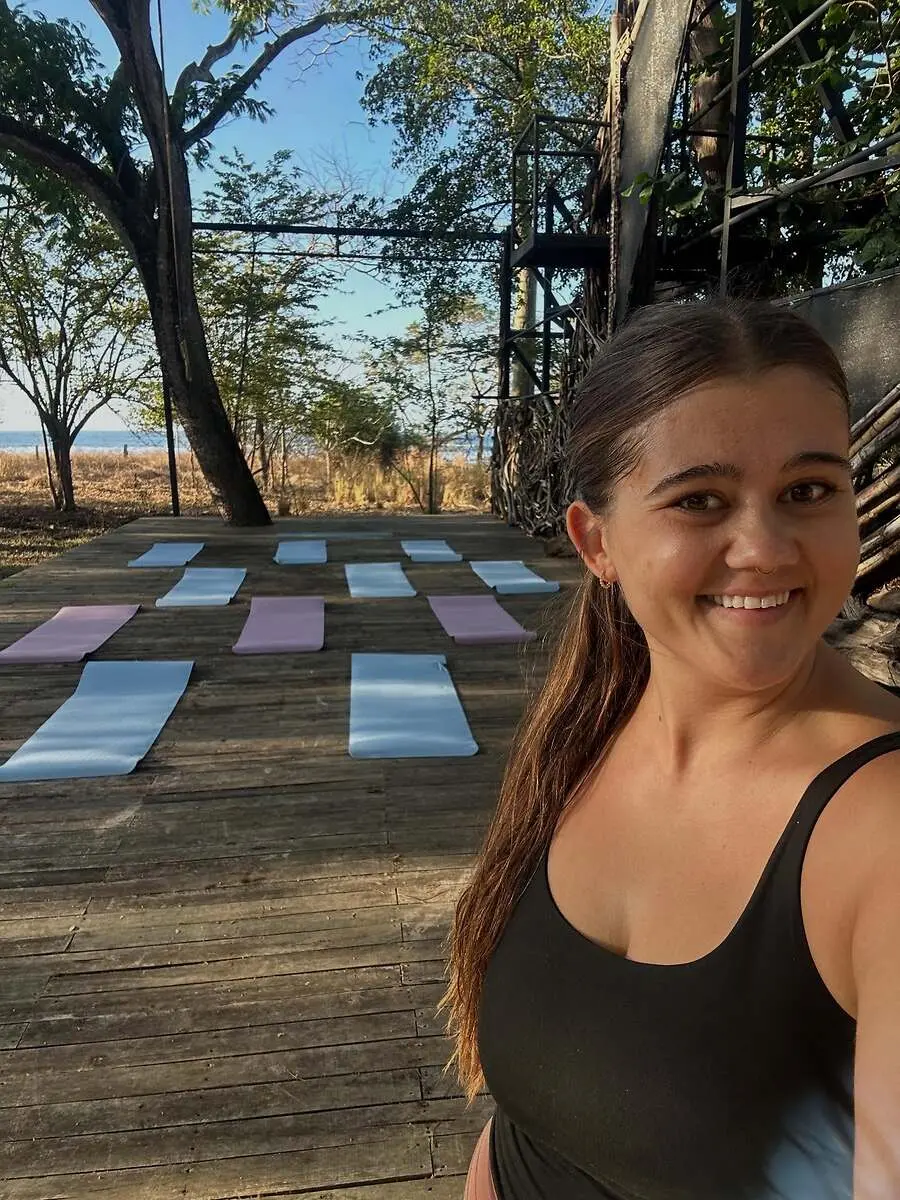
When I started hosting retreats, I wondered what people would think of me (and still do, especially when I receive a negative reply to a promotion or a bad comment on Instagram).
But what if we could tap back into our childlike sense of being naïve to what others think of us—doing what we want and following where we are called?
I have this theory that being consumed by what others think of us is societal indoctrination (I promise I’m not using that word for the third time—I’m using it again based on earlier context). I have been called a conspiracy theorist from time to time (I don’t believe the Earth is flat, though, okay?), and I wonder if conditioning us to worry about others’ opinions—keeping us small—is, in some ways, calculated.
Imagine a world where everyone followed their calling without judgment.
Uncapped expression.
We would have constant new inventions, new workflows, and new living systems.
Worrying about what others think of us truly does keep us small. Not only us individually, but our society as a whole.
As I’m trying to tie this all together, I’m not entirely sure what the punchline is. Life before indoctrination? An urging to return to our childlike yearning for life?
The more we speak as a species, the more I have found we relate to others.
The more we share, the more we meet others who have gone through something similar or resonate in ways that once made them feel alone.