Mental Contagion
Understanding the psychological and spiritual crisis that precedes unthinkable acts of maternal harm—and how compassion, intervention, and prevention can save lives.

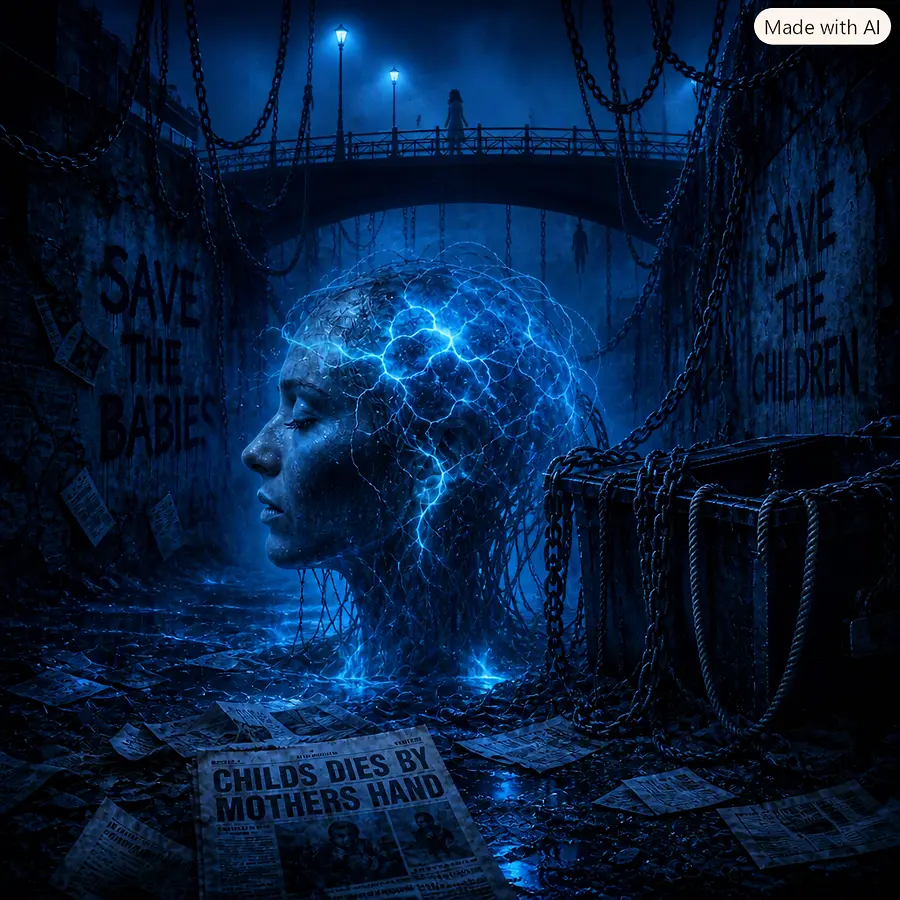
Mental Contagion
Where Does the Mind Go? Stopping the Unthinkable Before It Starts
To look past the chilling headlines—a child discovered abandoned in a dumpster or a mother tightening an exercise cord around her children’s necks—is to confront questions that shake us to our very essence: What thoughts and emotions race through the human mind in those harrowing final moments leading up to such acts? How does a mother’s inherent instinct to nurture and protect devolve into actions so horrifying and incomprehensible?
Every few days, another devastating headline flashes across our screens:
- “Lindsay Clancy-obsessed mom sang ‘Wizard of Oz’ tune after hanging 2-year-old son…”
- “Mom accused of starving two young girls to death after family feared Lindsay Clancy, copycat…”
- “Texas mom shoots daughter hours after losing custody battle…”
- “Mom allegedly stabs husband, two young children during early morning attack…”
- “Missouri mom who claimed she mistakenly placed infant in oven cops a plea deal…”
- “Frankfort mom claimed her son had the devil inside and strangled him…”
The comment sections beneath these articles quickly fill with anger, horror, and fierce debates about accountability versus mental illness. But for those of us who sit across from women in deep crisis every day—and for the mothers reading these stories in quiet terror—these headlines evoke something much deeper and more chilling.
- In 2001, before the Clancy hearing, Andera drowned her five children in the bathtub.
- In 2011, Lindsey received two life sentences for killing her twin boys.
- In 2013, Tiona received 16 years for smothering her newborn son.
- In 2016, Amber received a life sentence after stabbing her newborn child.
- In 2018, Cassandra received five years after stabbing a newborn.
- Over the course of more than a decade, Megan killed six infants and received a life sentence.
This brings up agonizing questions that shake the soul:
- Where does a human mind go when an infant is placed in an oven, left in a dumpster, or harmed in their own crib?
- How does the maternal protective instinct warp into something so tragic?
- And most urgently, how do we stop the cord or the weapon from ever reaching a child’s neck?
Inflicting harm upon a child is an act that defies all morality, as every infant and young person deserves unwavering safety and robust protection. While it is natural to express horror and grief in the wake of tragic losses of innocent lives, such reactions alone will not stem the tide of future tragedies. To genuinely safeguard our children, we must delve deeply into the complex factors that lead to these heart-wrenching incidents. We must confront the profound struggle between good and evil that permeates our society and take proactive steps to build a stronger bridge of security. This bridge must serve as a lifeline, preventing another devastated mother from being drawn into the dark abyss of despair. Only by fostering a proactive environment rooted in understanding and empathy can we hope to protect the most vulnerable among us.
Protecting yourself from harmful mental contagion does not mean disconnecting from empathy or shutting out others. It is about maintaining clear emotional boundaries so you can offer grounded presence rather than reactive resonance.
Check the Emotional Weather: When a wave of anxiety, irritability, or defeat washes over you, pause and ask, “Is this mine, or did I just walk into it?” Simply identifying the origin interrupts automatic absorption.
Anchor Before Responding: Deep, regulated breathing signals physiological safety to your nervous system, preventing the fight-or-flight mirroring that often fuels escalating tension.
Navigating Trauma, the Weight of Harm, and Reclaiming Presence
When trauma enters a life, it doesn’t just shatter our sense of safety—it fractures our relationship with time, trust, and reality. When pain is too profound or heartbreak too heavy to carry, we often ask a silent, desperate question: Where does the mind go?
Does it drift backward to memories of what once was? Does it leap forward in terror, bracing for the next catastrophe? Or does it simply disconnect—floating somewhere in the quiet space between survival and numbness?
In our work at Adoption Solutions of Arizona and alongside the agencies we partner with every day, we witness firsthand the deepest fractures in human connection. We sit with the heartbreaking reality of women who, trapped in untreated trauma, substance use, or abusive cycles, have hurt the very children they brought into the world. It is a sorrow that ripples outward, impacting adoptive families, caseworkers, and whole communities.
When the news is heavy and the wounds run deep, the mind naturally searches for escape. But rather than turning away, our response must be rooted in unwavering presence, community protection, and the strength of prayer circles—holding sacred space for both innocent children who need healing and mothers who desperately need redemption.
The Legal Crossroads: What the Courtroom Laid Bare
The collision between acute maternal psychosis and our criminal justice system was laid bare in Plymouth Superior Court during the trial of Lindsay Clancy. Paralyzed from the waist down by her jump from a second-story window—a permanent physical testament to the violence of that night’s break—Clancy appeared in a wheelchair. Words in the courtroom were sparse, but what was spoken cut to the marrow. When the court asked her procedural questions, Clancy’s voice was faint: “Yes, Your Honor.” But when the medical examiner detailed the autopsies of five-year-old Cora, three-year-old Dawson, and eight-month-old Callan, the silence fractured. Clancy broke into wracking sobs and cried into the defense microphone, “I can't do it.”
The trial record laid out the terrifying duality that defines acute postpartum psychosis: a woman who had desperately sought psychiatric help, suddenly hearing an auditory command telling her it was “her last chance” to rescue her children from eternal doom.
When the trial concluded in an 11–1 deadlocked jury—eleven jurors voting to acquit under Massachusetts’ standard of legal insanity, held up by a single juror demanding a first-degree murder conviction—Judge William Sullivan declared a mistrial and subsequently denied a direct motion for acquittal. Outside the courthouse, the aftermath revealed deep public fractures. Nurses in scrubs gathered alongside mothers in silent “Stand in Peace” rallies, holding pink signs reading “She Needed Help.” They did not stand to excuse the deaths of three children; they stood because they recognized a terrifying institutional failure: if an experienced labor and delivery nurse with health insurance, a loving spouse, and an active desire for treatment could slip through the cracks of modern medicine and cycle through a dozen psychiatric medications without inpatient crisis stabilization, our safety net is broken.
Yet, standing alongside the devastated families was a diverse group of community members, their faces a mix of sorrow and determination as they demanded justice for three innocent lives tragically taken too soon. This palpable tension reveals a crucial reality: the legal system, designed to assign blame only after the yellow crime scene tape is removed, cannot undo the pain or restore lost futures. Our fundamental moral obligation must focus on prevention, ensuring that no families endure such a heart-wrenching loss again.
As the crime scene tape is finally lifted to signify the end of the investigation, we are compelled to examine how society perceives the shocking killings of these young lives. Do we view these tragedies as preventable—the result of actions doctors, caregivers, or family members could have taken to intervene? Should Child Protective Services step in and assess the circumstances leading to this tragedy, holding our community collectively responsible for shielding these vulnerable children from future threats? We must confront difficult questions: Was this a manifestation of deep-seated mental health issues, unresolved trauma from the past, a disturbing detachment from reality, postpartum psychosis, or something more insidious? We must seek answers and act, striving to build a world where every child feels safe, valued, and protected.
The Spiritual Battle: Light in the Deepest Darkness
While science and medicine provide us with clinical terminology such as psychosis, dissociation, and neurochemical imbalances, those who delve deeply into these tragic situations recognize an equally significant, though often overlooked, spiritual struggle occurring beneath the surface. When a mind becomes consumed with the disturbing intent to harm innocent children, we cannot overlook the chilling presence of a spiritual darkness at work—an insidious force that actively seeks to steal, kill, and destroy. This duality of psychological turmoil and spiritual malevolence creates a complex landscape where human suffering intertwines with the profound battles fought in unseen realms.
Scripture speaks directly to the unseen battles of the mind and heart:
“For we do not wrestle against flesh and blood, but against principalities, against powers, against the rulers of the darkness of this age, against spiritual hosts of wickedness in the heavenly places.” — Ephesians 6:12
Even for individuals who do not share the same faith, it is difficult to overlook the gravity of the situation when a mother inflicts harm upon her own child. This troubling behavior often indicates deep-seated malevolence that has seeped into her reality. In such moments of despair, she may be susceptible to negative thoughts suggesting that hope is nonexistent, that destruction is the only viable option, and that a higher power has abandoned her. However, it is crucial to recognize that spiritual support is often closest to those who are experiencing profound heartbreak; the presence of compassion and light can transcend the darkness that seeks to envelop a vulnerable individual, offering pathways to healing and restoration.
“The light shines in the darkness, and the darkness has not overcome it.” — John 1:5
Where Does the Mind Go? Understanding the Breakdown
When these unthinkable acts occur, the public often assumes cold, calculated malice. But forensic psychology and frontline crisis work show that a mother’s mind does not go to hatred—it goes into catastrophic breakdown.
1. Severe Dissociation and Panic
When a mother hides a pregnancy, gives birth in secret, or discards an infant, the driving force is almost always acute trauma and complete detachment from reality. Nine months of terrifying abuse, rape, or shame can cause the mind to split off from the physical truth. At delivery, sheer panic triggers a primal fight-or-flight blackout. In that moment, the rational brain is completely offline; the child is perceived not as a human being with a future, but as an overwhelming object of terror.
2. The Delusion of “Mercy” and Postpartum Psychosis
In cases like Lindsay Clancy’s and those involving women who fixate on her story, reality inverts. Postpartum psychosis and severe psychotic depression feed a mother terrifying delusions: The world is evil. My babies are cursed because of me. The only way to save them from a fate worse than death is to send them back to peace. When a mother reaches for a cord or a weapon in that psychotic state, her broken mind does not believe she is murdering her children—she believes she is rescuing them.
3. Revenge, Despair, and Extended Suicide
Headlines involving bitter custody battles and murder-suicides reveal another dark corner: a state of unbearable hopelessness in which a mother feels entirely trapped, erased, and destroyed. In a toxic mix of spite, severe depression, and desperation, her mind concludes that taking her own life—and taking her children with her—is the only way to retain control or prevent them from living in a world she perceives as utterly hostile.
4. Extreme Medication Volatility, Substance Use, and Neural Exhaustion
Addiction, unmanaged withdrawal, weeks of severe sleep deprivation, and rapid changes to heavy psychiatric medications can cause severe akathisia. In this agonizing inner restlessness, a person feels literally driven to jump out of their skin. Under that chemical overload, impulse control and emotional regulation disintegrate entirely.
The Silent Pain Behind Closed Doors
Behind these catastrophic headlines are thousands of real women fighting silent battles before reaching their breaking points. Their pain rarely makes the news, but their voices reflect just how heavy the burden can be:
The Fear of Your Own Mind
“I was standing at the edge of the stairs holding my newborn, and a thought flashed through my head: ‘What if I dropped him?’ My chest tightened so hard I couldn’t breathe. I locked myself in the bathroom and sobbed because I thought I was becoming an evil monster. I didn’t know it was postpartum OCD. I was terrified that if I told anyone, the police would take my baby away.”
The Shame of Pregnancy and Addiction
“Looking down at a positive pregnancy test while holding a pipe or a needle is a shame that crushes your soul. You want to stop more than anything on earth, but withdrawal feels like dying. You convince yourself your baby would be better off without you, and that shame keeps you using in the dark instead of asking for help.”
The Terror of Abuse While Expecting
“He hit me where people couldn’t see the bruises. Being pregnant made me feel trapped like a wounded animal. When you’re constantly walking on eggshells to survive, you don’t feel maternal or joyful. You feel numb, exhausted, and desperate for an escape.”
How Do We Stop the Tragedy Before It Happens?
If we want to stop copycat tragedies and keep children safe, we have to change the way our communities respond when a woman is drowning.
1. Remove the Fear of Reaching Out
The number one reason mothers stay silent about terrifying thoughts is the fear that admitting their distress means immediate arrest or losing their children forever. We must teach mothers and families that intrusive, frightening thoughts are often symptoms of treatable illness. Admitting you are struggling is not a crime—it is a courageous act of protection.
2. Aggressive, Continuous Maternal Screening
Mothers cannot be handed a single depression questionnaire at six weeks postpartum and then forgotten. Every pediatrician, OB/GYN, and emergency room must actively ask direct, compassionate questions: “Are you sleeping? Do you feel safe? Are you having thoughts that frighten you?”
3. Low-Barrier Respite and Safe Surrender
Every woman needs to know that when the walls are closing in, safe options exist. Communities need crisis respite nurseries where an overwhelmed mother can safely place her children for 24 to 72 hours without shame or penalty while she gets medical detox, sleep, or psychiatric care. Furthermore, Safe Haven laws and Baby Boxes must be widely publicized so no mother feels she has no choice but a dumpster or an oven.
4. The Power of “I’ve Walked in Your Shoes”
Women who are using drugs, women who have survived sexual violence, and women who feel like failures do not open up to sterile clinical checklists or judgment. They open up to advocates who have walked through the fire, who understand grief, recovery, and redemption, and who can look them in the eye and say, “I see your pain. You are not a monster, but we must protect your children today—and I will stand beside you while we do it.”
Lifelines: Free, Confidential, and Available Right Now
- National Maternal Mental Health Hotline: Call or text 1-833-TLC-MAMA (1-833-852-6262). 24/7 confidential support for pregnant and new moms experiencing depression, anxiety, or scary thoughts.
- National Domestic Violence Hotline: Call 1-800-799-SAFE (7233) or text “START” to 88788. Confidential safety planning and local shelter support.
- SAMHSA National Helpline (Substance Use & Mental Health): Call 1-800-662-4357. 24/7 free treatment guidance.
- National Sexual Assault Hotline (RAINN): Call 1-800-656-4673 or chat at rainn.org for survivor support.
- Suicide & Crisis Lifeline: Call or text 988 anytime you feel yourself slipping toward the edge.
A Message to Any Woman in Crisis
No matter what choices brought you to this moment, no matter what abuse you have survived, and no matter how dark your thoughts have become, your story does not have to end in a headline.
Harming your child is never the answer, and your children deserve safety and life. But you do not have to carry this crushing weight alone in the dark. Put down the secret. Reach out your hand. Help is available, redemption is possible, and God has not forgotten you. People understand the valley, will help keep your babies safe, and will walk beside you until the light breaks through again. This is how we ensure that the rope never finds its way to a child’s neck.
Additional Resources
1. Perinatal & Maternal Mental Health Specific
- National Maternal Mental Health Hotline
- Call or text: 1-833-TLC-MAMA (1-833-852-6262)
- Details: 24/7, free, confidential support in English and Spanish for pregnant and new moms, partners, and family members. Culturally competent, peer and professional support.
- Postpartum Support International (PSI)
- Call or text helpline: 1-800-944-4773 (Text in English: 503-894-9453 / Text in Spanish: 971-203-7773)
- Online: postpartum.net
- Details: Specialized support, local provider directories, weekly virtual support groups for postpartum depression, anxiety, OCD, and emergency guidance on postpartum psychosis.
2. Immediate 24/7 Crisis & Suicide Prevention
- Suicide & Crisis Lifeline
- Call or text: 988
- Chat: 988lifeline.org
- Details: Free, confidential 24/7 support for anyone experiencing severe emotional distress, a suicidal crisis, or acute mental health overwhelm.
- The Crisis Text Line
- Text: HOME to 741741
- Details: Free 24/7 crisis counseling via text message.
Author Note
Marcy Anne Kumer is a Case Manager and Outreach Coordinator at Adoption Solutions of Arizona, an Influential Women honoree, and a member of the Worldwide Women’s Association. A writer of poetry and short stories, Marcy brings over a decade of dedicated advocacy to women navigating trauma, substance use, and family crisis. Working closely with partner agencies, community advocates, and prayer circles, she focuses on protecting vulnerable children, breaking cycles of harm, and offering compassionate, lived-experience guidance toward hope and redemption.

Marcy Kumer is a Case Manager and Outreach Coordinator with 12+ years supporting vulnerable populations in Tucson, Arizona. She specializes in serving pregnant teens, homeless women, and individuals affected by substance use. With 15 years of long-term recovery, Marcy brings lived experience and empathy to her work. She is a published poet, honors graduate, and currently works with Adoption Solution of Arizona,…