
Mental Health in the Workplace; You can struggle with mental health and still be a badass at work
Breaking the Stigma: How Mental Health and Professional Excellence Can Coexist

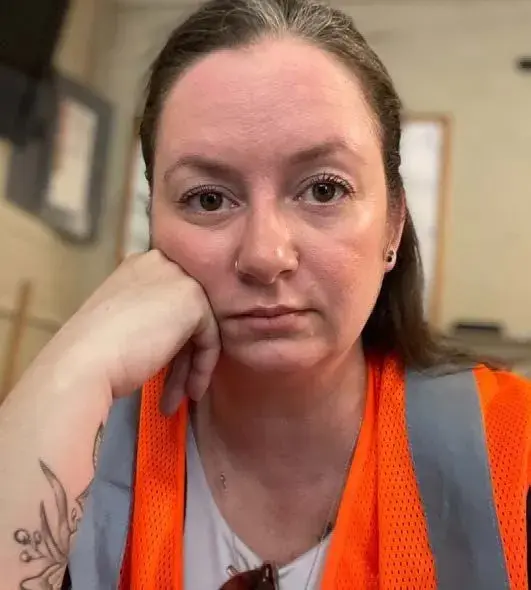
Mental health comes in many forms and manifests in many ways. It is not a reflection of one's talents or skills—including the ability to lead. It does not make anyone less worthy, less desirable, or less capable. Two things can be true at once: you can struggle with mental health and still be a badass at work.
There is a beautiful tapestry we can collectively weave by continuing to break down barriers and eliminate the stigma surrounding mental health. Our industries will emerge more vibrant and successful as a result. Diversity of thought is a powerful thing, and incorporating accessibility, education, and compassion into the workplace will help us tap into that power.
For years, I functioned with something I have since referred to as my "house of cards," until about 2019. All the masking and coping mechanisms I had built up to function at work came crashing down. I started experiencing worrisome symptoms, including memory issues, panic attacks, an inability to concentrate, and difficulty completing simple tasks. At first, I chalked it up to burnout from working so much and being an extreme perfectionist, but I ultimately realized it was something more.
After confiding in my partner and sister, and with COVID-19 leading to work-from-home mandates, I made the difficult decision to take a step back from work and from the career and organization I loved. I spent the next year at home freelancing, supporting my son through at-home schooling, and researching mental health. I learned (and unlearned) so much during that time, and I am incredibly grateful for the privilege of having had that opportunity. Ultimately, I returned to work in 2021, and it wasn't until almost two years later that I sought professional help. For the first time, I answered the screening questions honestly with my doctor, and she referred me to a mental health professional so I could begin addressing my concerns in earnest.
One of the more difficult aspects of this journey has been addressing the emotional damage caused by previous traumas—actually admitting they existed and coming to terms with the fact that people, both those I knew and loved and those I didn't, had caused them. Realizing that some things had been exacerbated by bad managers and shitty leaders wasn't fun, either. Additionally, I had to mourn the loss of my masked self—the strong one who performed at such high levels, was super organized, and never dropped any balls. Realizing that I could no longer operate at the same level or in the same way was jarring. Coming to terms with a new way of moving through the world that honored my well-being and moving away from perfectionism were also difficult.
Several diagnoses—including CPTSD, ADD, MDD, and anxiety—more than a year and a half of medication protocols, and a partnership with an amazing therapist later, I am feeling closer to my baseline than ever before. Mental health is a lifelong, ongoing journey for me and so many others. It involves a recurring cycle of evaluating yourself, your environment, your medications, and other factors, as well as having courageous and honest conversations with your support system. It's about learning the art of calling in those who get it wrong, including yourself, and calling out those who cause harm (if you're safe to do so). It's about understanding that the workplace and the people within it can have a significant impact on your well-being.
This is what inspired me to share my personal journey and advocate for mental health openly and publicly. While we have come a long way and there is greater awareness of mental health, there is still much work to be done, and mental health remains widely misunderstood. On the one hand, I can be praised for sharing my story; on the other hand, doing so could have real professional consequences if I'm not careful. I spent so long dealing with these issues in isolation and suffering on the inside that I finally had to ask myself, "What's the worst that could happen at this point, and would it be worse than what you're already suffering through?"
With all this said, though, I still have to challenge my own understandings, perceptions, and misperceptions about mental health. Just because you deal with it yourself does not mean you are an expert, and it certainly doesn't insulate you from your own biases. It's a learned practice of seeking to understand with compassion and extending grace. For those with little to no personal experience, it is even more important to be intentional about this practice.
As much as I wish I could (or as much as society has pressured me to) "leave our personal lives at the door" when I show up to work, let's be real: that is not possible. I can't separate the parts of my brain and heart that have to fight a little harder to feel good on the inside from the parts that kick ass at work. They are intrinsically linked, and denying that added fuel to the dumpster fire I was already battling. Coming to this critical realization also helped me develop one of the key points of my advocacy work: deconstructing what "professionalism" means. When "being professional" includes chipping away at your humanity, we are missing the mark. Leaders have a tremendous obligation and responsibility to provide feedback that is equitable, informed, and considerate.
Two things can be true at once: you can struggle with mental health and still be a badass at work.
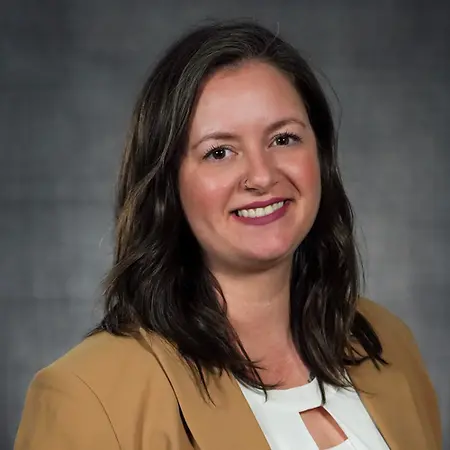
Daryl Anne Estill is a Senior Project Manager at TDIndustries with 20 years of construction industry experience and expertise in large commercial projects. A passionate advocate for workplace equity and mentorship, Daryl has earned multiple awards including the 2024 Mentor of the Year and 2025 Industry Advocacy Award. She mentors students, chairs the E.M.P.O.W.E.R. Women's Partner Resource Group, and speaks publicly…





