Modernist Revolt
Examining Capitalism's Systemic Exploitation and the Psychological Roots of Civil Unrest

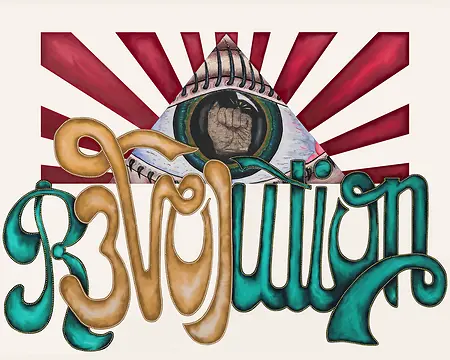
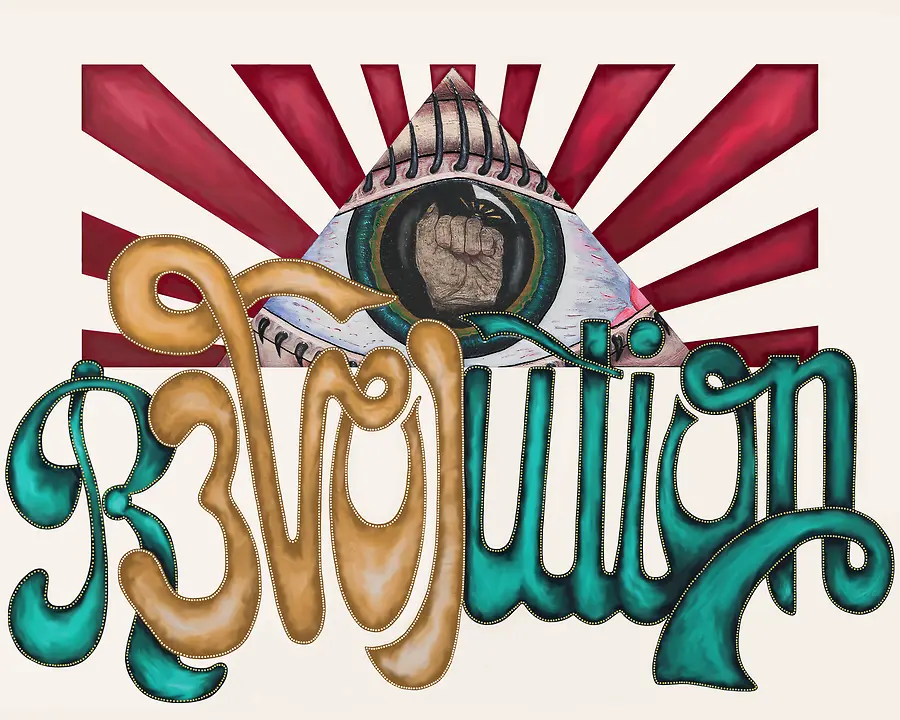
"Modern Industry has converted the little workshop of the patriarchal master into the great factory of the industrial capitalist… Masses of labourers, crowded into the factory, are organised like soldiers. As privates of the industrial army, they are placed under the command of a perfect hierarchy of officers and sergeants. Not only are they slaves of the bourgeois class and of the bourgeois State; they are daily and hourly enslaved by the machine, by the overlooker, and, above all, by the individual bourgeois manufacturer himself. The more openly this despotism proclaims gain to be its end and aim, the more petty, the more hateful, and the more embittering it is."[\[1\]]
The ideology based in the analysis of political science, and thus backed by theorem and constituted by unwavering fact, allots the crumbling of political stability to the inheritances of the wealthy classes. The United States propagates its wealth gap through cultural appropriation, meddling, and the mass manipulation of its citizens, dependent on the enslavement positioning within its own economic system. Those who obtain power are historically determined to harness and hold said power while notoriously expanding its everlasting grip and daunting reach.
Capitalism is rightfully appropriated for world domination, yet the challenge posed by its scientific superior is a threat to that world domination and, thus, the antagonist of its warmongering. Nuclear absolutist warfare is held in blood across the United States' fingerprints, and yet the threat is the enlightenment of a flawed economic system. Fear is propagated through the democratic countries under its capitalistic foundations, historically bound to their own deterioration within a few centuries thereafter, and this is attributed to the subjugation of their systematic root: the exploitation and dehumanization of their proletariat.
Working classes, in dependence upon their economic enslavement, are among the most civilized in their social concept of classist devotion. The proletariat respects its authority and is thus bound to its dependence upon the elitism of the wealthy class until the subjection of its livelihood reaches deprivation. This demand creates an imperative and significant economic gap between corporate bodies and civilized labor.
The scientific formulation of civil unrest
is best analyzed by political scientist Ted Gurr through the concept of "relative deprivation" and the psychological factors that construct or ignite civil uprisings, or specifically, civil violence in a political spotlight.\[2\]
"Relative deprivation is the ratio between propositional value and source value (value expectations and value capabilities). Frustration initiation is held within awareness of interference, which is directly subjugated within its awareness of relative deprivation. The combination of relative deprivation and frustration are psychologically proven, scientifically, to cause anger among actors whose perfect conditions are relevant to the deprivation in which they suffer. The extent of anger and the suppression of frustration resolution outlets determine the magnitude of the civil violence that may occur and vary based on depreciation of frustration or anger across an elongation of time between initializations and active response. This magnitude, and the manner in which it is scientifically found to be strategized or manifests, is determined by the qualities of the actor and whether said actor is considered to possess elitist qualifications."[\[3\]]
The nature of conflict, propagating fear of its own hand across the face of its subjected classism, is the leading totalitarian regime. This type of psychological manipulation in political addendum is destructive not only to its nation but to every world nation and colonization to which it demands subjection.
The social understanding of scientific political adjudication has little to do with democracy, and opposition to capitalism is not an authoritarian regime. The argument in conflict is denoted by erroneous language designed to humiliate and dehumanize. If the world is to know and understand political and economic stability, it must first understand the destruction of its capitalism and its relationship to patterned and chronic deterioration, resulting in habitual civil uprisings. The balance is systematically flawed: the ideology is distorted, and the leaders of the "free world" refute independent thought and systematic reform.
\[1\] Marx, Karl, and Friedrich Engels. Manifesto of the Communist Party. Translated by Samuel Moore. London: Penguin Books, 2002.
\[2\] Gurr, Ted Robert. Why Men Rebel. Princeton, NJ: Princeton University Press, 1970.
\[3\] Sparkes, Taunie Jade. "Relative Deprivation" (2026). University of Idaho, Canvas POLS4870.

Taunie Sparkes is an art gallery and distribution professional who founded sparksink.com in 2018 and specializes in literature, art, and photography. She holds a History degree with a business minor from the University of Idaho and is pursuing an MBA. Sparkes serves as a Girl Scouts troop leader and volunteers regularly in her daughter's classroom. Her daughter has been instrumental in her entrepreneurial journey…