MORE THAN A CLAIM NUMBER
Why Claims Management Is About People, Not Just Numbers

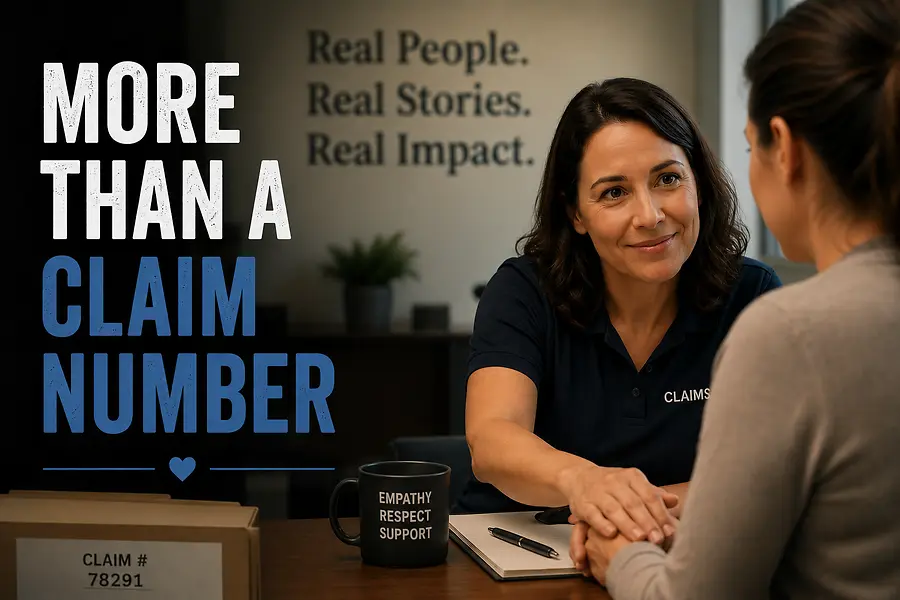
The Human Side of Claims in Trucking
Over the course of my career working in transportation and claims, I’ve seen firsthand how much the claims process depends on judgment, communication, documentation, and empathy.
When Something Goes Wrong
It can happen in seconds.
A truck is traveling down the highway when traffic suddenly stops. A driver makes a split-second decision. Metal meets metal. Cargo shifts. Property is damaged. Someone is injured.
In that moment, the trip changes, and so does the work of everyone behind the scenes.
For the trucking company, the incident may quickly become a claim number. A file is opened. Documents are requested. Statements are collected. Insurance carriers are notified. Reserves are established. Calls are made.
But a claim is never just a number.
Behind every claim is a person.
There is a driver who may be shaken by what happened. A customer waiting for damaged freight to be resolved. An employee trying to understand what comes next. A business concerned about financial exposure. An insurance adjuster working to determine the facts.
And somewhere in the middle is the claims professional.
Their job is to bring order to what can often be a complicated and emotional situation.
The People Behind the File
Claims management is sometimes misunderstood as simply processing paperwork and paying bills.
Throughout my career, I’ve seen the value of a strong connection between claims and safety.
A claims professional is part investigator, part problem solver, part negotiator, and often part communicator between multiple parties.
Every claim requires questions:
What happened?
Why did it happen?
Who was involved?
What evidence supports the facts?
What are the company’s responsibilities?
What does the insurance policy provide?
What can be done to prevent this from happening again?
Those questions require more than a checklist. They require judgment.
“A claim may begin with an incident, but the way it is handled can have an impact far beyond the original event.”
Where Claims and Safety Meet
One of the most valuable relationships within a trucking organization is the connection between claims and safety.
When these two areas work independently, an opportunity can be missed.
A claim tells a story about what happened. Safety can use that information to help determine how to prevent it from happening again.
Maybe several claims involve backing accidents.
Maybe cargo is repeatedly being damaged during loading or unloading.
Maybe a particular route, location, piece of equipment, or operational practice appears repeatedly in claim reports.
Those patterns matter.
Claims data can provide safety teams with information that might otherwise be overlooked.
The question should not simply be:
“How much did this claim cost?”
The better question is:
“What can this claim teach us?”
That shift in thinking can transform claims from a reactive department into a proactive risk-management resource.
The Price of a Claim Goes Beyond the Check
The financial impact of a claim can be substantial.
A serious trucking accident may involve vehicle repairs, cargo damage, property damage, bodily injury, towing and storage expenses, legal fees, medical costs, deductibles, and other related expenses.
But there is another cost that is harder to measure:
Reputation.
A poorly handled claim can damage a customer relationship. Delayed communication can create frustration. Inadequate documentation can complicate an investigation. Unresolved issues can lead to litigation.
This is why effective claims management is also financial management.
Every claim should be evaluated carefully, documented thoroughly, and handled with an understanding of both the immediate and long-term impact on the organization.
Documentation Tells the Story
When a claim becomes complicated, documentation becomes one of the most powerful tools available.
Photographs.
Driver statements.
Police reports.
Bills of lading.
Maintenance records.
Inspection reports.
Contracts.
Emails.
Video footage.
Electronic data.
Each piece can help tell the story of what happened.
Good documentation allows a claims professional to move beyond assumptions and focus on facts.
It also creates accountability.
When information is gathered quickly and accurately, decisions can be made with greater confidence.
In claims management, details matter.
Sometimes, one photograph or one line in a report can change the entire direction of a claim.
Communication Can Change the Outcome
There is another tool that cannot be measured in dollars or documents:
Communication.
Claims professionals often work with people who are frustrated, angry, confused, or simply looking for answers.
A customer may want to know when their cargo will be replaced.
A driver may want to know whether they are going to be blamed.
A claimant may want to understand why a settlement is taking time.
An insurance adjuster may need additional information.
Leadership may want to know the potential financial exposure.
Everyone wants answers.
And while a claims professional may not always be able to provide an immediate solution, they can provide something equally important:
Communication.
A phone call.
An email.
An update.
A simple explanation of what happens next.
Sometimes, people don’t need to hear that everything is resolved.
They simply need to know someone is working on it.
The Insurance Partnership
Insurance is an important piece of the trucking industry’s risk-management structure.
When a significant claim occurs, trucking companies may find themselves working closely with insurance carriers, adjusters, attorneys, brokers, and other professionals.
Strong relationships can make a difference.
But effective claims management also requires accountability.
Claims professionals often need to ask questions, review information, understand the applicable coverage, raise concerns when information does not align, and follow up when a claim is not progressing.
Supporting the organization’s interests does not mean losing sight of the people and other parties involved.
It means making decisions based on facts, policy language, documentation, and sound judgment.
Compliance Is More Than a Checkbox
The trucking industry operates in an environment where safety, regulatory requirements, contracts, insurance, and operational policies intersect.
Claims can touch nearly every one of those areas.
That makes compliance an important part of the claims process.
In my experience, strong claims operations benefit from clearly defined procedures for reporting incidents, preserving documentation, escalating serious events, communicating with insurance partners, and maintaining appropriate records.
Consistency matters.
When an organization has a clear process, employees know what to do when something goes wrong.
And when people know what to do, critical information is less likely to be lost.
The Human Side of the Claim
Perhaps the most important part of claims management is also the easiest to overlook:
People.
A serious accident can change someone’s life in an instant.
A driver may be dealing with fear or uncertainty.
A customer may be dealing with a significant business interruption.
An employee may be trying to understand what happened and what comes next.
Claims professionals are often exposed to these stories on a regular basis.
That requires more than technical knowledge.
It requires empathy.
Being empathetic does not mean losing sight of the company’s responsibilities or accepting every demand.
It means remembering that professionalism and compassion can exist together.
You can protect the company’s interests while still treating people with dignity and respect.
Every Claim Has a Lesson
The best claims departments don’t measure success only by how quickly files are closed.
They look for patterns.
They ask questions.
They analyze data.
They communicate with safety and operations.
They identify opportunities for improvement.
A claim can reveal a training opportunity.
It can identify a procedural weakness.
It can expose a communication gap.
It can highlight an equipment issue.
It can demonstrate where additional resources are needed.
When organizations take the time to learn from claims, those losses can become valuable lessons.
And those lessons can help prevent the next accident.
Building a Culture of Accountability
Across the transportation industry, claims management does not operate in a silo.
Drivers play a role.
Operations play a role.
Safety plays a role.
Maintenance plays a role.
Leadership plays a role.
Claims plays a role.
Everyone has a responsibility to help protect the organization.
That means reporting incidents promptly.
Preserving evidence.
Following procedures.
Communicating effectively.
Taking responsibility when appropriate.
And, most importantly, learning from mistakes.
A strong claims culture is not about assigning blame.
It is about accountability.
There is a difference.
Looking Ahead
Technology is changing the way claims are managed.
Dash cameras, telematics, electronic records, data analytics, artificial intelligence, and other tools are giving claims professionals access to more information than ever before.
These technologies can help reconstruct accidents, identify patterns, improve response times, and support better decision-making.
But technology cannot replace human judgment.
Data can tell us what happened.
People still have to determine what it means.
The future of claims management will require both:
Better technology.
Better data.
Better processes.
And skilled professionals who understand the business, the risks, and—most importantly—the people involved.
The Claim Is Never Just the Claim
The trucking industry moves America forward.
But behind every load, every truck, and every mile are people.
And when something goes wrong, those people need someone who can step in, ask the right questions, find the facts, manage the risk, and help move the situation forward.
That is the true role of claims management.
It is not simply about opening a file.
It is not simply about understanding what happened and evaluating the issues involved.
It is not simply about helping move a claim toward resolution.
It is about protecting people, protecting the company, managing risk, supporting safety, maintaining compliance, preserving relationships, and learning from every event.
Because behind every claim number is a story.
And behind every story is a person.
That is the human side of claims in trucking.


