Moving Mountains (and Microchips): Why Supply Chain Needs Your Magic
Why women are the missing piece in supply chain technology innovation.

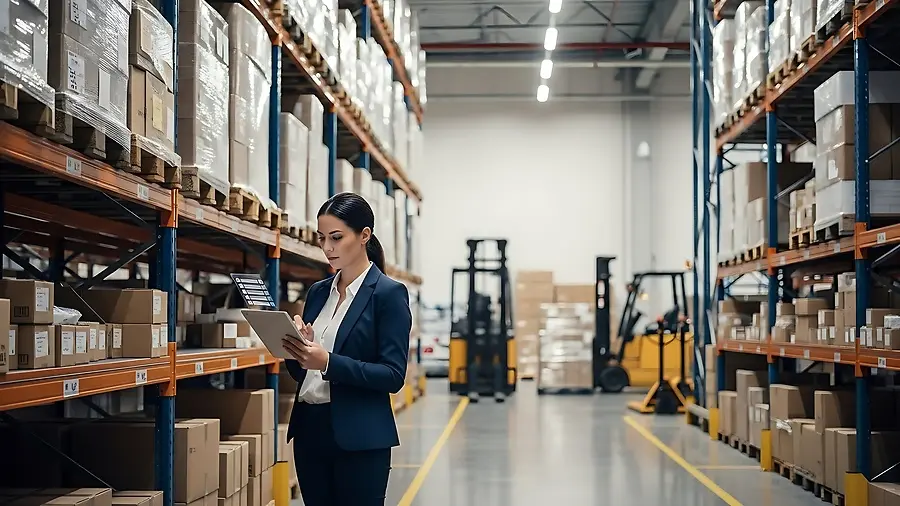
If you had told me a few years ago that I’d be spending my days thinking about “last-mile delivery” and “automated warehouse logic,” I probably would have assumed I had accidentally joined a very specific type of marathon.
But here we are.
Supply chain—specifically the technology side of it—has long been viewed as a world of dusty clipboards, heavy machinery, and men named Tom. But there is a quiet revolution happening. The clipboards are now tablets, the machinery is driven by AI, and the “Toms” of the world are realizing they desperately need a broader range of perspectives.
If you are a woman looking at the tech side of supply chain and wondering if you belong, let me give you the short answer: you are the missing piece of the puzzle.
The “Soft” Skills Are Actually Hard Power
In supply chain tech, we are not just moving boxes—we are solving complex, interconnected systems problems.
Women often excel at “multithreaded thinking”—the ability to see how a delay in a microchip factory in Asia affects a retail shelf in Ohio. That is not just intuition; it is advanced systems thinking. When you combine that with the empathy to understand the human being at the end of the data point, you are not just a worker—you are a strategist.
Don’t Fear the “Tech” in Tech
Here is a secret: no one knows everything about blockchain or predictive analytics on day one.
Most of “tech” is simply the willingness to ask:
- Why is this broken?
- How can we make this faster?
- What is not working that everyone has normalized?
If you can organize a family vacation or manage a complex project at work, you already have the foundational logic for supply chain architecture. The rest is vocabulary, tools, and time.
Build the Table You Sit At
This sounds heavy, but it is actually a superpower.
You see gaps others miss.
You ask questions others are too conditioned—or too comfortable—to ask.
And in supply chain systems, those questions are often where the real innovation begins.
Final Thought
To the women considering this path: the water is fine.
It is fast-paced. It is occasionally chaotic. And it is the backbone of how the world actually works.
We do not need more people who simply follow the process.
We need people who look at the process and say:
“I think there is a better way.”
So take your seat at the table.
Or better yet—help design the systems that build the table in the first place.
The industry is already waiting for you.


