Navigating Two Worlds — Without Losing the One That Matters Most
How 16 years in consulting, grief, and the courage to show up authentically taught me that presence matters more than perfection.

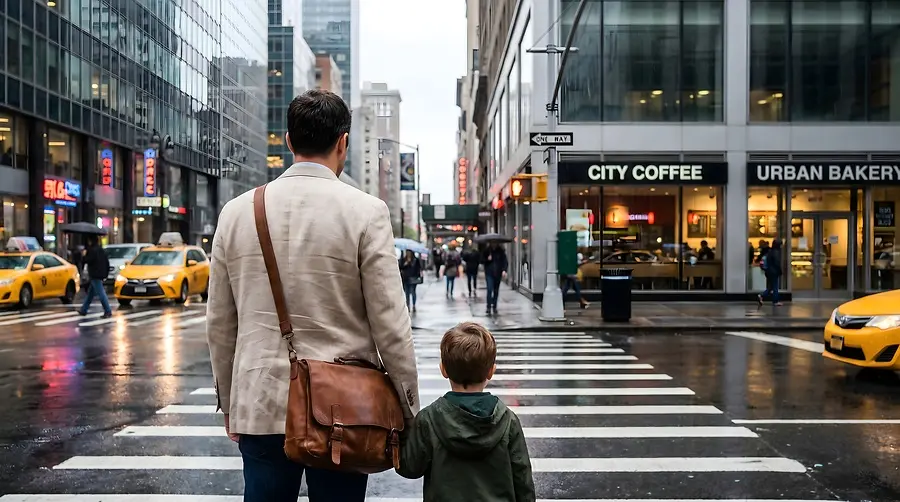
Presence Over Perfection
There is a version of this article where I tell you I have it all figured out. Where I describe my mornings as calm, my calendar as intentional, and my energy as boundless.
That version is not true, and it is not what you need to read.
What I can tell you is this: I have spent more than 16 years in the IT industry, with the last four years in consulting, navigating financial institutions, energy companies, retailers, and healthcare clients—each one a different universe of priorities, culture, and pressure.
I lead volunteer engagement for PMI Houston as VP of Volunteers, a role I have held for three years. I am a wife, a mother, the eldest daughter in my family, and someone who recently lost a close family member in a way that quietly rearranged everything I thought I knew about planning for the future.
Two worlds.
That is what people see when they look at my résumé. But honestly, it is more like five.
And none of them wait their turn.
Presence over perfection.
That has become my quiet operating principle—not a slogan, but a survival strategy.
I Did Not Start Here
I started in QA: testing software, identifying what was broken, and documenting what did not work the way it was supposed to.
When I think about it, it is a strange origin story for a program manager—except that it is not strange at all.
QA teaches you to look at systems holistically. It trains you to ask:
Where is the gap between what was promised and what was delivered?
That question never left me. I simply started asking it about programs, teams, and organizations instead of software.
The pivot from QA to program management was not a straight line. It was built over years, across industries, and through a master’s degree in information management that I pursued in Mumbai while working full-time.
When I started that program, I was single.
By the time I finished, I was married.
Evening classes after long workdays, followed by coming home to a new marriage, a new home, and a new version of what my life was supposed to look like—it was tiring in the specific way that meaningful things are tiring.
Hard enough to matter.
Worthwhile enough to keep going.
I think about that version of myself sometimes.
She did not know how much further the road would go.
She just kept showing up to class.
The Eldest Daughter Tax
There is something that women who grew up as the eldest daughter in their families will recognize immediately, even if they have never heard it named.
You learn early that you are responsible—not just for yourself, but for the tone of the room, the well-being of siblings, and the invisible labor of keeping things steady.
My youngest brother is three years behind me. The gap was small enough that I was always conscious of setting an example, and large enough that I felt it as a kind of quiet leadership long before I had a title for it.
I carry that with me.
It is not a burden—or rather, it stopped feeling like one once I understood it as a skill.
The eldest daughter learns to read a room before she enters it. She learns to absorb stress without broadcasting it. She learns that leading does not always mean being the loudest voice.
These are things I use every day, in every program I run and every volunteer meeting I facilitate.
Nobody put those skills on a curriculum.
Life did.
What Grief Taught Me About Living Now
We lost someone close to our family recently.
I will not dress that sentence up because loss does not dress up.
They were someone who planned. Someone who believed—reasonably and rationally—that the future was a place you could prepare for.
And then, the way grief always arrives, it came without asking for permission and dismantled the scaffolding of what we thought we knew about time.
I have spent most of my career being very good at planning: roadmaps, milestone matrices, phased rollouts, and risk registers. I build structures for a living.
After we lost them, I sat with the quiet, uncomfortable truth that all of that structure exists in service of a future that is never guaranteed.
What shifted for me was not that I stopped planning.
It was that I stopped deferring the present.
The cup of black coffee in the morning, taken slowly without a laptop open—that matters now.
The dinner table with my daughter—that matters now.
The drive in the Mustang with no destination agenda—that matters now.
Grief has a way of demoting the urgent and promoting the essential.
I am a better leader since that loss.
A more human one.
I hold my team members’ realities with more care because I know now, in a way I did not fully understand before, that everyone is carrying something you cannot see on their status report.
What Empathy Actually Looks Like at Work
People assume empathy is soft.
A nice-to-have.
Something you bring to one-on-one conversations when someone is struggling.
Over 16 years and across more industries than I can count on one hand—including finance, energy, retail, healthcare, and pharmaceuticals—the thing I have learned is that every client operates inside its own logic.
A retail organization moves at a completely different rhythm than an energy company.
A financial institution has a different relationship with risk than a healthcare system.
You cannot parachute in with a universal playbook.
You must listen first.
You have to understand what this industry, this team, and this person are optimizing for before you can help them move forward.
That is empathy in professional practice.
Not sentiment.
Situational intelligence.
And the single place where I trained for it most—without knowing that was what I was doing—was at the dinner table with my daughter, learning to be present enough to truly hear what was being said underneath what was being said.
Why I Volunteer—and Why Three Years In, I Am Not Done
When I took on the VP of Volunteers role at PMI Houston, I thought I understood what it would require of me.
Three years later, I know I underestimated it—and I mean that in the best possible way.
Volunteer leadership is one of the hardest forms of leadership.
Nobody has to be there.
Nobody is being paid.
The only currency you have is genuine appreciation, a culture worth showing up for, and the sense that someone in leadership sees the work being done.
Building that—and sustaining it year after year—has made me a fundamentally different kind of manager than I was before taking this role.
At work, success is measured in milestones, velocity, and delivery.
At PMI Houston, success is a volunteer who felt seen.
It is a recognition dinner where someone tears up because they did not expect anyone to notice how hard they had been working.
It is a Volunteer of the Month announcement that prompts a message back saying simply:
"Thank you for seeing me."
I need that reminder regularly.
The point of all this work is people.
On Work Friends, Black Coffee, and the Risks Worth Taking
There is a common professional warning: do not get too close to your work colleagues. Keep it professional. Maintain boundaries.
I understand the reasoning.
I have simply found, in my own life, that it does not capture the whole picture.
Some of my closest friends are people I met through work and through PMI Houston.
We meet for coffee—black, always, in my case. It is the one non-negotiable in my daily routine.
We go dancing.
I show them who I actually am, not just the polished professional version, and they do the same.
There is no judgment.
There is real care.
And I think that is not luck so much as it is intentional openness—a willingness to let people see beyond the title and to trust that most people, when you do that, will meet you there.
The popular opinion says that is risky.
My experience says it is necessary.
The Mustang, the Gym, and the Art of Reclaiming Yourself
I drive a Mustang GT Premium.
I want to say that plainly because it matters more than it might sound.
There are mornings when everything feels like it belongs to someone else.
My time belongs to the program.
My attention belongs to my daughter.
My energy belongs to the volunteer calendar.
On those mornings, getting into that car and driving—with no destination agenda, the engine doing exactly what it was built to do—is the closest I come to meditation.
I also work out.
Not always at the perfect hour. Not always with perfect consistency.
But enough to know that the version of me who skips it for too long is not the version anyone around me enjoys.
Movement is not vanity.
It is maintenance.
It is how I show up for everything else.
After losing someone close, these rituals took on a different meaning.
They stopped being treats I earned and became acts of living in the present—which is, I now believe, one of the most important things any of us can do.
What I Would Tell Someone Standing Where I Stood
If you are a woman managing multiple roles—and most women I know are—here is what 16 years has taught me:
The career you want is built in the in-between.
In the evening classes after long days.
In the lateral moves that do not look strategic until years later.
In the industries that seem unrelated until you realize every one of them taught you something the next one needed.
Empathy is not a personality trait.
It is a professional skill.
Develop it intentionally—at work, at home, and especially during the moments of grief and transition that life will eventually give you, whether you plan for them or not.
The people around you do not need you to be perfect.
They need you to be real.
Real is more durable than perfect.
Real builds trust that perfection never can.
And protect the things that make you feel like yourself.
The black coffee taken slowly.
The drive with no agenda.
The dinner table where you truly show up and are present.
The dancing.
The friends who see beyond your title.
Those are not extras.
They are the infrastructure everything else is built on.
Real is more durable than perfect. Real builds trust that perfection never can.


