On International Women’s Day, Iranian Women and the Limits of the Language of Freedom
What the struggle of Iranian women reveals about the global politics of the body and the limits of freedom framed as choice

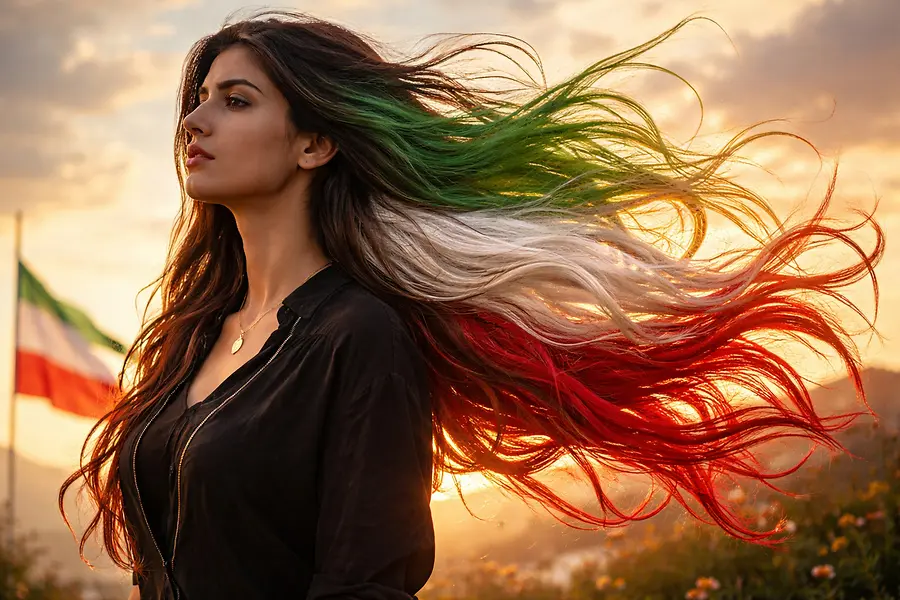
International Women’s Day is often marked by a familiar and reassuring vocabulary: progress, empowerment, achievement. This narrative is necessary, yet it carries a quieter assumption — that the history of women’s freedom, however uneven, fundamentally moves forward.
The contemporary world offers a more complicated picture.
In recent years, women’s bodies have once again become sites of political contestation on a global scale. Reproductive rights are being challenged in countries where they once appeared secure. Women’s dress remains the subject of public dispute. Even concepts long considered settled have re-emerged as arenas of conflict.
This uneasy coexistence of progress and regression raises a troubling question for global feminism: Does the dominant language of women’s freedom still suffice?
In this moment, the struggle of Iranian women is not merely a national story.
The movement that crystallized around the slogan “Woman, Life, Freedom” following the death of Mahsa Amini represents a focal point in a profoundly global conversation. This uprising did not emerge in isolation but rests upon decades of contestation by Iranian women over the body, agency, and social order — struggles unfolding across legal frameworks, cultural norms, and the rhythms of everyday life.
What made this moment a turning point was not simply the scale of protest.
It was a shift in language.
Much of the dominant feminist discourse, particularly within liberal Western traditions, has framed freedom primarily through the lens of individual choice. A free woman is one who can choose — her clothing, her lifestyle, her trajectory.
Yet the experience of Iranian women reveals something more foundational.
Within a system where the female body is directly regulated by political authority, the issue is not merely the restriction of a particular choice but the conditions that make choice itself possible. Before the question “What may I choose?” can even arise, another question asserts itself: “Is my body fundamentally recognized as belonging to the realm of choice?”
The movement encapsulated in “Woman, Life, Freedom” intervenes precisely at this level.
The slogan is not simply a demand for a specific right. It rearticulates the relationship between life and freedom, shifting the emphasis from freedom as a menu of options to freedom as the possibility of living with dignity.
This is why the movement resonated far beyond Iran.
Not because Iran is exceptional, but because the underlying tension is widely recognizable. In varied forms, women’s bodies continue to serve as sites of legal, cultural, and political negotiation across the world. The differences are ones of intensity and form, not of the fundamental logic of the conflict.
The struggle of Iranian women exposes a fissure global feminism cannot easily ignore:
How should freedom itself be understood?
Is the language of choice alone sufficient to capture the full range of women’s lived realities? Or do certain contexts compel a deeper rethinking of agency, embodiment, and power?
Global responses to Iran reflect this tension. Iranian women are alternately romanticized as heroic symbols or distanced as subjects of a remote cultural predicament. Both reactions risk narrowing the space for a more serious engagement with the conceptual questions the movement presents.
Because the issue is not solely Iran.
It is the fragility of concepts global feminism sometimes treats as settled.
If International Women’s Day is to remain a moment of reflection rather than ritual, it offers an opportunity to view the struggle of Iranian women not only as a story of repression but as a conceptual intervention in the evolving language of freedom.
Global solidarity begins here.
Not through the flattening of differences, but through recognizing that women’s struggles across contexts articulate shared questions about power, the body, and the conditions of a livable life.
“Woman, Life, Freedom” is not only an Iranian slogan.
It is part of the emerging vocabulary of global feminism — a vocabulary that reminds us that women’s freedom is not a settled achievement, but an enduring site of contestation.


