Orwell’s 1984 Wasn’t a Prediction. It Was a Warning Label.
How Orwell's 1984 Warnings Are Playing Out in Real Time

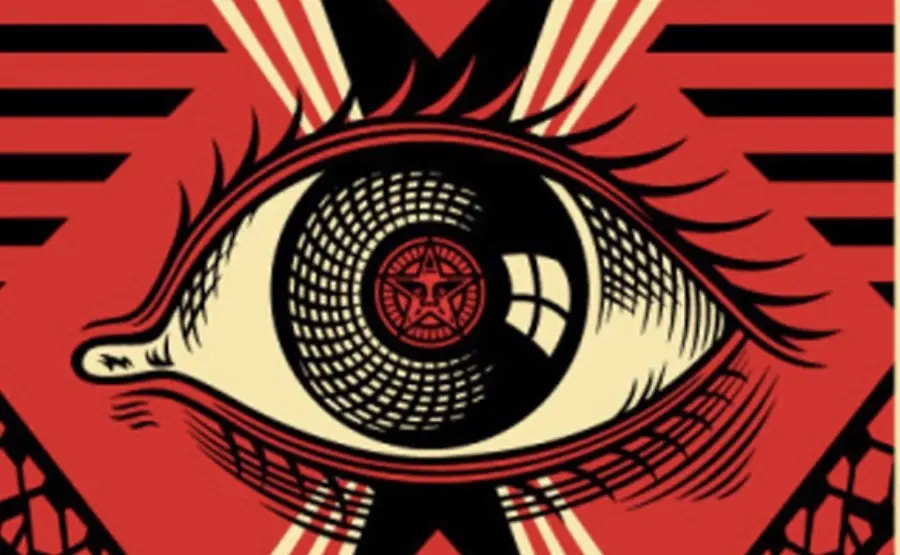
By the time my students reach the part in 1984 where Winston tries to remember a simple truth—what happened, who said what, what the past actually was—they start to get uncomfortable. Not because Orwell is confusing. Because he’s familiar.
In George Orwell’s novel, control doesn’t begin with a boot on a face (though that’s there). It begins with something quieter: the government shapes what citizens can see, say, and save until reality becomes whatever the powerful declare it to be. Orwell’s genius is that he doesn’t sell us a single villain. He shows a system—surveillance that makes people self-censor, propaganda that makes lies feel normal, and constant pressure that makes resistance feel pointless.
If you’re reading this in 2026 and thinking, “Okay, but we don’t live in Oceania,” I agree. We don’t. But we also don’t get to pretend Orwell’s tactics are “fiction only.” We’re watching versions of them play out—through technology, through institutions, through public arguments over history and information. Not identical. Not always government-run. But undeniably related.
Surveillance: When Being Watched Becomes a Way of Life
In 1984, telescreens don’t just collect information; they change behavior. The threat of being watched teaches people to keep their heads down. Winston’s most radical act isn’t shouting in the street. It’s writing in a diary.
Now zoom to the present: we’re surrounded by tools that can trace where we go, who we know, what we click, and where we sleep. Sometimes it’s private companies; sometimes it’s government agencies; often it’s a partnership of convenience.
In January 2026, a Minnesota Public Radio report described how immigration enforcement can use phone and internet data to help identify and track people—data gathered and sold through systems most ordinary people never knowingly opt into (Moini and Finn). That’s not a telescreen on your wall. But it’s the same concept: a person becomes legible to power through data, and legibility makes control easier.
And this isn’t abstract. In 2024, the Federal Trade Commission took action against data brokers Gravy Analytics and Venntel for allegedly selling sensitive location data—data that could reveal visits to places like medical facilities and houses of worship (Federal Trade Commission). Orwell’s Party didn’t need consent; it demanded obedience. Our system often works differently: the surveillance is “agreed to” through unread terms, buried permissions, and a marketplace that treats people’s movement like a product.
Here’s the modern 1984 twist: the goal isn’t always to punish you directly. It’s to create a world where you wonder if you could be punished, and that uncertainty is enough to shape choices.
History Control: The Past as a Battleground
In Orwell’s Ministry of Truth, history is edited daily. If yesterday’s enemy becomes today’s ally, the records change. The public is expected to accept the revision as normal. Orwell names it clearly: if the Party controls the past, it controls the future.
In January 2026, the Associated Press reported that the National Park Service removed a slavery exhibit at Philadelphia’s Independence National Historical Park after an executive order about “restoring truth” in American history; the city sued, with critics arguing the move modeled “whitewashing history” (Vejpongsa and Brewer). Whether you agree with every framing of that controversy or not, the Orwellian parallel is the same: when power interferes with public memory, it’s never just about plaques and panels. It’s about permission—who gets to narrate the nation.
Or look at the ongoing battles over how schools teach slavery and race. Florida’s 2023 African American history standards drew national backlash for how certain topics, including slavery, were framed (Najarro).
Again, this is not the Ministry of Truth stamping UNPERSON on a file. But it is the same fight over what students are allowed to learn and how the story is told.
If 1984 scares you, it’s not because it suggests the government can rewrite the past. It’s because it shows how quickly people can be trained to accept rewriting as normal.
Censorship: When the Shelf Becomes Smaller Than the World
Orwell’s Newspeak isn’t just about banning words; it’s about shrinking thought. If you don’t have language for an idea, the idea becomes harder to hold.
In the United States, the fight over books isn’t theoretical anymore. PEN America documented 10,046 instances of school book bans in the 2023–2024 school year, affecting 4,231 unique titles (PEN America). That’s not one district making a questionable choice. That’s a national pattern: access to stories and information is being restricted at scale.
Sometimes bans are justified as protection. Sometimes they’re framed as “age appropriateness.” But Orwell would ask a sharper question: What happens to a society when it trains students to expect less information instead of more?
A classroom should expand a young person’s mind. When we normalize removing books because they make us uncomfortable, we teach the opposite lesson: the solution to complexity is silence.
Propaganda and Language: Words Become Weapons
In 1984, propaganda isn’t only posters and slogans. It’s the constant, exhausting drumbeat that makes it hard to think clearly. It’s the way language gets redefined until truth feels slippery.
In 2026, we live inside competing headline factories. We’re surrounded by phrases designed not to clarify but to trigger: enemy of the people, fake news, traitor, illegal, woke, terrorist, freedom, security. Some of these words describe real issues. But they’re also routinely used as blunt tools—labels that shut down curiosity.
When public debate becomes a battle of slogans, we move closer to Orwell’s world—not because one side “wins,” but because thinking itself gets replaced by chanting.
The Most Dangerous Part: Self-Censorship
The Party’s greatest trick in 1984 is that people begin policing themselves. The fear becomes internal. Winston doesn’t only hide from the government; he hides from his neighbors, his coworkers, his own face.
That’s the real question for 2026—not whether we have telescreens, but whether we’re learning to live as if we do:
- Do we stop asking honest questions because we’re afraid of being labeled?
- Do we avoid reading certain books because it’s easier than defending curiosity?
- Do we accept “that’s just how it is” when privacy erodes?
Orwell shows that authoritarianism doesn’t always arrive with fireworks. Sometimes it arrives with exhaustion. With cynicism. With the belief that truth is unknowable, so why bother?
So What Do We Do With Orwell Now?
I’m not interested in turning 1984 into a cheap “gotcha” against whichever political team you dislike. That’s not the point. Orwell didn’t write a partisan novel. He wrote a human one about what happens when power stops being accountable to truth.
Here’s what I tell my students:
- Practice evidence-based thinking. Don’t just react. Ask: What do we know? How do we know? Who benefits if we believe this?
- Protect privacy like it matters—because it does. Data trails aren’t harmless. They’re leverage. And leverage becomes power (Moini and Finn; Federal Trade Commission).
- Defend the right to read broadly, even the books you don’t like, because censorship rarely stops with one shelf (PEN America).
- Refuse to let history become a costume. If public memory is edited for comfort, democracy gets weaker (Vejpongsa and Brewer; Najarro).
In 1984, Winston loses because the Party doesn’t just control his actions; it ultimately controls his mind. Orwell’s warning is brutal, but it’s also useful: the first defense against manipulation is noticing it.
We don’t live in Oceania. But the tools Orwell described—surveillance, narrative control, language manipulation, and shrinking access to information—are not relics. They’re live options in modern society.
And the question in 2026 is not, “Is Orwell happening?”
It’s: “Which parts are we willing to normalize—and which parts are we willing to resist?”