Radiant Pathways: Turning Assisted Living Challenges Into Better Solutions
Building Connected Systems to Transform Senior Care and Strengthen Healthcare Communities

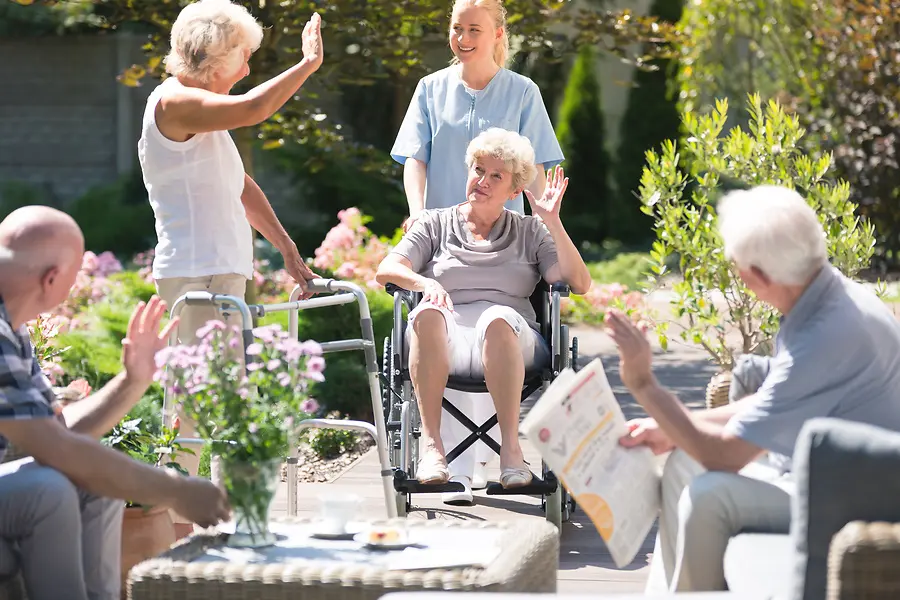
Assisted living is more than a place where older adults receive care. It is a community where health, dignity, safety, independence, family relationships, and quality of life intersect every day.
Yet the professionals responsible for making that environment work are facing increasingly complex challenges.
Staffing pressures. Communication gaps. Care coordination. Family concerns. Changing resident needs. Healthcare transitions. Documentation. Burnout. Safety. And the constant pressure to provide exceptional care while managing the realities of running a demanding organization.
At Radiant Pathways, we believe the answer is not simply working harder.
The answer is building better pathways.
Our mission is to help assisted living communities and healthcare professionals identify problems before they become a crisis, create practical solutions, strengthen collaboration, and ultimately improve the experience for residents, families, and care teams.
The Problem: Healthcare Does Not Operate in Isolation
One of the greatest challenges in senior care is that residents often interact with multiple people and systems. There may be an assisted living administrator, nurses, pharmacies, hospitals, specialists, family members, social workers, and other professionals involved in one person's care.
When those professionals are not communicating effectively, the resident can become the person responsible for connecting the dots.
That's backward.
The Centers for Medicare & Medicaid Services describes person-centered care as coordinated care that responds to an individual's goals, values, preferences, and needs while encouraging collaboration among providers. (CMS)
That philosophy is at the heart of the Radiant Pathways approach.
Solution #1: Build a Culture of Proactive Problem-Solving
Many organizations become excellent at responding to emergencies but struggle to prevent them.
Radiant Pathways encourages communities to ask:
- What problems keep happening?
- Why are they happening?
- What patterns are we seeing?
- Where is communication breaking down?
- What does the resident need that they are not currently receiving?
- What can we change before this becomes a crisis?
This is the difference between reactive care and proactive leadership.
Instead of asking only, "What happened?"
We ask:
"Why did it happen, and what can we change so it does not keep happening?"
That mindset creates stronger organizations.
Solution #2: Put the Resident at the Center
Every resident has a history, personality, preferences, fears, strengths, relationships, and goals.
Effective assisted living is not simply about completing a checklist of tasks.
It is about understanding the person behind the care plan.
Person-centered planning is designed around an individual's strengths, goals, medical needs, preferences, desired outcomes, and choices. (ACL Administration for Community Living)
Radiant Pathways helps organizations think beyond:
"What services do we provide?"
and instead ask:
"What does this individual need to live the best possible life within our community?"
That shift can influence everything from communication and activities to care coordination and family engagement.
Solution #3: Strengthen the Connection Between Assisted Living and Healthcare Professionals
A resident's healthcare journey does not stop at the assisted living door.
When a resident goes to a physician appointment, emergency department, hospital, rehabilitation facility, or specialist, the transition can create opportunities for information to be lost.
Radiant Pathways believes healthcare professionals and assisted living communities should function as partners rather than separate systems.
That means developing reliable communication pathways for:
- Changes in resident conditions
- Medication-related concerns
- Hospital and emergency department transitions
- Follow-up appointments
- Therapy recommendations
- Behavioral or cognitive changes
- Nutrition concerns
- Family communication
- Changes in care needs
Strong care transitions are important because effective coordination can help prevent avoidable complications and unnecessary healthcare utilization. ACL specifically identifies care coordination and transition as important components of community-based support. (ACL Administration for Community Living)
Solution #4: Support the People Providing the Care
There is another essential part of the equation:
The Caregiver.
You cannot consistently create exceptional resident experiences while ignoring the people delivering the care.
Staffing remains one of the most significant challenges across long-term care. CMS has identified staffing as a major factor affecting the quality and safety of care in the US. (CMS)
Radiant Pathways believes organizations should look beyond simply asking:
"Do we have enough people?"
Leaders should ask:
- Are our team members properly supported?
- Do they understand expectations?
- Are communication channels clear?
- Do they have the training they need?
- Are responsibilities clearly defined?
- Are we listening to frontline staff?
- Are we recognizing the people who consistently make a difference?
A supported healthcare professional is better positioned to provide meaningful, compassionate care.
Solution #5: Create One Connected Care Team
The best solutions often do not come from one person.
They come from collaboration.
Imagine an assisted living community where the administrator, nursing team, caregivers, physicians, pharmacy, therapists, family members, and other professionals understand their roles and communicate around the resident's needs.
That's the model Radiant Pathways promotes:
Assess ~ Connect ~ Coordinate ~ Communicate ~ Measure ~ Improve
Assess:
Understand the resident, the organization, and the problem.
Connect:
Bring the right people and resources to the table.
Coordinate:
Create clear responsibilities and next steps.
Communicate:
Make sure critical information reaches the people who need it.
Measure:
Determine whether the solution is actually working.
Improve:
Adjust the process rather than accepting "the way we've always done it."
This continuous-improvement mindset is increasingly reflected in national efforts to strengthen community-clinical partnerships and improve operational performance over time.
What Makes Radiant Pathways Different?
Radiant Pathways is not about creating another complicated system for already-overwhelmed professionals.
It is about making the system work better.
We believe solutions should be:
Practical.
They must work in the real world-not just on paper.
Person-centered.
The resident should never become secondary to the process.
Collaborative.
Healthcare works best when professionals communicate and work together.
Preventative.
Identifying a problem early is often more effective than managing a crisis later.
Measurable.
If we cannot determine whether something improved, we need to rethink the approach.
Sustainable.
A solution is not successful if the organization cannot maintain it.
Modeling What Works
The future of assisted living will not be built by organizations that simply react to problems.
It will be built by organizations willing to study what works, replicate successful practices, measure outcomes, and continuously improve.
That is where Radiant Pathways can lead.
Our goal is to help assisted living communities and healthcare professionals move from fragmented solutions to connected systems.
The Radiant Pathways Standard
To be seen.
To be heard.
To be respected.
To have choices.
To receive coordinated care.
To experience a community designed around their well-being.
Every healthcare professional deserves:
Clear communication.
Strong partnership.
Practical resources.
Supportive leadership.
Systems that allow them to focus on what matters most-the people they serve.
That is the pathway Radiant Pathways is building.