Rebuilding Career Paths for the Modern Workforce
From Career Ladders to Career Ecosystems: How Modern Organizations Can Develop Talent for a Changing Future

Rebuilding Career Paths for the Modern Workforce
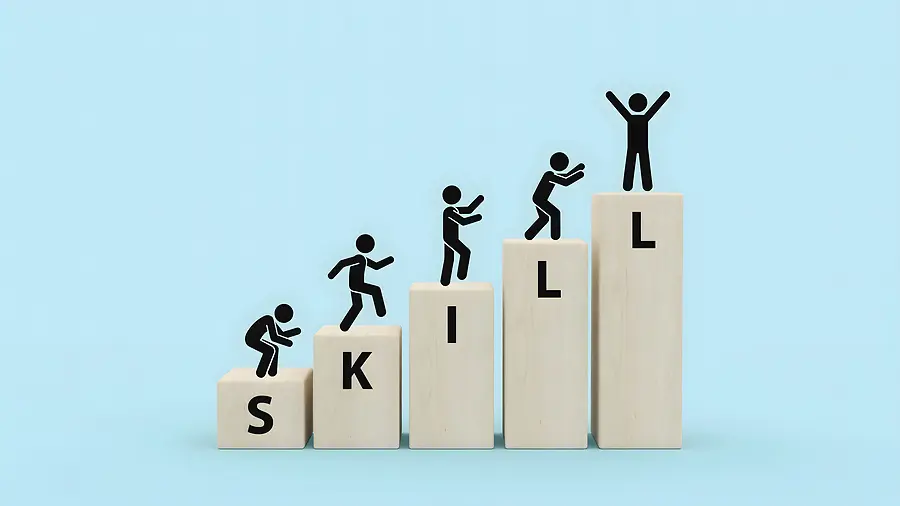
For decades, we treated career growth like a ladder. You entered an organization, learned your role, waited for the next position to open, and, if the timing, budget, and leadership decisions aligned, you moved one rung higher.
That model may have worked when jobs, technology, and organizational structures changed slowly. It does not work as well for today's workforce.
Roles are evolving faster than job descriptions can be updated. Artificial intelligence is reshaping how work gets done. Employees are being asked to collaborate across functions, adapt to new systems, and build capabilities that did not exist when they were hired.
Yet many organizations are still trying to develop modern talent using career structures built for a different era. We do not need taller career ladders. We need better career ecosystems.
Today's Employees Are Looking for More Than Promotions
When employees ask about career growth, they are not always asking, "When will I be promoted?"
They may be asking:
- What skills should I build next?
- What opportunities exist beyond my current role?
- How can I prepare for work that is changing?
- Can I explore another function without leaving the company?
- Does anyone here see my potential?
- Is there a future for me in this organization?
When we cannot answer those questions clearly, employees are left to build their own career paths, often outside the organization. That is not simply a retention problem. It is a workforce strategy problem.
People are more likely to invest their energy in an organization when they can see how the organization is willing to invest in them. A vague promise that "there may be opportunities someday" is not a development strategy. Hope is lovely, but it is not a succession plan.
Career Growth Is No Longer a Straight Line
Modern careers look less like ladders and more like lattices.
Growth may involve moving upward, but it can also mean:
- Expanding responsibilities within a current role
- Developing deeper technical expertise
- Moving laterally into another function
- Participating in a cross-functional project
- Leading an initiative without becoming a people manager
- Completing a temporary assignment or stretch opportunity
- Becoming a mentor, facilitator, or subject-matter expert
- Building the skills required for an emerging role
A lateral move is not a consolation prize. In many cases, it is the experience that prepares someone for stronger leadership later. When we define advancement only as promotion, we unintentionally tell employees that learning, contribution, and increased capability do not count unless a new title appears beside their name. That message is both outdated and costly.
Start With Capabilities, Not Course Catalogs
Rebuilding career paths requires more than offering additional training. A learning management system filled with courses is not the same thing as a career-development ecosystem. Content matters, but employees also need context. They need to understand:
- What capabilities are required in their current role
- What capabilities are required in a future role
- Where their current strengths and gaps exist
- What experiences will help them close those gaps
- How progress will be demonstrated and recognized
This is where competency frameworks, capability assessments, career maps, and role-based development plans become valuable. These tools should not become complicated HR wallpaper. If employees cannot understand or use them, we have designed documentation, not development.
The goal is to make career growth visible, actionable, and connected to real business needs.
Learning Must Be Connected to Experience
We also need to stop treating development as something that happens only in a course. Formal learning can introduce a skill, but capability is built through application, feedback, coaching, and repetition.
A stronger career-development model combines:
- Formal learning to establish foundational knowledge
- Practice opportunities to build confidence
- Stretch assignments to apply new skills
- Coaching and feedback to improve performance
- Mentoring and sponsorship to increase access
- Communities of practice to encourage shared learning
- Performance evidence to demonstrate readiness
Employees should not have to collect digital badges like arcade tickets and hope someone eventually trades them in for an opportunity. Development must lead somewhere. If we ask employees to invest time in learning, leaders should be prepared to help them use what they have learned.
Managers Are the Bridge...or the Bottleneck
The best career framework in the world will fail if managers are not prepared to support it. Managers influence whether employees receive feedback, gain visibility, participate in stretch assignments, and learn about internal opportunities. They also shape whether career conversations feel encouraging or risky.
Unfortunately, many managers have never been taught how to conduct meaningful development conversations. "Where do you see yourself in five years?" is not enough.
Managers need tools and training to explore questions such as:
- What kind of work gives this employee energy?
- What capabilities do they want to strengthen?
- What business problems could they help solve?
- What experiences would prepare them for broader responsibility?
- Who else should know about their strengths and aspirations?
- What can we do now—even if a promotion is not available?
Career development should not be reserved for the annual performance review. It should be part of an ongoing conversation about contribution, capability, and opportunity.
AI Changes the Work, but People Still Drive Adoption
Artificial intelligence adds urgency to this conversation.
Some tasks will be automated. Many roles will be augmented. New roles will emerge, and existing roles will require different combinations of technical knowledge, judgment, creativity, communication, and critical thinking.
The answer is not to hand employees an AI tool and call it transformation. Organizations need a human-centered approach to AI enablement—one that helps employees understand how their work is changing, where human judgment remains essential, and how new tools can improve performance without stripping away trust or accountability.
We must develop both technical and human capabilities.
Prompting, data literacy, responsible AI use, and workflow design matter. So do curiosity, adaptability, collaboration, ethical judgment, and the ability to communicate through change. Technology adoption succeeds when people understand the purpose, see the relevance, and feel capable of participating in the future being created.
Access to Opportunity Must Be Intentional
Career paths are not truly modern if they remain more visible and accessible to some employees than others. Talent is distributed widely. Opportunity is not.
Women and other underrepresented employees are often encouraged to build more confidence, gain another credential, or wait until they feel completely ready. Meanwhile, others are encouraged to pursue opportunities based on potential.
We have to examine who receives stretch assignments, sponsorship, executive exposure, leadership development, and permission to take calculated risks. Mentoring is valuable, but sponsorship is what helps open doors.
Organizations need leaders who will not only advise talented employees but also advocate for them when opportunities are being discussed. I am deeply committed to pulling more women forward and increasing their presence at executive, mid-management, and leadership tables.
That work cannot depend solely on individual resilience. We must build systems that identify talent earlier, make pathways clearer, and distribute developmental opportunities more equitably.
Career Architecture Is Business Architecture
This is not an employee-engagement side project.
Clear career pathways help organizations:
- Retain institutional knowledge
- Build internal talent pipelines
- Reduce the cost and disruption of external hiring
- Prepare employees for emerging capabilities
- Strengthen succession planning
- Improve engagement and performance
- Respond more quickly to business and technology changes
When workforce planning, learning strategy, performance management, and succession planning operate separately, employees experience the gaps. They complete training that is disconnected from advancement. Managers identify development needs without resources to address them. Leaders discuss succession without creating enough opportunities for people to become ready.
Career architecture connects those pieces. It turns learning from an isolated function into a driver of organizational capability.
The Path Forward
Rebuilding career paths begins with a few honest questions:
- Can employees clearly see how they can grow here?
- Do we recognize expert, lateral, project-based, and leadership pathways?
- Are learning opportunities connected to real work?
- Are managers equipped to support career development?
- Do employees have equitable access to visibility and sponsorship?
- Are we preparing people for how work is changing—not how it worked five years ago?
- Can we identify the capabilities the business will need before the talent gap becomes a crisis?
The modern workforce is not asking organizations to predict every future role perfectly.
Employees are asking for transparency, opportunity, relevant development, and leaders who are willing to help them move forward.
If organizations want adaptable, capable, and committed employees, they must create environments where people can continue becoming more capable.
Career paths should not feel like secret passageways that employees discover by accident. They should be visible, flexible, equitable, and connected to the future of the business.
Because when people can see a future within an organization, they are far more likely to help build it.