Resilience versus Adaptation
Finding strength through adversity: A physician's journey of resilience and adaptation.

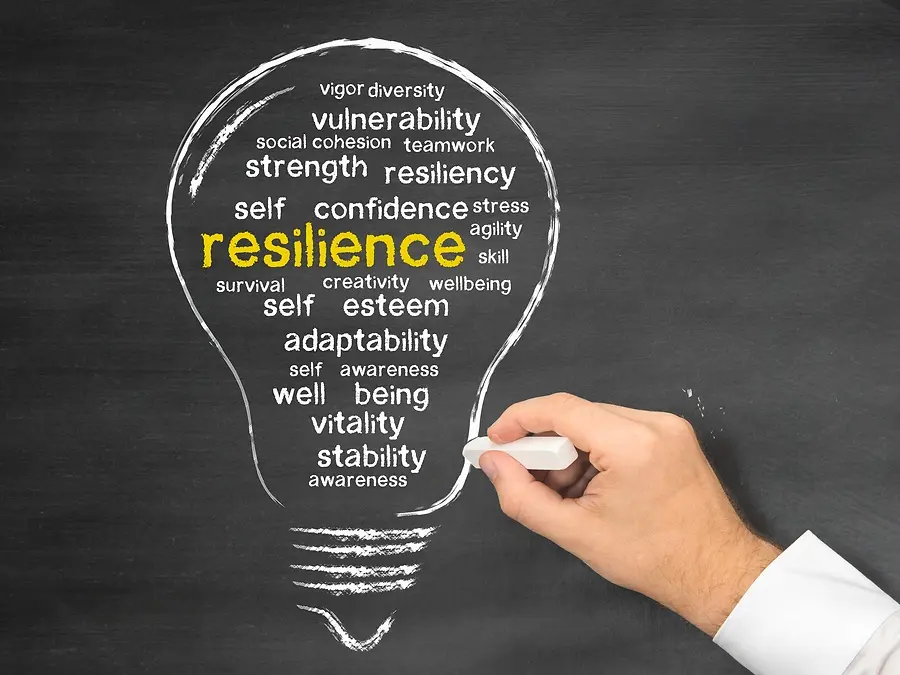
Resilience vs. Adaptation
Resilience is the ability to successfully adapt to stressors and maintain psychological well-being in the face of adversity. It is the ability to "bounce back" from difficult experiences, cope mentally and emotionally with a crisis, or return to pre-crisis status quickly. — Wikipedia
On the other hand, adaptation is the act of changing your behavior to make it suitable for a new purpose or situation.
Is resilience a prerequisite for adaptation, or is it vice versa? I never felt resilient. Resiliency is a strength that I never thought I possessed.
As long as I can remember, growing up in the Soviet Union, I have always been good at adapting—to the harshness of life, to the shortage of choices, often of food, and always of means. I adapted to the notion of being quiet even when I wanted to scream my lungs out. I adapted to ignoring political forces for the sake of safety and survival—my own and my family's.
My ability to adapt came to a sudden, harsh stop when, as an "A" student, I realized I would not be accepted into medical schools in Ukraine or Central Russia because I was Jewish. Angry, betrayed, but determined to make it, I went into my adaptive mode and entered medical school far from home, in the Siberian city of Izhevsk.
Extremely cold weather, poverty, a lack of simple necessities, and food that my parents had to send from Ukraine, which I shared with my three roommates in a dorm, made me want to study hard. The professors, the majority of whom were World War II veterans, were tough and expected us to adapt quickly to whatever hardships we were facing—whether it was getting to the hospital at 5:00 in the morning through a snow blizzard and -45°F temperatures or having our fingernail length and skirt lengths checked at the hospital entrance. No long nails or short skirts were allowed.
As fifth-year medical students (six-year medical school started immediately after high school), we were sent to a village for medical practice during our summer break. The hospital had an extremely short supply of everything—medications, instruments, and doctors. We quickly adapted to the environment, using empathy and hand-holding as substitutes for what was missing.
Resilient were our patients.
I assisted in a surgery where a young man was having his appendix removed with very little local anesthesia due to a shortage of lidocaine, and without general sedation because the only anesthesiologist was on vacation. He was biting on a towel to muffle his screams. No one heard a sound from him throughout the 30-minute operation. He recovered well.
Years later, coming to the United States, I adapted to yet another set of new challenges—a language I didn't understand and didn't speak, a medical system I didn't know, and 40-hour residency shifts with no sleep and very little time for food or water.
I adapted and changed my behavior to make it suitable for a new purpose and situation. And I loved the purpose and the situation.
I practiced internal medicine in California when one day a new doctor joined our medical group. He was very well educated, had great bedside manners, and had an open and friendly demeanor. He had already tried three different medical groups, hadn't found any to be a good fit, and had now joined ours.
As a leader of the group, I felt responsible for his well-being and his immersion into the group. He was always open to conversations and kept his office door open during lunch and after hours for colleagues to come and chat. I started getting great comments from patients about his care. My colleagues and I couldn't have been happier to have Dr. Judd as part of our group.
But three months later, things changed. I noticed his door being shut during lunch and after hours. One day, I knocked on his door and poked my head into his office.
"Is everything okay?" I asked.
Dr. Judd was at the computer doing his work. He didn't smile when he saw me.
"Yes, okay. I am working," he responded, with no friendliness in his voice.
After a short time, I started getting negative comments from his patients. Dr. Judd was abrupt and short with patients.
One afternoon, I went to his office.
"We need to talk," I said.
Judd looked at me, no smile. "What is the matter?" he asked.
"What is going on, Judd?" I sat down and closed the office door.
He stopped typing and, without looking at me, quietly said:
"It is not for me. I can't do it anymore."
"What's not for you?"
"This work, medicine. It is too much."
"Can I help?" I asked. "You can cut your hours. You can work part-time."
"No, I can't. I have a medical school loan to pay and two kids at home."
We both sat quietly for a moment.
"I don't want to end up like my father," he almost whispered. I noticed wetness in his eyes.
"What happened to your father?" I asked.
"My father was a prominent neurologist in my home state. He worked hard, and to relieve his stress, he started drinking. He became an alcoholic and died of its complications in his 50s."
Judd looked at me, and I saw deep pain in his eyes.
"I don't want to end up like him," he said. "I lost my father when I was 16. I can't do it to my kids."
At that moment, I knew what we needed to do.
"Judd," I said, "it must have been extremely devastating to lose your father at such a young age, and these thoughts you are having—they must have been killing you."
I paused. I used all the empathy I had.
"They have," he responded with relief, able to talk about it.
"I tell you what," I said. "You are a great physician. You put many years into your medical training and a lot of effort. Is there an area of medicine you think you would love to practice?"
"I would like to help with alcohol addiction, any addiction," he said. "But positions in this field are so rare. I couldn't get any."
My group was in dire need of a primary care physician. Letting Judd go would create a hardship for us all. But the next day, I checked with the addiction medicine group. They happened to anticipate an unexpected opening and agreed to interview Judd. He became an addiction medicine specialist within a few months.
I ran into Judd one year later. He looked happy and smiled. He had passed the board exam in his specialty and became one of the very few board-certified addiction specialists in our area. He was now a leader of his group. He couldn't stop talking about how he had fulfilled his purpose by helping so many patients get their lives back.
"I don't think I would ever retire. I would do this work with no pay if I had to."
As we were parting, he shook my hand.
"Thank you for giving me my life back! I learned so much from you, but mostly I learned about being resilient. You are the most resilient person I have ever met," he said.
I was speechless. I suddenly realized that to adapt, one needs to be resilient.
So, resilience is a prerequisite for adaptation.
Or is it still vice versa?


