
Respect Is a Two-Way Street: Why Honoring Yourself Matters as Much as Honoring Others
Redefining respect as mutual recognition of human dignity rather than obedience to authority.

There comes a point in life when you begin questioning some of the things you were taught about respect.
Growing up, many of us heard familiar instructions.
Respect your elders.
Respect authority.
Be polite.
Don't talk back.
Don't make waves.
Treat others the way you want to be treated.
And while there is wisdom in teaching kindness, consideration, and courtesy, I have come to believe that something important was often missing from those lessons.
Where were we taught to respect ourselves?
Where were we taught that our voices mattered? That our boundaries deserved recognition? That disagreement did not automatically make us disrespectful? That kindness should never require us to surrender our dignity?
For many people, particularly women, the message was complicated.
We were encouraged to respect everyone around us, even when that respect was not returned.
We learned to accommodate.
To understand.
To forgive.
To make excuses for the behavior of others.
And sometimes, without realizing it, we began confusing respect with obedience.
After more than sixty years of living, learning, creating, surviving, and working with people from many different backgrounds, I have developed a different understanding.
Respect is not about who has the most authority. It is about recognizing the humanity of the person standing in front of us, including the person looking back at us in the mirror.
And that changes everything.
Respect Is Not Obedience
Somewhere along the way, we began treating respect as though it were something owed to people because of their position.
A parent.
A teacher.
A religious leader.
An employer.
A spouse.
An elected official.
Someone older, wealthier, or more influential.
Certainly, positions of responsibility deserve appropriate professional consideration. Experience and knowledge can deserve acknowledgment.
But holding a title does not make someone incapable of being wrong.
And it certainly does not give them ownership over another person's decisions.
I can respect an educator's experience while questioning a teaching method.
I can respect someone's spiritual beliefs without adopting them as my own.
I can respect an employer's responsibilities while maintaining reasonable professional boundaries.
I can respect another person's right to make choices without allowing those choices to determine how I must live.
Disagreement is not inherently disrespectful.
In fact, some of the most meaningful conversations occur when people are willing to challenge one another thoughtfully.
Respectful disagreement requires listening, curiosity, and the willingness to recognize that our experiences are not universal.
Obedience, on the other hand, requires compliance.
Those are not the same thing.
And when someone demands unquestioning agreement as proof of respect, we should be willing to ask whether they are seeking mutual understanding or simply control.
The Respect We Withhold From Ourselves
I have noticed something interesting about the way many women are taught to navigate relationships.
We are often encouraged to be compassionate toward others while being extraordinarily critical of ourselves.
We forgive people who have hurt us.
We explain away behavior that makes us uncomfortable.
We rearrange our schedules, sacrifice our energy, and put our own needs aside because someone else needs something.
And then, when we finally begin establishing boundaries, we may be accused of becoming selfish, difficult, or unkind.
But why?
Why is a woman considered generous when she gives everything she has, yet sometimes judged when she decides she has given enough?
Why is self-sacrifice celebrated more readily than self-preservation?
Why do we sometimes admire a woman's strength while expecting her to endure circumstances that should never have been acceptable?
I believe part of the answer lies in the way we have confused self-respect with selfishness.
Self-respect does not mean believing we are more important than other people.
It means recognizing that we are not less important, either.
It means acknowledging that our time has value.
Our bodies belong to us.
Our emotions deserve consideration.
Our experiences matter.
And our decisions do not automatically require someone else's approval.
Self-respect is not placing ourselves above others. It is refusing to place ourselves beneath them.
That distinction is essential.
Kindness Does Not Require Self-Abandonment
I believe deeply in compassion.
I believe in helping others, building community, and recognizing the struggles that people carry.
My work as an educator, artist, and guide has been shaped by the understanding that human beings need connection and belonging.
But compassion without boundaries can become self-abandonment.
There is a difference between helping someone because we genuinely wish to and helping because we are afraid of what will happen if we refuse.
There is a difference between offering forgiveness and allowing repeated mistreatment.
There is a difference between understanding someone's difficulties and accepting responsibility for managing their behavior.
We can care about people without becoming responsible for every decision they make.
We can recognize someone's pain without allowing them to inflict pain on us.
We can offer support without surrendering our autonomy.
And sometimes, the most respectful thing we can do for ourselves is say no.
Not out of anger.
Not to punish someone.
But because our well-being matters, too.
I have come to appreciate a simple truth:
A boundary is not a declaration that another person has no value. It is a declaration that we have value as well.
And healthy relationships must make room for both.
Respecting Another Person's Right to Say No
There is another side to this conversation that deserves equal attention.
If I expect others to respect my boundaries, I must also respect theirs.
That means accepting that someone may not have the time, energy, interest, or emotional capacity to meet my expectations.
It means understanding that another person's refusal is not necessarily a rejection of my worth.
It means recognizing that relationships do not give us unlimited access to someone's body, time, attention, or personal life.
Consent and autonomy are not principles that apply only when they are convenient.
They must be mutual.
Sometimes we become so focused on how we have been treated that we forget to examine how we respond when someone else establishes a boundary with us.
Do we listen?
Do we respect their decision?
Or do we attempt to persuade, pressure, shame, or guilt them into changing their minds?
Respect requires consistency.
We cannot demand freedom for ourselves while denying it to others.
We cannot insist that our feelings matter while dismissing someone else's.
And we cannot build relationships rooted in dignity if we believe that love, friendship, or family connection entitles us to control.
Respecting someone's autonomy means accepting that their life belongs to them, even when their choices differ from what we would prefer.
Children Deserve Respect, Too
One of the areas where I believe we need to rethink our understanding of respect is in the way we treat children.
Children are often taught that they must respect adults.
But how often do we ask whether adults are demonstrating respect toward children?
A child is not simply an unfinished adult waiting to become worthy of consideration.
A child is already a human being.
They have feelings, preferences, fears, questions, and developing boundaries.
Of course, children need guidance, structure, and protection.
They do not yet possess the experience or developmental capacity to make every decision independently.
But guidance does not require humiliation.
Teaching does not require intimidation.
And setting appropriate limits does not mean dismissing a child's dignity.
My appreciation for Montessori philosophy has reinforced the importance of observing children, respecting their development, and creating environments that encourage curiosity and independence.
When we listen to children, we teach them that their voices matter.
When we explain boundaries rather than relying solely on authority, we help them understand responsibility.
When we acknowledge our own mistakes and apologize, we demonstrate that respect is mutual rather than determined by age.
And when we allow children to express disagreement appropriately, we help them develop critical thinking rather than simply practicing compliance.
A child who learns that respect includes being heard may grow into an adult who understands both how to advocate for themselves and how to listen to others.
That is an educational legacy worth creating.
Respect Across Differences
We live in a world filled with differences.
Different cultures.
Different religions.
Different political perspectives.
Different identities, abilities, traditions, and life experiences.
These differences can enrich our communities.
But they can also become sources of misunderstanding when we begin treating our own experiences as the standard by which everyone else must live.
I have spent much of my life engaging with people whose backgrounds and beliefs differ from my own.
And one of the lessons I continue to carry is that understanding begins with curiosity.
We do not have to agree with every belief someone holds.
We do not have to accept harmful behavior in the name of tolerance.
And we do not have to abandon our own convictions to recognize another person's humanity.
But we can approach differences without immediately assuming that someone else's way of living is a threat to our own.
We can ask questions.
We can listen.
We can examine the assumptions we have inherited.
And we can recognize that no single person possesses the complete story of what it means to be human.
Respect does not require the absence of disagreement.
It requires the willingness to disagree without stripping another person of their dignity.
That is particularly important in a time when public conversations can quickly become hostile and personal.
We can challenge an idea without dehumanizing the person who expresses it.
And when someone's actions cause harm, we can hold them accountable without abandoning our own commitment to fairness and humanity.
When Respect Becomes a Tool of Control
There is a difficult truth that deserves examination.
Sometimes the language of respect is used to justify disrespect.
A person demands respect while refusing to listen.
An institution expects loyalty while discouraging legitimate questions.
A relationship requires one person's constant accommodation while treating the other's preferences as nonnegotiable.
A religious or cultural tradition may be interpreted in ways that demand submission from some while granting authority to others.
In these circumstances, the word respect can become a disguise for unequal power.
This is why I believe we must examine what people mean when they ask to be respected.
Are they asking to be treated with dignity?
Are they asking to be heard?
Are they asking for reasonable consideration?
Or are they demanding that another person surrender their independence?
The distinction matters.
Respect cannot be genuine when it is maintained solely through fear.
A person may comply because they are afraid of punishment, rejection, humiliation, or abandonment.
But compliance under pressure should not be mistaken for mutual respect.
Healthy relationships and institutions allow room for questions, accountability, and appropriate boundaries.
They recognize that authority carries responsibilities as well as privileges.
And they understand that dignity does not disappear when someone occupies a less powerful position.
The Courage to Examine Our Own Behavior
It is easy to recognize disrespect when we are the ones experiencing it.
It can be more uncomfortable to recognize the ways we may have contributed to someone else's discomfort.
But if we genuinely believe respect is a two-way street, we must be willing to examine ourselves.
Do we interrupt people because we assume we already understand what they are saying?
Do we dismiss someone's concerns because their experience differs from ours?
Do we offer advice when someone simply needs to be heard?
Do we confuse our good intentions with proof that our actions caused no harm?
Do we expect consideration that we sometimes fail to extend?
These are not always easy questions.
And none of us will answer them perfectly.
I certainly do not claim to have mastered every aspect of human relationships.
I am still learning.
Still reflecting.
Still discovering how my own experiences influence the way I interpret the behavior of others.
But I believe the willingness to examine ourselves is part of what makes respectful relationships possible.
We can acknowledge mistakes without defining ourselves entirely by them.
We can apologize without surrendering our dignity.
We can change our behavior without pretending that growth happens overnight.
And we can recognize that respect is not a fixed achievement.
It is an ongoing practice.
Self-Respect After Difficult Experiences
For people who have lived through trauma, coercion, or relationships where their autonomy was repeatedly undermined, rebuilding self-respect can be complicated.
When someone's boundaries have been ignored over time, they may begin questioning whether those boundaries are reasonable.
They may feel guilty for expressing needs.
They may anticipate conflict whenever they disagree.
They may become accustomed to placing another person's emotional reactions ahead of their own well-being.
These responses can develop as ways of navigating difficult or unsafe circumstances.
Reclaiming autonomy may therefore involve more than simply learning to say no.
It can involve rediscovering personal preferences, rebuilding trust in one's judgment, recognizing patterns of coercion, and developing supportive relationships.
There is no single timeline for that process.
And no one should be shamed for finding it difficult.
In my work with trauma-informed education and personal transformation, I return repeatedly to the importance of choice.
People need opportunities to participate in decisions affecting their lives.
They need environments where boundaries are recognized.
They need the freedom to explore who they are without being told that someone else knows their identity, needs, or future better than they do.
This is one reason I describe myself as a guide.
I do not believe healing or personal growth should require surrendering one's autonomy to another authority figure.
Instead, I believe meaningful support should help people strengthen their ability to make informed choices for themselves.
The goal is not to replace one form of control with another. It is to restore the person's ability to participate in directing their own life.
Respect Begins in Everyday Moments
We sometimes imagine that respect is demonstrated through grand gestures.
But often, it is revealed in ordinary interactions.
Listening without immediately interrupting.
Accepting an answer we did not want to hear.
Recognizing someone's contribution.
Acknowledging when we are wrong.
Respecting another person's time.
Speaking to service workers with the same courtesy we extend to people in positions of authority.
Allowing children to ask questions.
Recognizing that an elderly person's age does not erase their autonomy.
Understanding that disability does not diminish dignity.
Giving someone space to grieve, think, or make decisions at their own pace.
And treating ourselves with the same consideration we encourage others to practice.
These moments may seem small.
But they shape the culture of our homes, workplaces, classrooms, and communities.
Respect is not merely something we claim to value.
It is something other people experience through our behavior.
And the same is true of self-respect.
It becomes visible in the decisions we make about our well-being, our relationships, and the ways we allow ourselves to be treated.
A Different Understanding of Strength
At this stage of my life, I have become less interested in proving that I can endure difficult circumstances.
I have already learned that I can survive a great deal.
What interests me now is how to build a life that does not require constant survival.
A life where kindness and boundaries coexist.
Where independence does not mean isolation.
Where compassion does not require self-sacrifice.
Where relationships are based on mutual consideration rather than control.
And where respect is not reserved for those who possess authority, wealth, status, or influence.
I want to live in a world where people understand that dignity belongs to everyone.
Not because they have earned enough money.
Not because they have achieved a particular educational level.
Not because they belong to the right group or hold the right position.
But because they are human.
That includes the people with whom I disagree.
It includes people whose lives I do not fully understand.
And it includes me.
The Two-Way Street
I have come to believe that respect is one of the foundations of healthy relationships and communities.
But it must be understood as something more meaningful than politeness or compliance.
Respect requires us to recognize that every person has a life beyond our expectations.
Every person has boundaries.
Every person has experiences we may not fully understand.
Every person deserves to be treated with basic human dignity.
And every person has a responsibility to consider how their choices affect others.
Self-respect and respect for others are not competing values.
They are connected.
When we understand our own dignity, we may become better equipped to recognize it in others.
When we respect another person's autonomy, we reinforce the principle that autonomy matters for everyone.
And when we create relationships rooted in mutual consideration, we make room for something more meaningful than obedience.
We make room for trust.
For connection.
For genuine compassion.
And for the freedom to be ourselves without requiring anyone else to become smaller.
So yes, I believe in respecting others.
I believe in kindness.
I believe in listening, understanding, and giving people the opportunity to grow.
But I also believe in respecting myself.
And after a lifetime of learning what that means, I am no longer interested in confusing the two.
I can respect your right to live your life without giving you permission to dictate mine.
I can offer compassion without accepting mistreatment.
I can disagree with you without denying your humanity.
And I can say no without surrendering my kindness.
Because respect is not a one-way demand.
It is a two-way street.
And everyone deserves room to walk it with dignity.
Including the woman who has spent far too many years being told to step aside.
As for me?
Well, I intend to keep walking.
With compassion in my heart, boundaries firmly in place, and just enough dragon fire to remind anyone who needs reminding that kindness and strength have never been opposites.
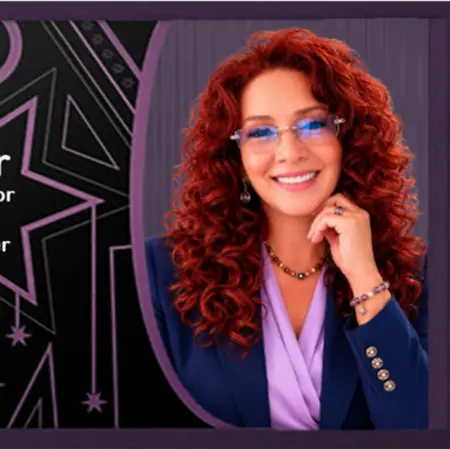
Mylee Star Hawk, MAED, founded Mama Star's Healing Circle to support healing through education, art, and community. With 25+ years in education and community support, Star specializes in addressing generational trauma through creative expression, culinary arts, and spiritual practices. An ordained minister and master chef pursuing a doctorate in Transpersonal Psychology, she integrates education, creativity, and…





