Rest Before the Rush: What Rosie the Riveter Still Teaches Us About Work
How creating sustainable workplaces and supporting employee wellness is the most powerful form of inclusive leadership.

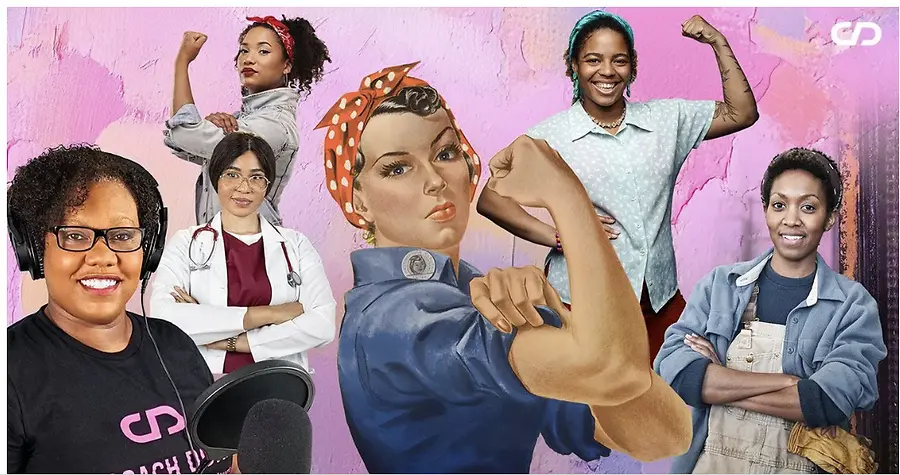
Rest Is Not a Reward: What Rosie the Riveter Can Teach Us About Work, Wellness, and Inclusive Leadership
A note as we publish: Since drafting this piece, we learned that Jeanne Gibson—one of the estimated six million women who worked as “Rosies” on the World War II home front—passed away on July 29, 2026, at age 100. She spent decades afterward volunteering at Rosie the Riveter/World War II Home Front National Historical Park, helping keep the story personal rather than simply iconic. Rest in power. 🕊️
With the U.S. Labor Day holiday landing later this year, August gave us something unusual: a little more room to rest, reset, and enjoy the final stretch of summer.
And after some rest myself, I'm back.
Every Sunday, I'll be sharing reflections with our community—bringing the conversation to you because social media posts are great, but some conversations deserve more room to breathe.
That is part of why I created my Substack. Coach Dora | Inclusion 365 on Substack
It gives us something social media often doesn't: space for deeper conversations, direct connection, and room to explore the nuanced stories that shape who we are and how we work.
So, with Labor Day approaching, let's start with a story that has become one of the most recognizable symbols of American work: Rosie the Riveter.
The Real Story Behind Rosie the Riveter
Before we talk about modern workplace wellness, we need to talk about the women who helped change the American workforce during World War II.
The Rosie the Riveter image has become an enduring symbol of women entering industrial and defense work during the war. But the history is more complicated—and more interesting—than the iconic poster suggests.
There wasn't one single Rosie.
The name and image came to represent many women who entered jobs traditionally closed to them. The Library of Congress notes that the character emerged through songs, illustrations, photographs, and wartime propaganda, while millions of actual women worked in factories and other war-related jobs.
And that distinction matters.
Because behind the symbol were real women.
Women who learned new skills.
Women who operated machinery.
Women who welded, riveted, assembled, inspected, transported, repaired, and built.
Women who stepped into workplaces because the country needed them.
The famous “We Can Do It!” poster is part of that history, but it was created by J. Howard Miller for Westinghouse and was not originally connected to the name Rosie. Its association with Rosie became much stronger decades later.
The real legacy isn't simply the poster.
It's the women.
And that is where the story becomes relevant to today's workplace.
Work Has Always Been About People
Labor Day is often treated as the unofficial end of summer.
One last barbecue.
One last long weekend.
One last trip to the lake.
Then Monday comes.
Back to work.
But Labor Day is also an opportunity to think about the people behind the work.
The U.S. workforce wasn't built by job titles.
It was built by people.
People who showed up.
People who learned.
People who sacrificed.
People who organized.
People who challenged expectations.
People who made workplaces—and eventually entire industries—different from what they had been before.
That is why I don't want to talk about workplace wellness as another corporate benefit.
I want to talk about it as a leadership responsibility.
Because rest isn't something employees should have to earn after they have completely exhausted themselves.
Rest is part of sustainable performance.
August Gave Us a Reminder
This year, Labor Day falls on September 7.
That means August gave many of us a little more breathing room before the traditional back-to-school and back-to-work rush.
And I think we should pay attention to that.
We often treat rest as something that happens after the work is finished.
But when is the work ever finished?
There is always another email.
Another deadline.
Another meeting.
Another project.
Another customer.
Another problem.
Another thing that needs fixing.
If we wait until everything is finished before we rest, we may never rest.
That's why inclusive leadership requires us to think differently.
Rest shouldn't be the reward for surviving burnout.
It should be part of how we design sustainable work.
Think about a teacher beginning a new school year already exhausted, unsupported, and overwhelmed.
We wouldn't look at that situation and say, “Well, that's just what work is.”
We should have the same reaction in every workplace.
People cannot consistently perform at their best when organizations consistently operate at their worst.
Wellness Is Bigger Than a Paycheck—and Bigger Than a Gym Membership
When organizations talk about wellness, the conversation often focuses on benefits:
Gym memberships.
Step challenges.
Wellness apps.
Discounted fitness programs.
Those things can be useful.
But wellness is much bigger than that.
Real workplace wellness includes:
🧠 Mental well-being
Can someone say, “I'm struggling,” without worrying that doing so will damage their career?
Can employees access mental health resources without stigma?
Are managers equipped to recognize when someone is overwhelmed?
❤️ Emotional well-being
Do people feel respected?
Do they feel that their contributions matter?
Can they disagree without being punished?
Can they make mistakes, learn, and recover?
🏃 Physical well-being
Do people have reasonable workloads?
Are workspaces safe and ergonomic?
Are breaks actually encouraged?
Can employees take lunch without feeling guilty?
🧘 Psychological safety
Can people ask questions?
Can they challenge an idea?
Can they tell a leader something isn't working?
Can they bring their authentic perspectives to the workplace?
These aren't luxuries.
They are components of a healthy workplace.
The Rosie Standard for Inclusive Leadership
The most powerful lesson I take from Rosie isn't simply:
“Women can work.”
It's:
“People deserve the opportunity to contribute.”
And inclusive leadership means creating the conditions where people actually can.
That requires more than a standard benefits package.
It means recognizing that employees have different lives, responsibilities, cultures, identities, needs, communication styles, and ways of working.
It means making flexibility real.
It means respecting boundaries.
It means creating psychological safety.
It means recognizing that one-size-fits-all policies don't necessarily create equitable workplaces.
And it means understanding that supporting people doesn't make an organization weaker.
It can make the organization stronger.
When people feel supported, they have more capacity to think, create, collaborate, solve problems, and contribute.
Five Ways Leaders Can Build Better Workplaces
So what does this look like in practice?
1. Foster genuine support.
Don't wait for the annual performance review to ask how someone is doing.
Check in.
Celebrate progress.
Notice effort.
Have difficult conversations with empathy.
And remember that employees are people before they are productivity metrics.
2. Make work-life integration real.
Flexibility isn't simply working from home.
Consider flexible schedules, reasonable boundaries, mental health days, family responsibilities, and expectations around after-hours communication.
Ask yourself:
Are we actually giving people flexibility, or are we simply giving them permission to be available from somewhere else?
3. Prioritize mental health without stigma.
Employee assistance programs can help, but they are only one piece of the puzzle.
Train managers.
Normalize conversations about well-being.
Create psychologically safer environments.
And most importantly, make sure leaders model the behavior they expect from employees.
You cannot tell employees to take care of themselves while rewarding leaders who answer emails at midnight.
4. Promote holistic health.
Yes, offer fitness programs if they are useful.
But also provide healthy food options.
Encourage movement.
Create comfortable workspaces.
Support breaks.
Let people actually take lunch.
Imagine that.
5. Set human-first expectations.
Realistic deadlines.
Manageable workloads.
Adequate resources.
Clear priorities.
Enough staffing.
Those aren't indulgences.
They are prerequisites for sustainable success.
And yes, technology and AI can help.
AI can enhance the work. Humans still need to lead it.
Rest Is a Leadership Strategy
Here's the part I think we sometimes miss:
Rest isn't simply an employee wellness issue.
It is a leadership issue.
When people are constantly exhausted, organizations pay for it.
Creativity suffers.
Patience disappears.
Errors increase.
Engagement declines.
People stop bringing their best ideas.
And eventually, people leave.
So when leaders create environments where people can rest, recover, and maintain healthy boundaries, they aren't simply being nice.
They're thinking long term.
They're protecting the capacity of their workforce.
They're investing in sustainability.
They're building organizations where people can contribute without destroying themselves in the process.
This Labor Day, Let's Remember the People
As we fire up the grills and enjoy that extra day away from work, I hope we remember what Labor Day represents.
Not just jobs.
Not just productivity.
Not just economic output.
People.
The people who built industries.
The people who challenged barriers.
The people who fought for better working conditions.
The people who came before us.
And the people who are still asking what work can—and should—look like.
Rosie the Riveter became a symbol because millions of women demonstrated that capability was not limited by the expectations society had placed on them.
Today, we have an opportunity to carry that lesson forward.
Not by asking people to work harder.
But by asking:
How can we create workplaces where more people have the opportunity to contribute, thrive, and remain whole while doing it?
That is inclusive leadership.
That is sustainable work.
And that is a legacy worth building.
Rest Is Not the Opposite of Work
Maybe this Labor Day, instead of simply celebrating how much we accomplish, we can also celebrate the wisdom to know when to pause.
Rest.
Reset.
Reconnect.
Reflect.
Then return with something more valuable than exhaustion:
capacity.
Because when we take care of our workers, our workers are better positioned to take care of everything else.
And that's not just good for business.
It's good for all of us.
✨ If this resonates with you, subscribe to Coach Dora | Inclusion 365 on Substack and share this conversation with someone who needs the reminder that rest is not something we have to earn.
What changes are you making in your workplace to make wellness—and rest—part of the culture rather than an afterthought?
Let's learn from one another.
Coach Dora Mendez
Founder, Coach Dora LLC
Author | Career Coach | Fractional CHRO | Advancing Inclusive Leadership
Host of Building Leadership Community Podcast


