Safeguarding the Vault: How the U.S. Banking System Secures Your Account
How Banks Protect Your Money: A Multi-Layered Defense Strategy in the Digital Age

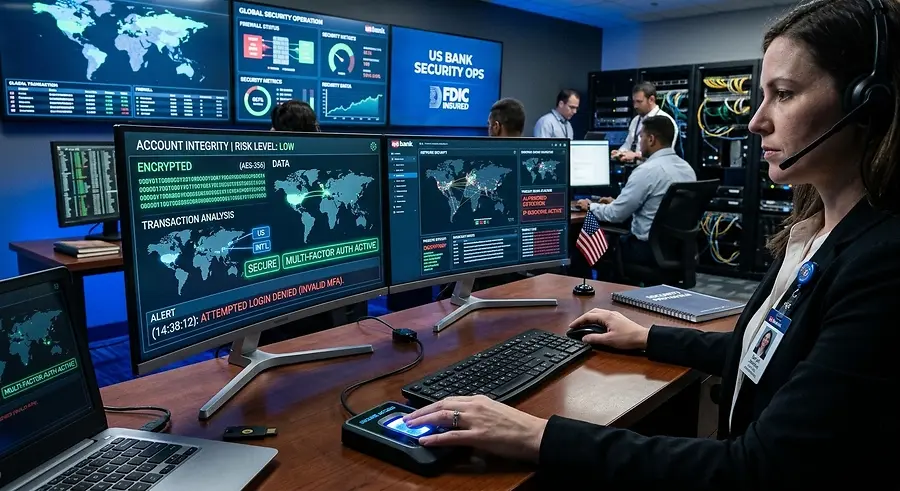
The United States banking system is the backbone of the global economy, moving trillions of dollars daily. Behind this massive volume of transactions lies a complex, multilayered security apparatus designed to protect consumer assets from sophisticated cyber threats, internal vulnerabilities, and fraud.
Securing bank accounts is not a single measure but a continuous defense-in-depth strategy managed jointly by federal regulations, cutting-edge technology, financial institutions, and everyday account holders.
1. Advanced Digital Protection (Cybersecurity)
With the vast majority of banking shifting to web browsers and mobile apps, cybersecurity has become the front line of defense. Banks invest heavily in protecting digital entry points using several primary mechanisms:
- End-to-End Encryption: When you check your balance or transfer funds online, your data is translated into unreadable code using advanced encryption standards (such as TLS/SSL) while in transit and at rest on servers. This ensures that even if data is intercepted, it cannot be read.
- Multi-Factor Authentication (MFA): Passwords alone are no longer enough. MFA requires users to provide two or more verification factors to gain access—typically something you know (a password), something you have (a secure code sent via SMS or an authenticator app), or something you are (biometrics).
- Biometric Integration: Modern mobile banking apps heavily leverage device-level biometrics, such as facial recognition (Face ID) or fingerprint scanning, ensuring that even if a phone is temporarily unlocked, unauthorized users cannot access financial portfolios.
2. Real-Time Fraud Monitoring and AI
Banks do not just wait for a breach to happen; they actively hunt for anomalies using artificial intelligence and machine learning algorithms.
- Behavioral Analytics: Fraud detection systems map your normal spending habits, geographic locations, and login patterns. If a transaction occurs halfway across the world or deviates significantly from your typical behavior, automated filters can instantly freeze the transaction or trigger a verification alert.
- Proactive Alerts: Many financial institutions deploy automated SMS or push notifications for high-risk actions, such as password changes, large withdrawals, or international purchases, empowering customers to halt unauthorized activity immediately.
3. Regulatory Frameworks and Government Oversight
The stability and security of the U.S. banking system are heavily governed by federal agencies that enforce strict security protocols and compliance measures.
- The Federal Deposit Insurance Corporation (FDIC): While not a cybersecurity tool per se, the FDIC provides the ultimate psychological and financial security blanket. It insures deposits up to $250,000 per depositor, per insured bank, ensuring that consumers never lose their hard-earned money due to bank failure or systemic shocks.
- Federal Regulators (OCC, Federal Reserve, CFPB): These entities subject banks to rigorous, regular audits concerning their IT infrastructure, disaster recovery plans, data privacy practices, and compliance with federal laws like the Gramm-Leach-Bliley Act (GLBA), which mandates how financial institutions protect consumers' nonpublic personal information.
4. Institutional Infrastructure and Internal Controls
Security goes far beyond what the consumer sees. Inside the institution, banks use strict administrative and physical safeguards:
- Tokenization and Secure Payment Networks: When you use a digital wallet (like Apple Pay or Google Pay), your actual debit or credit card number is never shared with the merchant. Instead, a unique digital token is used for the transaction, neutralizing the threat of data breaches at retail checkout points.
- Role-Based Access Control: Bank employees are granted access to customer data strictly on a "need-to-know" basis, drastically reducing the risk of internal data leaks.
The Consumer's Role in Security
While banks provide the heavy machinery for security, the chain is only as strong as its weakest link. Consumers play a vital role in maintaining account safety by practicing good cyber hygiene:
- Using complex, unique passwords for banking portals rather than reusing credentials.
- Remaining vigilant against phishing scams—fraudulent emails or texts mimicking banks and designed to trick users into handing over login credentials.
- Monitoring monthly statements regularly to catch unauthorized microtransactions or suspicious activity early.
Conclusion
The U.S. banking system operates as an evolving fortress. By combining unbreakable digital cryptography, real-time AI surveillance, stringent federal regulations, and consumer awareness, the financial sector adapts continuously to stay a step ahead of cybercriminals, ensuring that consumer capital remains secure in an increasingly digital world.

Gladys Yarbrough is CEO of KD Bar Investments and Private Money Lending Manager at Blue Horizon Capital Group. With over two years in real estate and private lending, she specializes in helping distressed homeowners and structuring profitable transactions. Certified Project Money Lender with cosmetology and business education, Gladys received Outstanding Leader of the Year Award for 4-H mentorship. She excels at…