
Speaking Shame Out Loud
Understanding the difference between shame and guilt, and how to break free from the freeze response that keeps shame alive.

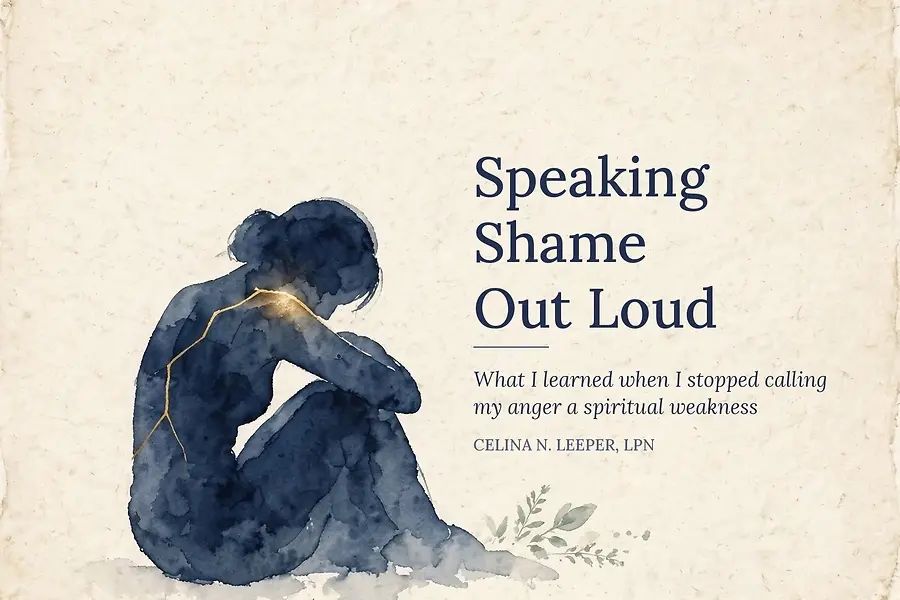
Shame and guilt sound alike, but they speak in different voices. Guilt says, “I did something bad.” Shame says, “I am bad.” One is about a single action. The other is a verdict on your whole self, and you can't fix a verdict the way you fix a mistake.
A Freeze the Body Never Finished
Trauma researchers Peter Levine and Bessel van der Kolk both describe shame as more than a thought. It is often the body's freeze response—going still to survive—that never got the message it was safe to move again. So shame often isn't really about the thing a woman is ashamed of. It is about a body that once had to hold still.
I know that freeze well, though mine came with an unexpected label. I was angry, privately and exhaustingly angry, at a system that let real harm happen to people I loved, including me. The religious community I grew up in had a name for that anger: spiritual weakness. A sign I was drifting from God.
What it actually was, underneath, was a body that had been still for years, finally trying to complete a movement it had never been allowed to make. The shame wasn't a sign something was wrong with me. It was a label placed over a freeze so that no one had to look at what caused it.
Where the Pattern Gets Built
Psychiatrist Dan Siegel traces chronic shame to repeated moments in childhood when a child needed to be met and wasn't, with no repair afterward. It's rarely one event. It's the slow buildup of small moments when a girl's honest reaction was labeled wrong instead of received.
The Antidote Is Spoken, Not Silent
Brené Brown's landmark research followed 215 women. Those who could name their shame out loud to someone who could actually hold it moved through it. Silence wasn't protecting them. Silence was what kept the shame alive. Researchers Kristin Neff and Christopher Germer add that as shame and self-criticism ease, self-compassion grows. It happens as one shift, not two.
Writing about my anger here, calling it a freeze response instead of a spiritual failing, where other people can read it, is my version of speaking shame. It's the opposite of what I was taught. It's also the only thing that has worked.
What Actually Helps
- Find one safe person. Look for someone gentle, curious, validating, and easy to be around. Trust comes first; the words follow.
- Notice your body. Shame has a recognizable posture: collapsed chest, lowered head, eyes down. Straightening your spine and lifting your gaze can interrupt it in the moment.
- Say the true thing out loud. Name it, in your own words, to someone safe.
Shame that formed to protect you from real danger was never proof you were damaged. It was a nervous system doing exactly what it needed to do, waiting, sometimes for decades, for someone to say the freeze can end now.
Celina N. Leeper, LPN

Celina Leeper is a dedicated Licensed Practical Nurse with 14+ years of clinical experience specializing in patient care and healthcare innovation. Inspired by her mother's hospice care, Celina excels in patient assessment, medication administration, and care planning while maintaining high standards. She is now pursuing addiction counseling to support mental health recovery, balancing professional goals with her…





